Casinos That Accept USDC in the UK: Payment Checks
 Available in GB

Crypto payment options vary by casino, so confirm the token, network and account process before relying on USDC for deposits or withdrawals.
Can you use USDC at a UK online casino?
USDC is a cryptocurrency designed to track the value of the US dollar. That description does not tell you whether a UK-facing casino accepts it. A site may offer a crypto payment route without supporting USDC, and mentioning digital currencies in general is not confirmation that this particular token can be used.
The available payment information needs to be read precisely. A specialist review of casino payment pages lists familiar options such as Visa, Mastercard, bank transfer and e-wallets, alongside several cryptocurrencies. It does not establish that any UK casino accepts USDC. Nor does a broad label such as “crypto” identify which coins, networks or account processes are supported. Treating those details as interchangeable can lead you to assume an option exists when it has not been confirmed.
That is the important distinction behind searches for casinos that accept USDC in the UK: there is a difference between a payment method being technically possible and a remote gambling licensee actually offering it to UK customers. A cryptocurrency might be accepted by a business in another market, or appear on a general payment list, without being available in a particular casino’s UK cashier. The same applies to claims about new sites, Android access, games or promotions. None of those labels, on its own, demonstrates that a USDC deposit route is available.
Casinos That Accept Citadel in the UK: What to Check
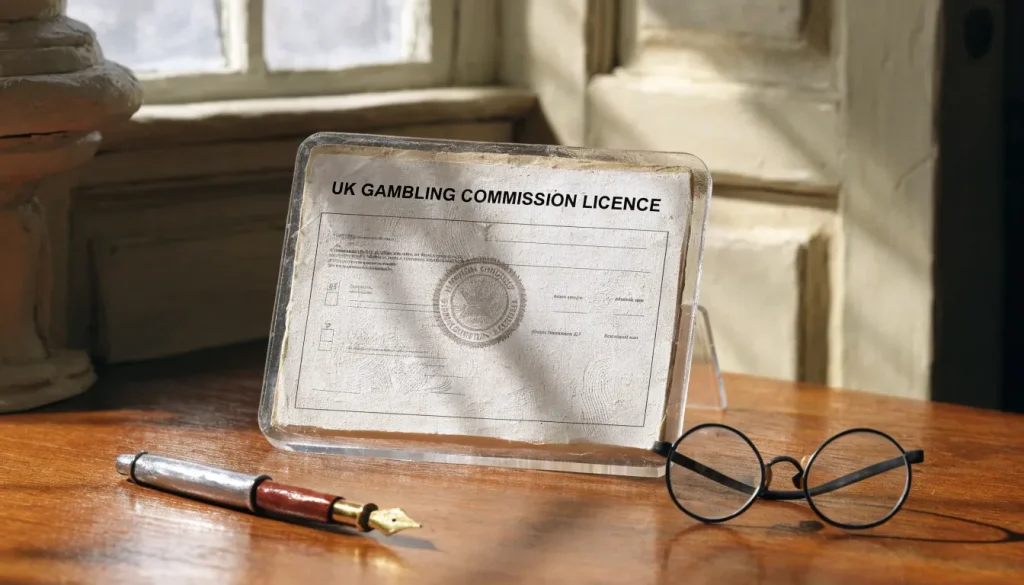
Before considering a casino, establish who operates it and whether it is authorised for the market it serves. Remote gambling licensees selling into Great Britain must hold the relevant Gambling Commission licence, regardless of where the business is based. Online gambling is legal in Great Britain for adults aged 18 and over at licensed sites. A casino’s branding, app, or crypto-related advertising is not a substitute for a current operating licence.
You can check a licence on the UK Gambling Commission’s public register. Match the operator’s identity and website details with the register rather than relying only on a badge displayed on a casino page. The Gambling Act 2005 governs gambling in England, Wales and Scotland; Northern Ireland has a different legal framework. For a UK-facing casino, the key point remains that a claimed payment option does not establish regulatory status, and a licence does not establish that USDC is accepted.
Casinos That Accept Visa in the UK: What to Check
Keep those checks separate. First, identify the operator and its regulatory position. Then look for explicit confirmation of USDC as a supported payment method for the relevant UK account. A generic “cryptocurrency” reference is not enough: the casino should identify USDC itself and make clear what payment route it means. A token name without details may still leave unanswered whether the cashier supports that asset or whether the reference applies to another market.
Be wary of lists that call themselves the best USDC casinos, or promise a choice of new USDC sites, without showing clear evidence for each claim. A list can repeat a broad payment description as though it were a confirmed cashier option. It can also confuse a casino that accepts some cryptocurrencies with one that accepts this specific token. The wording may look decisive; the underlying distinction is not.
This matters even if you intend to play from an Android phone. A mobile site or app describes how you access the casino, not how you fund an account. Likewise, a catalogue of slots does not prove that a particular coin is an accepted deposit method. Payment availability has to be established separately from device support and game selection.
Casinos That Accept eCheques in the UK: What to Check
Do not infer that a USDC casino is available merely because cryptocurrency appears among the payment categories discussed for UK-facing sites. The detail that matters is whether the named operator, serving the relevant market, explicitly supports USDC through its own current payment information. If that cannot be confirmed, the accurate conclusion is that USDC acceptance has not been established—not that every crypto casino accepts it, or that none could.
Check payment compatibility before you deposit
A payment method appearing on a casino’s general information page does not prove that you can use it from the UK, with your account, or for the transaction you have in mind. The cashier is the practical check: sign in, open the deposit options and see which methods are available to your account before sending money. If USDC is not explicitly offered there, do not assume that a reference to cryptocurrency, a wallet, or another digital asset means USDC is accepted.
Always verify the cashier’s available payment methods within your specific account before making any deposits. Do not assume a generic cryptocurrency label implies USDC support.
The same check matters if you are looking for an alternative to USDC. A casino may list Visa, Mastercard, bank transfer or an e-wallet on an information page, yet the cashier may show a narrower selection. A specialist review can help identify methods worth checking, but its list is not a substitute for the operator’s current cashier. Payment arrangements can change, and an option shown in a review may not be available to every customer.
Check both directions
A deposit option and a withdrawal option are not automatically the same thing. Before choosing a route, check whether the casino lets you both fund your account and receive withdrawals through it. A method marked deposit-only cannot complete that full journey. If withdrawals are available only by another route, find out what the operator requires before depositing; changing the route later may mean additional verification.
This distinction is especially important when assessing a claimed USDC route. Look for an explicit statement that USDC itself is accepted, not just a broad cryptocurrency label. Then check whether the cashier identifies it for deposits, withdrawals, or both. If the information is unclear, ask the casino’s customer support to confirm the exact currency and transaction direction in writing. Do not treat a generic coin symbol or a third-party payment service as confirmation that the casino accepts USDC directly.
The operator’s terms and cashier should agree. If one names a method but the other does not offer it, pause and ask which information applies to your account. A payment route can also be subject to account or location eligibility. The relevant question is not simply whether the casino has accepted that method for someone, but whether it is available to you before you make a deposit.
Casinos That Accept Upaycard in the UK: What to Check
Match the account and payment details
Check that the payment account belongs to you and that its details match the casino account. Using an account and payment route in the same customer’s name reduces the risk of avoidable problems over ownership. A casino may ask for evidence that you control the payment method, and another route may trigger additional checks.
This is not a reason to send funds first and resolve the details later. If a cashier rejects a payment method, or the operator’s terms rule it out for your account, do not try to work around the restriction through someone else’s account. Ask the casino what it accepts and what documents it needs before proceeding.
For cards, distinguish the named brand from the card product you hold. Visa and Mastercard appear in payment information, but their presence alone does not establish that every card issued under those brands is eligible or currently available to UK customers. Check the cashier and the operator’s rules for your particular card. UK-licensed casinos cannot accept credit-card payments for gambling, so a credit card must not be treated as an acceptable substitute for an eligible debit card.
Confirm the account currency
Before your first transaction, check the currency set for your casino account and the currency shown at the payment stage. Casino information may say that GBP is supported, but that does not tell you which currency your own account will use. If the account and payment currencies differ, a conversion may take place. Resolve the currency setting before confirming the transaction rather than relying on a method’s name or logo to explain it.
Currency Setting
Before your first transaction, ensure your casino account currency and the payment currency match to avoid unexpected conversion costs.
Also make sure the payment screen shows the amount and method you intend to use. If the displayed option differs from the one you selected, or the cashier does not make clear whether it is a deposit or withdrawal route, stop and contact the operator. A successful deposit is not proof that the same method will be available for a payout: return-to-source controls are a common anti-fraud and anti-money-laundering measure, and alternatives can require further verification.
Treat compatibility as a set of checks, not a label on a casino page: the exact method, its availability to your account, whether it works in both directions, the ownership details and the account currency. If any part remains uncertain, get a clear answer from the operator before depositing.
Deposits, withdrawals and the return of your funds
A payment route is not complete just because it lets you put money into an account. Before depositing, check how winnings and any remaining balance would be returned, and whether the casino can send them back through the same route. This matters when you are considering USDC: a digital-asset deposit does not, by itself, establish that USDC is supported for withdrawals or explain how a payout would be handled.
UK anti-money laundering rules commonly require a casino to return funds to the original payment source. This is part of the closed-loop rules: deposits and payouts are linked to the same source where possible, rather than treated as unrelated transfers. It is an anti-fraud control, not a promise that every payment method can receive a withdrawal in every circumstance. If the original route cannot be used, the casino may ask for another method and additional checks.
Casinos That Accept eCheck in the UK: What to Check
That distinction can matter when a deposit involves a card, an e-wallet or a cryptocurrency service. The casino may need to establish who owns the account or wallet and how the funds moved. Keeping your casino account details and payment route in your own name can reduce avoidable questions about ownership. Do not assume that a wallet, exchange account or address you can access is automatically acceptable for both sides of the transaction; check the casino’s payout terms and cashier instructions.
A fast deposit is only one part of the timetable
Deposits and withdrawals run through different processes. A card payment can reach a casino instantly, while a payout to that card may take several business days. The withdrawal clock can include the casino’s internal approval, not just the time taken by a bank or payment provider to deliver the money.
The first withdrawal can take longer if the casino still needs to complete KYC. That is why an account that accepted a deposit may not yet be ready to pay out. Verification can involve confirming identity, address or payment ownership. Check what documents are required and whether they must be approved before a withdrawal can be processed; submitting them only after requesting a payout can add a further stage.
A pending withdrawal does not necessarily mean the payment provider has started sending funds. The casino may first review the request and account. Once approved, the receiving route may introduce its own processing time. Ask the operator which stage applies if the status is unclear, and keep the request confirmation and any messages about verification.
Verification Reminder
Verification processes like KYC can take longer for your first withdrawal; ensure all required documents are submitted and approved beforehand.
Check the whole route before committing
For any payment method, read the withdrawal rules as well as the deposit instructions. Look for whether payouts go back to the original source, whether another route might be required, and what account checks could delay approval. If you are considering casinos that accept USDC in the UK, apply the same test: confirm the method is genuinely available for your account and understand how a withdrawal would be returned before sending funds. Do not infer that a casino accepts USDC for payouts merely because a deposit option appears.
A route that works in one direction may be deposit-only. In that case, the casino may need to return funds by a different method, subject to its rules and further verification. That can be inconvenient, but it is better to discover the restriction before a balance is waiting to be withdrawn.
Treat advertised processing times as a sequence, not a single promise: casino approval first, then payment delivery. The practical question is not only how quickly you can fund an account, but whether you can verify the payout path, satisfy the checks and receive funds through a route you are eligible to use.
Playing mobile slots does not change the payment rules
A slot that works on a phone is still connected to the casino’s cashier. The screen may be designed for mobile, but that does not make USDC an available payment method. Nor does a game being labelled an online slot or a “USDC slot” establish that you can fund real-money play with the stablecoin. The game format and the payment route are separate questions.
Casinos That Accept Boku in the UK: What to Check
The same distinction applies to free play. A demo version lets you try a game without making a real-money deposit; it does not show that the casino accepts USDC, or that the same game is available for real-money play. Check what the operator actually offers rather than relying on a slot’s name, an app description or a payment logo shown outside the cashier.
Check the operator, not just the app
A mobile site or casino app is an interface, not proof of a particular payment option. If an operator says a game can be played on a phone, that tells you about access to the game. It does not confirm that USDC can be deposited, that the casino supports a mobile wallet for gambling, or that the payment route is permitted under the operator’s rules.
For real-money play in Great Britain, the remote gambling operator must hold a relevant UK Gambling Commission licence. Check the operator’s licence on the Commission’s public register before depositing. A smooth mobile experience is not a substitute for checking who is providing the gambling service.
The app also does not change the rules that apply to online slots. Autoplay is banned in Britain, and each slot spin must last at least 2.5 seconds. The maximum stake per game cycle is £5 for customers aged 25 and over, and £2 for customers aged 18 to 24. These rules concern how the game is played; they do not establish anything about USDC acceptance.
Separate access, payment and safeguards
If you are considering a real-money slot on a phone, assess three things separately: whether the operator is licensed, whether the game is offered for real-money play, and whether the cashier lists a payment method you can use. Do not infer one from another. A mobile-friendly site can offer a game without supporting a particular coin, while a payment option displayed in general information may not be available for your account.
DO
- Check the operator’s licence on the UK Gambling Commission’s public register
- Confirm USDC availability directly in the casino cashier
- Verify that ownership details match your bank and casino accounts
- Set financial limits before your first deposit
DON’T
- Assume a generic ‘crypto’ label confirms USDC support
- Use credit cards for gambling
- Rely on mobile app descriptions for payment details
- Ignore the need for transaction directionality (deposits vs withdrawals)
The payment method also does not remove the account safeguards. UKGC rules require remote operators to ask new customers to set a financial limit before their first deposit and to make account-level limit controls accessible. That applies whether you use a desktop or a phone, and whether you play slots or another casino game. Mobile access changes the screen, not the operator’s responsibilities.
Treat claims about USDC-enabled mobile slots cautiously unless the licensed operator itself confirms the payment route in its cashier and terms. A title, app listing or third-party description is not enough to establish that real-money deposits in USDC are supported.
Real-money slot play: keep deposits within your limits
Whether a slot runs in a browser or through an app does not change the safeguards that apply when you stake real money. Nor does a payment label such as USDC establish that a casino offers a particular game, accepts that currency or has a no-deposit route. Treat those as separate questions: what the cashier supports, what games are available, and what controls protect your spending.
For a casino licensed by the UK Gambling Commission, the first deposit has a required step. Remote gambling licensees must prompt new customers to set a financial limit before they deposit for the first time. This is not merely a suggestion tucked into the terms. It is a point at which you can decide how much money you are prepared to put at risk before play begins.
Casinos That Accept Bitcoin in the UK: What to Check
The limit controls must also remain accessible at account level. You should be able to find them in your account rather than having to rely on a reminder or search for a buried help page. Read what each control covers before setting it: a deposit limit concerns money paid into the account, while other controls may address different aspects of play. Do not assume one setting automatically governs every kind of spending or activity.
A practical way to use the prompt is to pause before choosing a figure. Consider what you can afford to lose, not what you hope to win or what a session might return. A limit is a boundary for deposits, not a prediction of results and not a guarantee that losses will stop at a particular amount if other accounts or forms of gambling are involved. Set it at a level that makes sense for your finances, and review the account controls if your circumstances change.
The same discipline applies if you are looking for real-money slots funded with USDC. Do not let a currency or game description distract from the account safeguards. Before depositing, establish that the site is a UK Gambling Commission licensee and that the account offers the required financial-limit prompt and accessible controls. A claim about USDC support, a slot title, or an app does not replace those checks.
If a site lets you deposit without the required prompt, or makes its account-level limits difficult to locate, stop before funding the account and check its regulatory status. UK-licensed casinos must also provide responsible-gambling tools, including self-exclusion. These controls serve different purposes: a spending limit helps set a financial boundary, while self-exclusion is a way to block access to gambling with that operator.
Final Summary
Always confirm specific payment methods and regulatory status directly through the casino’s cashier and terms before depositing funds.
Keep the decision about play separate from the payment method. A slot advertised as available for real money does not tell you whether USDC can be used, and a USDC label does not tell you whether the game is suitable for your budget. Start with the limit, keep it within what you can afford, and do not raise it simply to continue a session.
Cards, bank transfers and other ways to pay
If USDC is not shown as a payment option, familiar methods offer different trade-offs. Debit cards, bank transfers and prepaid vouchers do not work alike, particularly when you later want to withdraw.
Debit cards bearing Visa or Mastercard are commonly accepted by UK casinos, but the cashier must confirm that your particular card is available. A debit card is not a credit card: UK-licensed casinos cannot accept credit-card payments for gambling. The ban also covers credit-card funding routed through a money service business, and a wallet cannot be used to sidestep it if it allows credit-card funds to be spent on gambling.
A card can be convenient for depositing, but do not assume that it is equally suitable for receiving a payout. Check the casino’s stated withdrawal routes before choosing it. A specialist review describes card deposits as potentially instant while a payout may take several business days; that is a reported comparison, not a promise about a particular casino or card.
Open banking and bank transfers are another route. Open banking lets you authorise a payment through a connection to your bank, rather than entering card details. A specialist review reports that these methods can provide instant deposits and fast withdrawals at many sites, but availability and timing depend on the actual cashier and bank route. A bank transfer is not automatically faster simply because it moves money between accounts.
Casinos That Accept Dogecoin in the UK: What to Check
Prepaid vouchers have a more limited role. Paysafecard is deposit-only, so it should not be treated as a route for cashing out winnings. If you use one, establish how withdrawals are handled before paying: a separate payout method may be needed, with the casino’s own checks applying.
E-wallets such as PayPal, Skrill and Neteller, and Apple Pay, also appear among payment choices at some UK-facing sites. Their presence on a general list does not establish that a particular operator currently offers them, or that they support both directions of payment. The cashier is the place to confirm the available options for your account.
Whatever the method, use an account and payment route that belong to you. Matching ownership details can reduce avoidable friction, but it does not guarantee that a transaction will be accepted. If a casino presents USDC alongside these options, treat that as a separate claim to verify; the alternatives above do not establish that USDC is accepted, or that it can be used for direct withdrawals.
Bonuses can depend on how you pay
A payment method can affect whether a promotion is available, even when it works for depositing. Treat the offer terms and the cashier as separate checks: seeing a payment option does not mean a deposit made with it qualifies for a bonus.
A specialist casino review reports that PayPal may be excluded from bonus eligibility. The same kind of review reports that Skrill and Neteller are often excluded from promotions. These are not fixed rules for every operator or offer; terms can change, so check the current promotion conditions before depositing. Look for restrictions on payment methods, any requirement to opt in, and whether the offer applies to your account.
Bonus Eligibility
Using certain payment methods like PayPal, Skrill, or Neteller may disqualify you from receiving specific casino bonuses.
This matters when you are considering a USDC casino welcome offer or a bonus connected with real-money slots. A page referring to USDC, slots or a bonus code is not enough to establish that a promotion exists or that a USDC deposit qualifies. Do not assume that a no-deposit offer, a welcome bonus or a code is valid simply because it appears alongside a payment claim. The operator’s current terms need to identify the offer and its eligibility conditions.
If the terms exclude a method, using it may mean that the deposit does not qualify, even if the payment itself is accepted. If the wording is unclear, ask the operator to confirm eligibility before you make the transaction, and keep a copy of the relevant terms. That is more useful than relying on a general description of a promotion.
When comparing offers, focus on the conditions attached to the specific payment route you intend to use. A promotion can be less valuable to you if your chosen method is excluded; the headline alone does not settle that point.
Minimum deposits, fees and currency conversion
A cashier’s minimum is only the starting point when you work out what a deposit will cost. The required amount can vary by payment method, and a displayed minimum does not tell you what will arrive in your casino balance after conversion or charges.
For a USDC payment, first establish whether the cashier actually offers that route; do not assume that a low minimum advertised for another method applies. If the account accepts funds in pounds sterling but you send USDC, the conversion rate and the point at which conversion occurs matter. Check whether the quoted rate includes a spread: that is the difference between the rate used for the transaction and a reference market rate. A spread can cost more than a clearly stated flat fee.
Casinos That Accept Solana in the UK: Payment Guide
The full cost may be split across several places. The casino may charge a transaction fee; a payment provider may add its own charge; a bank or card issuer may apply a fee; and a crypto transfer may incur a network charge. These are separate from the amount you choose to deposit. Check each term before confirming, rather than treating a cashier’s “fee-free” label as proof that the whole route has no cost.
The same issue applies to a small deposit. A fixed charge takes a larger share of a small transaction than of a larger one, while a percentage-based exchange spread changes with the amount converted. To compare fairly, use the amount you intend to deposit and calculate the pounds that should reach your balance after every stated charge and conversion. If the cashier does not show enough detail to work that out, ask the operator or payment provider before sending funds.
There is no single payment method that is always cheapest. Compare the casino charge, provider or bank fees, conversion spread and, where relevant, network cost for the actual route and amount. Also confirm the account currency before paying: a second conversion can add cost if the payment and account currencies do not match. A minimum deposit that looks manageable can therefore be misleading if the final credited amount is reduced or the route adds charges outside the casino.
Full Cost Breakdown
To calculate the true cost of a deposit, you must account for:
- Casino transaction fees
- Payment provider charges
- Bank or card issuer fees
- Cryptocurrency network charges
- Currency conversion spreads
Compare the total cost before choosing an alternative
There is no single payment method that is cheapest for every casino transaction. The amount you send, the currency used at each stage and the route between your bank, payment provider and casino can all change the final cost. Compare alternatives using the same deposit amount and the same account currency, rather than relying on a fee label in isolation.
Check the casino’s cashier and payment terms for any charge it applies. Then look at the provider’s fee information and, where relevant, your bank or card issuer’s charges. A payment route may also involve a currency conversion spread: the difference between the exchange rate applied and a reference rate. That cost may not appear as a separate fee, so a route with no visible flat charge can still deliver less value than expected.
For a fair comparison, note the amount leaving your account and the amount credited to the casino balance. If the two currencies differ, check which party sets the exchange rate and whether the account can be held in pounds. A rate shown by a payment provider may not be the rate ultimately used if the bank or another intermediary handles the conversion.
For a cryptocurrency route, include any network charge as well as conversion costs. The total can depend on the amount and the route used, so a fee quoted for one transaction does not establish what another will cost. Do not treat a USDC option as available merely because a site lists other cryptocurrencies; confirm the method and charges in the cashier before deciding whether it is a practical alternative.
A short comparison can keep the decision grounded: record the casino fee, provider or bank charge, conversion cost and any network fee for each available route. Compare the resulting total for your intended transaction, not just the most prominent figure on a payment page. A specialist review may describe a method as low-cost, but its assessment may not reflect your amount, account currency or current charges. The useful answer is the one calculated for the payment you are actually considering.
Casinos That Accept Ukash in the UK: Current Options
USDC and casinos outside GamStop: verify the operator and payment route
A site described as outside GamStop may not participate in the UK self-exclusion scheme, but that label does not establish whether it is safe, legally authorised to serve you, or able to process USDC. Nor does a reference to USDC prove that the cashier accepts it for deposits and withdrawals. Treat the operator’s status and the payment route as separate checks.
In Great Britain, a remote gambling licensee selling gambling to local customers must hold the relevant UK Gambling Commission licence. Check the operator’s name and licence details on the Commission’s public register before depositing. A casino operating offshore without a UKGC licence is outside that regulatory system; a cryptocurrency option or absence from GamStop does not supply equivalent oversight.
A UKGC-licensed casino must provide safer-gambling tools, including self-exclusion, and let you access account-level financial limits. Remote operators must also prompt new customers to set a financial limit before their first deposit. These protections matter regardless of whether the cashier displays a familiar payment method or a digital currency.
Licensed operators must have an internal complaints process and provide access to an approved Alternative Dispute Resolution service if a complaint remains unresolved. Those routes are part of the regulated framework; do not assume they are available in the same way at an offshore site. A prominent payment logo is not a substitute for a licence or a route to challenge a dispute.
If you are considering a casino described as not connected to GamStop, verify the licence first, then check the cashier’s current terms for the exact USDC route and its permitted uses. Do not infer that USDC slots are available merely because a site advertises cryptocurrency, or that GamStop status confirms anything about payment handling. If the operator’s identity, licence position or withdrawal arrangements are unclear, pause before sending funds.
Do UK casino withdrawals require verification?
Yes. Verification may be completed before a first withdrawal, and using an account and payment method in your own name can help avoid unnecessary delays.
What is the fastest withdrawal method for UK casinos?
PayPal, open banking and debit cards linked to fast payout systems are generally among the quickest options. Your withdrawal speed also depends on the casino’s approval process and whether your account is verified.
Are fast casino withdrawals guaranteed?
No. Withdrawal speed depends on the casino’s internal approval process and whether your account is fully verified.
What is the current minimum deposit?
Minimum deposits usually start at £10–£20, depending on the payment method you choose.
Our top casino picks for the UK
- EvoSpinBonus: 125% up to €2500 + 125 Free Spins · Payout speed: 1-3 business days
- x3betBonus: Welcome Pack 100% Up to £1.000 + 200 Free Spins · Payout speed: 1-3 business days
- ChanzeBonus: Slots Welcome Bonus #1 200% up to €500 · Payout speed: 1-3 business days
- SlotoSportBonus: 500% up to £ 10 200+ 777 FS · Payout speed: 1-3 business days
- NightLuckBonus: Welcome Pack + 805% Up To 6400€ + 280 FS · Payout speed: 1-3 business days
- WinBeastBonus: €5000 + 500 FS + €650 Freebet · Payout speed: 1-3 business days
Related posts

Terms of Use
UK Gambling Casino Sites and Slots: Licensing and Play