Casino Welcome Bonus Types: A Map of the 2026 Offer Page
 Available in GB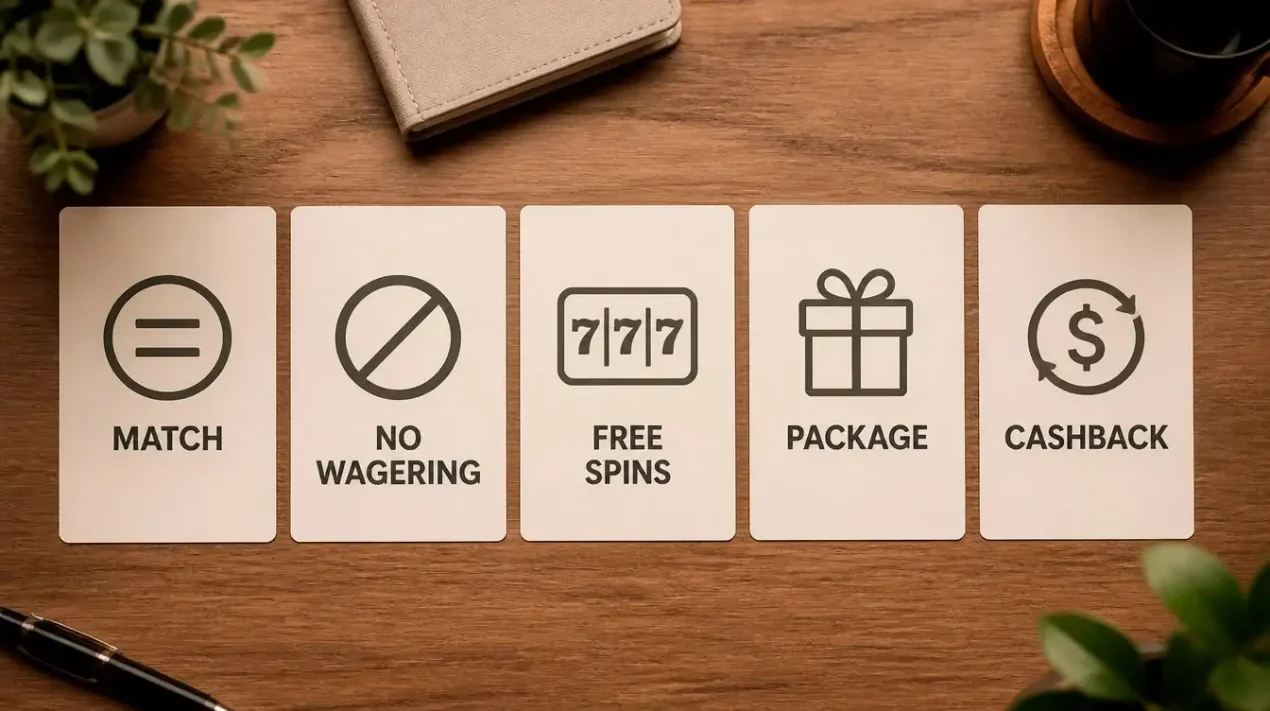
Why the type taxonomy matters before the headline number
Most of the welcome offer comparisons I have walked someone through start in the wrong place. The player has spotted “100% up to £200” at one operator and “200% up to £100” at another, and the question is which one is better. The right question is what type of offer each one is. The percentage match against a deposit is one specific bonus shape — common but not universal — and the comparison breaks down when one of the candidates is actually a no-wagering offer, or a free-spin package, or a cashback-style refund. The types are not interchangeable, and the expected value calculation is different for each.
The UK welcome bonus market in 2026 supports five distinct types of welcome offer. Each has its own mechanics, its own typical wagering structure, its own caps and conditions, and its own expected value profile. A player approaching the welcome offer page should know which type they are looking at before considering the headline number. The headline is meaningful only within a type — comparing across types using only the headline is the most common avoidable error in welcome bonus selection. The full picture is in our guide to the UK casino welcome bonus.
Type one: the percentage-match deposit bonus
The percentage-match deposit bonus is the dominant welcome offer type in the UK market and the structural template against which other types are usually compared. The mechanic. The player makes a qualifying deposit. The operator credits a bonus equal to a percentage of the deposit, up to a stated cap. The bonus carries a wagering requirement — capped at 10x bonus value under the Social Responsibility Code that took effect on 19 January 2026. The bonus converts to withdrawable funds when the wagering completes within the activation window.
The 100% match is the modal structure. A 100% match capped at £150 to £200 of bonus credit, on a £20 minimum qualifying deposit, with 10x wagering on the bonus value, is the most common welcome offer in the UK market in 2026. The structure is recognisable across operators because the regulatory framework rewards uniformity — once the wagering cap is fixed and the affordability check trigger is fixed, the remaining variables to differentiate on are the cap level, the eligible games list, and the activation window.

Variants on the percentage structure exist at higher and lower match rates. A 200% match capped at £100 is a common alternative shape — same headline absolute bonus value as a 100% match capped at £200, but the cap binds at half the qualifying deposit. The two structures look different on the page but produce similar gross expected value for a player whose intended deposit is at or above the cap level. The 50% match capped at £300 sits at the other end of the range — the headline percentage is lower but the cap is higher, requiring a larger qualifying deposit to extract the full bonus value.
The expected value calculation on a typical 100% match in 2026. A £150 bonus at 10x wagering produces £1,500 of cumulative turnover. At a 4% house edge on the eligible-for-bonus slot universe, the expected drain across that turnover is £60. The gross expected value of the bonus is £150 minus £60, around £90 of withdrawable expected value. This is the reference point against which the other welcome offer types are usefully compared. Which of them is worth taking: the expected-value maths.
Type two: the no-wagering welcome bonus
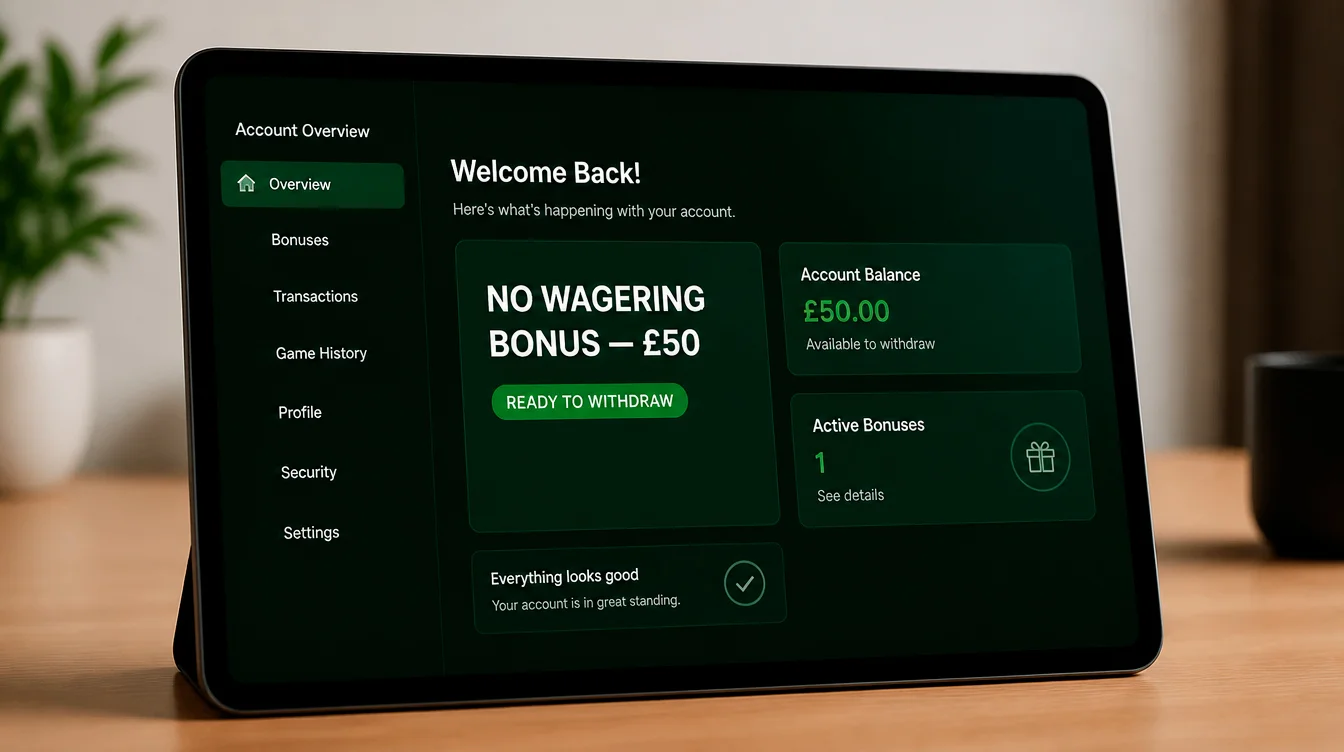
The no-wagering welcome bonus inverts the standard structure. The bonus credit is immediately withdrawable — there is no wagering requirement on the bonus itself. The trade-off is that the headline cap is much lower than the equivalent percentage-match offer. A typical no-wagering bonus in 2026 runs at £25 to £100 of bonus credit on a £20 minimum qualifying deposit. The structure has expanded materially since the introduction of the 10x cap, partly because the economic differential between wagered and unwagered offers narrowed when the multiplier ceiling came down.
The no-wagering structure typically still requires the player to wager the qualifying deposit through once before any withdrawal is processed — a deposit wagering of 1x. The deposit wagering is separate from any bonus wagering, and on a no-wagering bonus structure the bonus credit is exempt from the wagering requirement entirely. The combined effect is that the player must play through the qualifying deposit once but can extract the bonus credit without any additional cumulative turnover requirement.
The expected value calculation on a no-wagering bonus runs much closer to the headline figure. A £50 no-wagering bonus on a £20 deposit produces £20 of deposit wagering. At 4% house edge, the expected drain across that wagering is £0.80. The gross expected value of the offer is £50 minus £0.80, around £49 of withdrawable expected value. The per-bonus efficiency is much higher than the percentage-match equivalent — almost 100% of bonus credit converts to withdrawable value in expected terms.
The trade-off sits in the absolute cap. A £50 no-wagering bonus delivers £49 of expected value; a £150 percentage-match bonus delivers £90. The no-wagering structure is more efficient per pound but lower in absolute value. A player whose intended deposit is small benefits more from the no-wagering structure. A player whose intended deposit is larger and who is willing to clear wagering extracts more absolute value from the percentage-match structure. The full mechanics of the no-wagering structure and what to look for in the terms are walked through in the no-wagering welcome bonus article that breaks down the structure and what the lower headline actually delivers.
Type three: the free spins welcome bonus
The free spins welcome bonus delivers value in the form of slot spins rather than bonus credit. The mechanic. The player makes a qualifying deposit and receives a set number of free spins on a specified slot or slot list. The spins have a fixed stake value — typically 10p or 20p per spin in the UK market — and any winnings from the spins are credited to a bonus balance that carries its own wagering requirement.
The wagering on free spin winnings runs at a similar multiplier to bonus credit wagering. A spin package generating £15 of winnings at 10x wagering produces £150 of cumulative turnover requirement, comparable to a small percentage-match bonus. The structure adds a layer of variance the percentage-match offer does not have — the value of the spins themselves is uncertain, distributed around the expected return of the underlying slot.
The expected value calculation on a 50-spin package at 10p per spin runs as follows. Expected return per spin at 96% RTP is 9.6p. Expected total spin winnings across 50 spins is £4.80. Expected drain on the resulting £4.80 of wagering-bound winnings at 10x wagering and 4% house edge is £1.92. Expected withdrawable value is £4.80 minus £1.92, around £2.88 per package. Larger spin packages scale proportionally — a 100-spin package at 10p produces around £5.76 of expected value, a 200-spin package around £11.52.
The free spins structure has been favoured by operators in 2026 as a complement to the percentage-match offer rather than as a standalone welcome bonus at higher headline values. A typical structure is “100% match up to £150 plus 100 free spins on registration”, with the spins functioning as an immediate engagement hook ahead of the main bonus wagering. The standalone free-spins welcome bonus at high headline spin counts — 200 or 300 spins — is less common in 2026 than it was two years earlier, partly because the absolute value the structure delivers is small relative to the percentage-match alternatives.
Type four: the multi-deposit welcome package
The multi-deposit welcome package spreads the bonus across multiple sequential qualifying deposits. The standard structure runs across three or four stages. First deposit: 100% match capped at £500 of bonus. Second deposit: 50% match capped at £500. Third deposit: 50% match capped at £300. Fourth deposit: 25% match capped at £200. The headline total runs to £1,500 of cumulative bonus across the four stages.
The structural difference from the single-stage match is that each stage requires its own qualifying action — its own qualifying deposit within an activation window from the previous stage. The activation window is typically 7 to 14 days between stages. A player who deposits at stage one, clears the wagering, and then waits 21 days before depositing again will find that the stage two offer has expired. The cumulative cap of £1,500 collapses to the stage one cap of £500, with the remaining stages no longer available.
The wagering structure applies independently to each tranche. A four-stage package generating £500 plus £500 plus £300 plus £200 of bonus across the stages produces, at 10x wagering per tranche, £5,000 plus £5,000 plus £3,000 plus £2,000 of cumulative turnover — a total of £15,000 across the activation window. The cumulative turnover is large but each individual tranche is comparable to a single-stage match offer at the corresponding cap.
The expected value calculation on the package, assuming full completion of all four tranches. Total bonus credit £1,500. Total cumulative turnover £15,000. Expected drain at 4% house edge £600. Gross expected value if fully completed £900. The completion rate on four-stage packages typically runs much lower than on single-stage offers — industry estimates put full-package completion at 25% to 35% — which substantially reduces the risk-adjusted expected value below the £900 figure. The structure works best for players with the bankroll and time pattern to complete all four stages reliably.

Type five: the cashback-style welcome offer
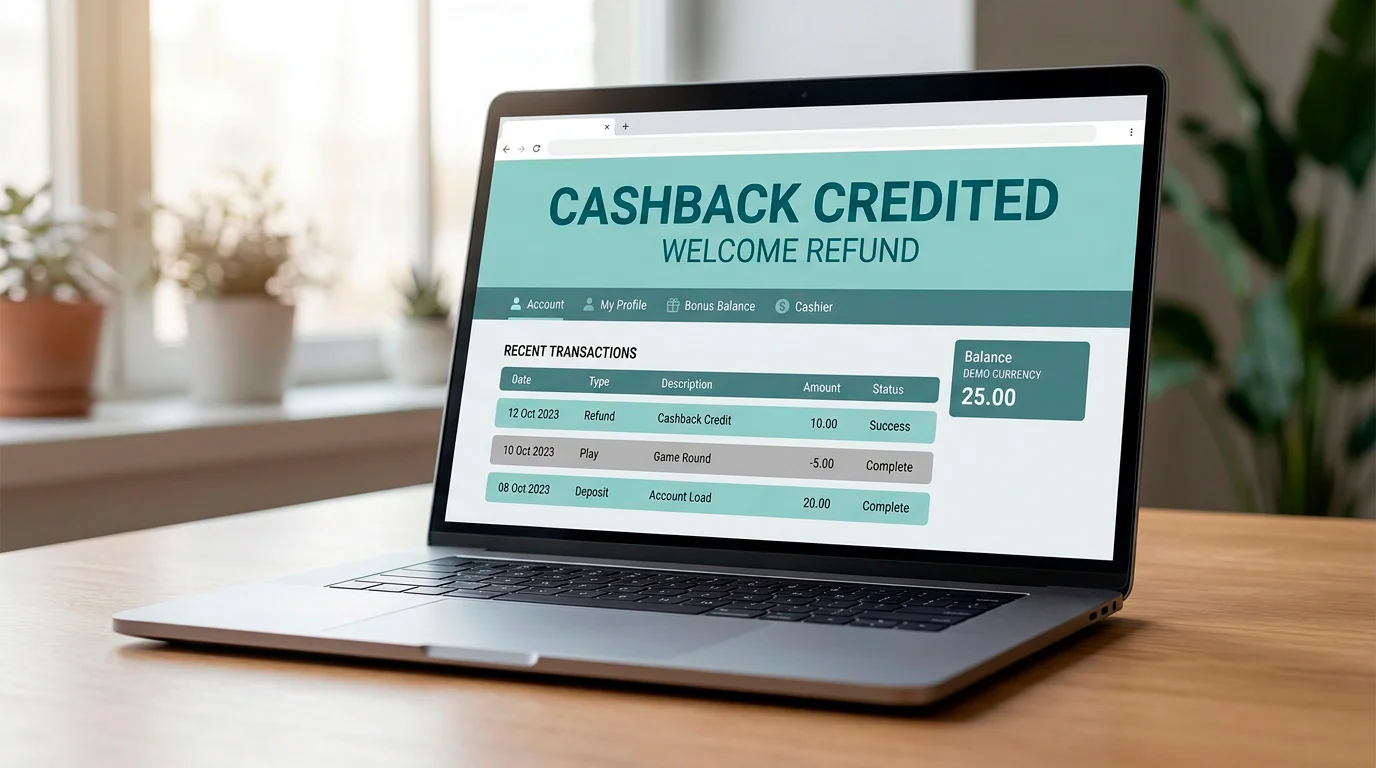
The cashback-style welcome offer is the structural newcomer in the 2026 UK market. The mechanic. The player makes a qualifying deposit and plays through it. If the player loses the deposit within a defined window, the operator refunds a percentage of the net loss as bonus credit or cash. The structure flips the conventional logic — the bonus pays out only if the player loses, rather than triggering immediately on deposit.
A typical structure runs as follows. Qualifying deposit £20 minimum, capped at £200 for refund eligibility. Refund percentage 50% of net loss across the qualifying play window. Refund cap £100. Refund credited as bonus with 1x wagering, effectively no-wagering after the deposit play. A player who deposits £100 and loses it all receives £50 of refund credit. A player who deposits £100 and finishes the qualifying window with £30 left receives £35 of refund — 50% of the £70 net loss.
The expected value calculation on the cashback structure depends on the player’s actual play pattern. Expected loss on a £100 deposit played on a 4% house edge slot for 100 spins at £1 stake is £4. The refund on a £4 expected net loss at 50% is £2 of expected refund credit. Expected total bonus value is £2 across a play volume that does not push the player meaningfully toward the refund cap. Players whose play volume produces larger net losses receive larger refunds, up to the cap.
The structure has an unusual property among welcome bonus types: the expected value rises with play volume up to the refund cap. The percentage-match and no-wagering structures have fixed bonus credits regardless of play volume. The cashback structure rewards extended play within the qualifying window, with the operator absorbing a proportion of the player’s losses. The dynamic produces a different decision profile than the standard welcome offer — players for whom the typical session would otherwise consume the deposit fully extract relatively more value from cashback than from percentage-match, while players whose typical session ends with a meaningful balance retained extract less.
How the types compare on the standard player
The five types produce different absolute and per-pound expected values. The percentage match at £150 cap delivers around £90 of gross expected value on a £150 qualifying deposit, or 0.60 per pound. The no-wagering offer at £50 cap delivers around £49 on a £20 deposit, or 2.45 per pound — substantially more efficient but on a smaller absolute base. The free spins package at 100 spins delivers around £5.76, with low per-pound efficiency relative to the alternatives. The multi-deposit package at £1,500 cap delivers around £900 if fully completed, but risk-adjusted for completion sits closer to £270 to £350 across a £2,900 total deposit profile. The cashback offer at 50% refund on £200 deposit delivers value contingent on actual losses, with expected absolute values in the £2 to £100 range depending on play pattern.
The Casinomeister position on the post-cap landscape captured the player advocacy reading. The 10x cap on paper still means a grind if popular games are excluded or contribute marginally, which speaks to the underlying point that the wagering multiplier is only one input. The five types of welcome offer present different combinations of multiplier, cap, contribution, and qualifying mechanic — and the comparison across them requires more than the headline number.
The aggregate UK market data anchors the analysis. The financial year to March 2025 closed with total UK regulated online gambling gross gambling yield at £7.8 billion, up 13.1% on the prior year. Remote casino, betting, and bingo together generated £7.7 billion or roughly 46% of the total UK gambling market. Online casino specifically — the category that hosts the welcome bonus structures discussed here — generated £1.4 billion in casino-game GGY across the same period. The welcome bonus pages discussed here are the customer acquisition gateway for a £1.4 billion product category, and the type-level differences in offer structure flow back to material commercial decisions across the operator population.
How the affordability check shaped the type distribution
The financial vulnerability check trigger that dropped from a pilot threshold of £500 to £150 net deposits within a rolling 30-day window in February 2025 has reshaped the relative attractiveness of the welcome offer types for operators. The percentage-match structure with a high qualifying deposit typically pushes the player above the £150 trigger immediately, which adds documentation friction and reduces conversion from registration to bonus credit. The no-wagering structure with a low qualifying deposit typically stays below the trigger, which preserves the conversion path.
The cashback structure similarly tends to stay below the trigger because the qualifying deposit on cashback offers is typically capped at the £150 to £200 range and many players deposit at the low end of the qualifying range. The multi-deposit package crosses the trigger on the first stage and stays above it throughout the package, which adds complexity but does not affect the absolute completion economics once the first check has cleared.
The implication is that the operator’s commercial decision on which welcome offer type to lead with depends partly on which trigger and friction profile they want to expose the player to during the activation window. Operators chasing high-conversion at-scale registration lead with no-wagering structures and small percentage-match offers below the trigger. Operators chasing higher per-claim engagement lead with multi-deposit packages and higher-cap percentage-match offers that cross the trigger. The type distribution across the operator landscape reflects these commercial choices.
What the 2026 market looks like across the types
The welcome offer page distribution across UK-licensed operators in 2026 runs roughly as follows. Around 60% of operators lead with a percentage-match deposit bonus, typically 100% match at £150 to £200 cap. Around 15% lead with a no-wagering structure at £25 to £100 cap. Around 10% lead with a free-spins-focused package, typically 50 to 100 spins on a specified slot. Around 10% offer a multi-deposit package, typically three or four stages. The remaining 5% offer cashback-style structures or hybrid combinations of two or more types.
The distribution has shifted since the start of 2025. The percentage-match share has fallen from around 75% to around 60% as operators have diversified their welcome offer types to differentiate on offer structure rather than on headline numbers. The no-wagering share has grown from around 8% to around 15% in the same period. The free-spins share has stayed roughly constant. The multi-deposit share has grown slightly as operators look for ways to deliver higher headline cumulative bonus values within the regulatory framework. The cashback share is small but growing fastest in proportional terms.

The trajectory across the rest of 2026 will likely continue this diversification. The structural framework — wagering cap, qualifying-action separation, affordability triggers — is fixed by regulation. The numerical calibration around those structures is still settling, and operators are experimenting with type-level differentiation to capture the customer acquisition market more effectively in the post-reform landscape. A player approaching the welcome offer page in late 2026 should expect to see a wider variety of offer types than was available 18 months earlier, with the comparison across types requiring more structured analysis than a headline-only review can provide.
Which welcome bonus type is most common in the UK in 2026?
The percentage-match deposit bonus, typically structured as 100% match capped at £150 to £200 of bonus credit, on a £20 minimum qualifying deposit with 10x wagering. Around 60% of UK-licensed operators lead with this structure on their welcome offer page, down from around 75% before the 2025-26 reforms as type diversification has increased.
Are no-wagering welcome bonuses always better than percentage-match offers?
They are typically more efficient per pound deposited but lower in absolute value. A £50 no-wagering bonus delivers more expected value per pound at risk than a £150 percentage-match bonus on the same deposit size, but the absolute expected value is lower. The right type depends on the player’s intended deposit size and tolerance for completing wagering.
Why are free spins welcome bonuses less popular as standalone offers in 2026?
The absolute expected value of a free spins package is small relative to the percentage-match alternatives. A 100-spin package at 10p delivers around £5.76 of expected value, against £90 on a £150 percentage match. Free spins now typically appear as a complement to the main welcome offer rather than as the headline product.
Does the wagering cap apply equally to all welcome bonus types?
The 10x cap applies to bonus credit across all welcome offer types. No-wagering offers sit below the cap structurally, since the wagering on the bonus itself is zero. Free spin winnings are wagering-eligible at the same 10x cap. Cashback refund credits typically run at 1x wagering or no wagering, well below the regulatory ceiling.
This material was created by the WagerVane team.
Related posts
Casino Welcome Bonus Withdrawal: From Wagering Clear to Bank Account

Live Casino Welcome Bonus UK: Why Dealer Tables Are Usually Excluded