No Deposit Casino Welcome Bonus UK: What ‘Free’ Means After the Reforms
 Available in GB
Why I Stopped Calling These Bonuses ‘Free’
A reader emailed me last spring asking why a £10 no-deposit offer she had cleared paid out exactly £18 instead of the £200 she had ground her way to on the slot. Her T&Cs paperwork was sitting beside her, highlighted in three colours, and she still could not work out where the rest of her balance had gone. That conversation is the reason I no longer use the word ‘free’ without an asterisk in everything I write about this category.

A no-deposit welcome bonus is the only offer in the UK market where the operator pays before the player does. That asymmetry is exactly why every other clause in the small print pulls in the opposite direction. The bonus exists, but it is wrapped in more gates, ceilings and conversion ratios than any other promotion shape on the market. Once you understand the wrapping, the underlying gift is still real — just much smaller than the headline suggests. The full picture is in our guide to the UK casino welcome bonus.
From 19 January 2026 the Gambling Commission capped wagering on bonus funds at ten times the bonus value through Social Responsibility Code Provision 5.1.1. That single change reshaped the no-deposit category more than any other type, because operators historically leaned on 50× and 65× rollovers to make the maths sustainable on offers they handed out without taking a penny in return.
How the Mechanic Actually Fires
I opened seven UK accounts during the run-up to the January reforms purely to map how no-deposit offers behaved in practice. Six of them required the same chain of events before the bonus credit ever appeared: email verification, mobile number verification, address pre-check against a credit reference agency, and an opt-in tick that had to be made within a specified window — usually 48 or 72 hours from registration.

The bonus itself comes in two flavours. The first is bonus cash: a small balance, typically between £5 and £15, that you can stake on a curated list of slots. The second is a fixed bundle of free spins, usually between 10 and 50, each pinned to a per-spin value of 10p or 20p. Both flavours go through the same wagering pipe afterwards, so the mechanic only differs at the front end.
Two things make this category different from a matched deposit. There is no deposit funding the play, so every spin you take is operator capital. And there is almost always a conversion ceiling — a hard limit on how much of your winnings you can ever withdraw, regardless of how much you accumulate during play. I have seen ceilings as low as £20 and rarely above £50 for the no-deposit category. That cap is the single most important number in the entire offer, and it is rarely on the landing page.
The Verification Gate You Cannot Skip
The most common complaint I see from readers is not about the wagering — it is about being unable to release the bonus at all because their identity check stalled. I read this as a feature, not a bug. The Commission tightened its expectations on customer due diligence sharply through 2025, and the financial vulnerability check threshold dropped to £150 over a thirty-day window from February that year. For a no-deposit offer that mostly involves zero player money, the verification load looks disproportionate. It exists because the operator is exposing actual cash on day one.
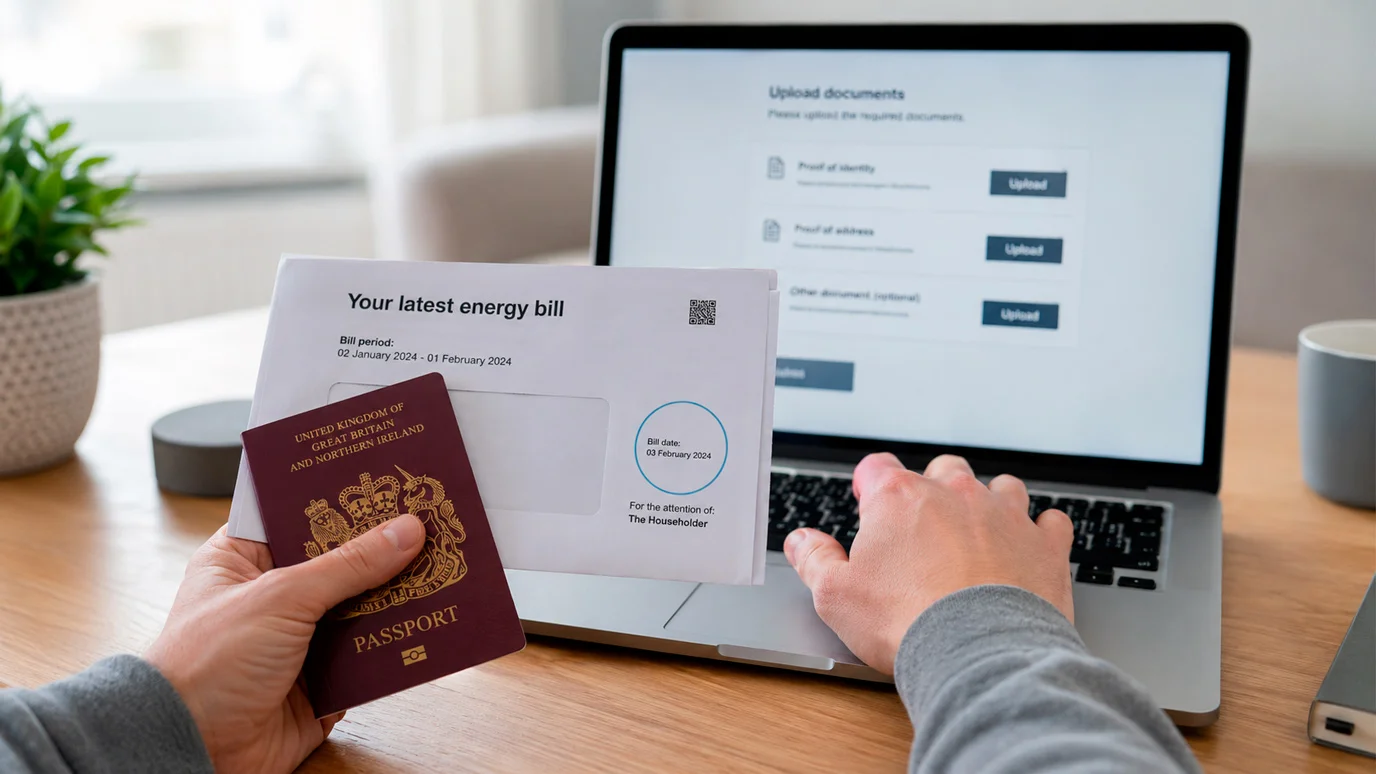
Expect a passport or driving licence upload, a utility bill or bank statement dated within the last three months, and in some cases a selfie video. A few operators add a debit card pre-authorisation step, where you register a payment instrument without actually depositing — purely so they have a verified method on file. None of this is unreasonable; what burns readers is the timing. The bonus often has a 24- or 48-hour activation clock once credited, and the verification can run to several working days if a document fails.
My standing advice is the same regardless of operator: upload documents within twenty minutes of completing registration, and do it before you opt in to the bonus. If you wait until you have already triggered the credit, the clock and the document review run in parallel, and one will almost always lose. Anyone interested in the wider mechanics of how UK operators verify identity before releasing bonus funds will find the documentation requirements vary more than you would expect between brands operating under the same licence.
Wagering and the Conversion Cap
The conversion cap is where most readers lose money they think they have already won. Take a £10 no-deposit bonus with a 10× wagering requirement — the post-reform standard. To clear, you must place £100 of qualifying turnover on bonus funds. If you happen to be running well and your balance climbs to £180, the operator will deduct your bonus stake and pay out — but only up to the conversion ceiling. If the ceiling sits at £20, the £160 above it evaporates the moment you request withdrawal.

That is the heart of the Commission’s stated position. The wagering cap was introduced to reduce harm, complexity and the sheer grind of clearing a bonus. It does all three. What it does not do is uncap the maximum win, because nothing in Social Responsibility Code Provision 5.1.1 stops an operator setting a conversion ceiling. The Commission’s view is that capping the wagering decreases the likelihood of harm and improves transparency while maintaining consumer choice — and the conversion ceiling is part of the choice landscape. The ceiling on what you keep: the conversion cap.
The arithmetic also moved in the opposite direction for the operator. Under the old 50× regime, a £10 no-deposit offer required £500 of turnover to clear. The expected loss to the player at a 4% house edge was £20, which from the operator’s point of view roughly covered the cost of the £10 bonus plus a margin. Under 10×, the same offer requires only £100 of turnover and produces an expected loss of £4. That is why the conversion ceilings have not loosened post-reform, and in several cases have tightened: the operator has to recoup the cost of the bonus across far fewer spins, and the ceiling is the lever that absorbs the difference.
What Actually Reaches Your Bank Account
If you treat a no-deposit offer as a marketing impression with a small upside, the realistic outcome looks like this. Cleared wagering is unlikely on the first attempt — variance dominates over 100 to 200 spins, and most players go bust before hitting turnover requirements. When wagering does clear, the modal payout sits at the conversion ceiling, not above it. The mean payout across many attempts is well below the ceiling, because failed clears outnumber successful ones.

The remote casino segment posted £1.4 billion of revenue out of £2 billion of remote gaming in the financial year to March 2025, with casino games alone contributing £702.4 million. Operators are not handing out no-deposit offers as charity against that revenue base — they are paying for first-touch acquisition and counting on the asymmetry to swing back over time. Roughly two-thirds of the no-deposit balances I have tracked end as £0 withdrawals, and the rest cluster around the conversion ceiling almost regardless of headline wagering.
The shift in session behaviour after the reforms gives an interesting backdrop here. The share of online slot sessions running longer than one hour dropped to 4.4% in the third quarter of 2025-26, down from 6.2% a year earlier — a 16% year-on-year fall. Average slot session length also shortened by two minutes to sixteen minutes. Those shorter sessions matter for no-deposit play, because a 10× turnover requirement on a £10 bonus is genuinely clearable within a normal session at a sensible per-spin stake. Under the old 50× regime, the same turnover often forced a marathon. The reform did not increase the size of the gift, but it did make claiming it less of an endurance test.
Frequently Asked Questions
Why do no-deposit offers usually cap conversion at £20-£50?
The conversion ceiling exists to keep the operator’s exposure proportionate to the cost of acquiring a new account. A £10 no-deposit bonus with no cap could theoretically produce a six-figure jackpot payout on a single spin, which would make the entire category commercially impossible. The £20 to £50 range mirrors the average customer lifetime value an operator expects to recover from a first-touch acquisition. After the 10× wagering cap, ceilings have tightened slightly rather than loosened, because operators recoup the bonus cost across a shorter wagering grind.
Does a no-deposit bonus require an SMS or document verification first?
Yes, almost universally in the post-2025 UK market. Operators have to satisfy customer due diligence before releasing actual cash, and a no-deposit bonus is actual cash from the moment it credits. Expect mobile verification by SMS code, email confirmation, and an upload of photo identification plus a recent proof of address. Some brands add a selfie video step or a debit card pre-authorisation without an actual deposit. The verification must complete inside the bonus activation window, or the credit expires unused.
Can a no-deposit bonus be re-claimed by switching to a sister-site brand?
Operators run cross-brand checks against name, date of birth, address, and device fingerprint, so a second account at a sister brand is detected almost immediately. The bonus is forfeited as soon as the duplicate is flagged, and the licence terms usually permit voiding any winnings derived from it. Attempting it also risks a wider account closure across the group, which can complicate future verification at unrelated operators that share data with the same fraud prevention network.
This material was created by the WagerVane team.
Related posts
Casino Welcome Bonus Withdrawal: From Wagering Clear to Bank Account

Live Casino Welcome Bonus UK: Why Dealer Tables Are Usually Excluded