UKGC Casino Welcome Bonus Rules in 2026: The Full Regulatory Framework
 Available in GB
The framework that rewrote the welcome bonus market in one year
The UK welcome bonus market in mid-2026 is structurally different from the same market 18 months earlier. The differences are not cosmetic. The wagering ceiling is half of what it was. The cross-product bundles that dominated the welcome offer page have been removed. The deposit threshold that triggers a financial vulnerability check sits at one-third of its previous level. The Remote Gaming Duty has nearly doubled. Each of these changes flowed from a specific regulatory or legislative instrument, and the cumulative effect has been the largest single repricing of welcome bonus economics in the history of the UK regulated market.The full picture is in our guide to the UK casino welcome bonus.
The Gambling Commission’s framing of the central reforms in the March 2025 consultation response described the package as reducing the likelihood of harm, reducing complexity, and improving transparency while maintaining consumer choice. The framing captures the regulator’s intent across the full suite of measures and provides a useful organising frame for understanding what each rule does. This piece walks through the major elements of the regulatory framework as they stood in mid-2026, with the practical implications for welcome bonus structure at UK-licensed operators.
The Licence Conditions and Codes of Practice as the central document
The Licence Conditions and Codes of Practice (LCCP) is the central regulatory document for UK-licensed gambling operators. The document is issued by the Gambling Commission and is updated regularly as the regulatory framework evolves. The LCCP contains licence conditions that operators must comply with as a condition of holding a UK operating licence, and Social Responsibility Codes that operators must comply with under the licence conditions.
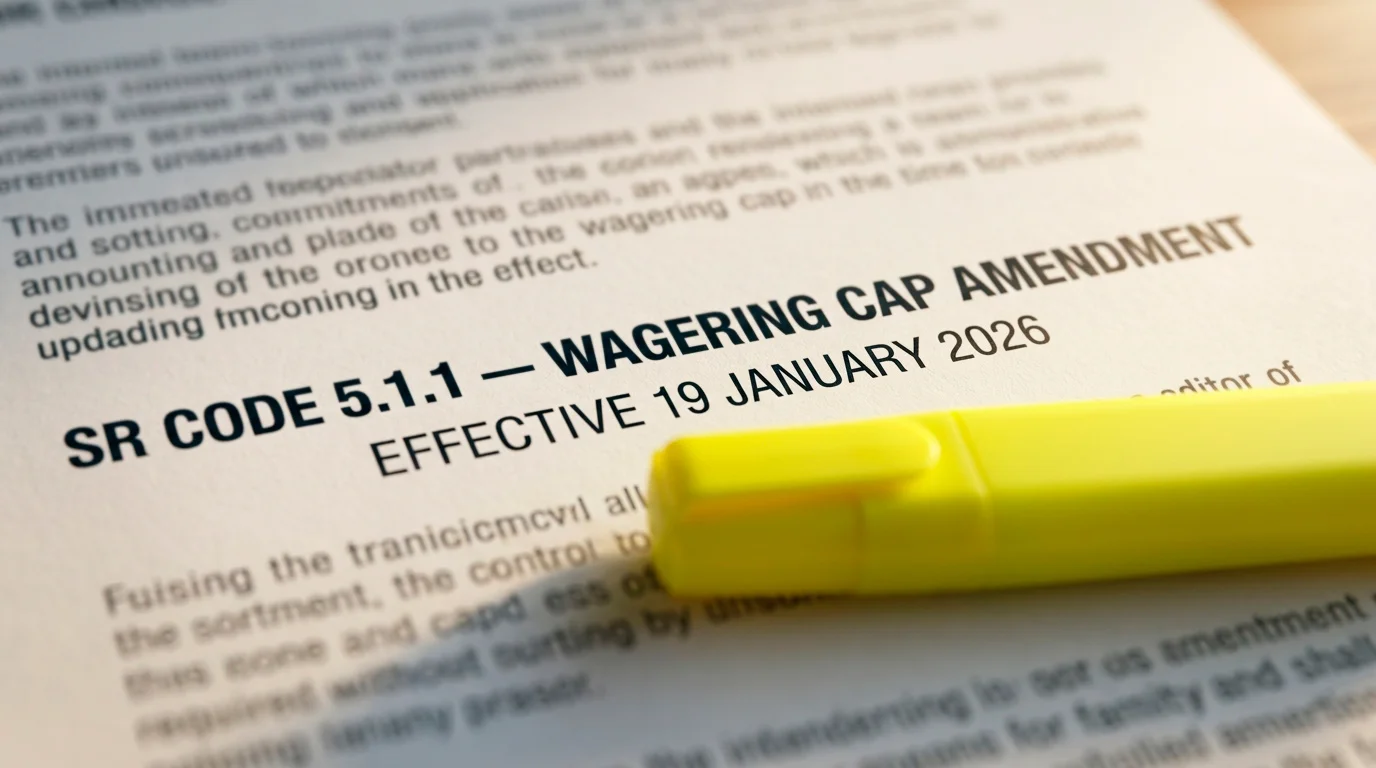
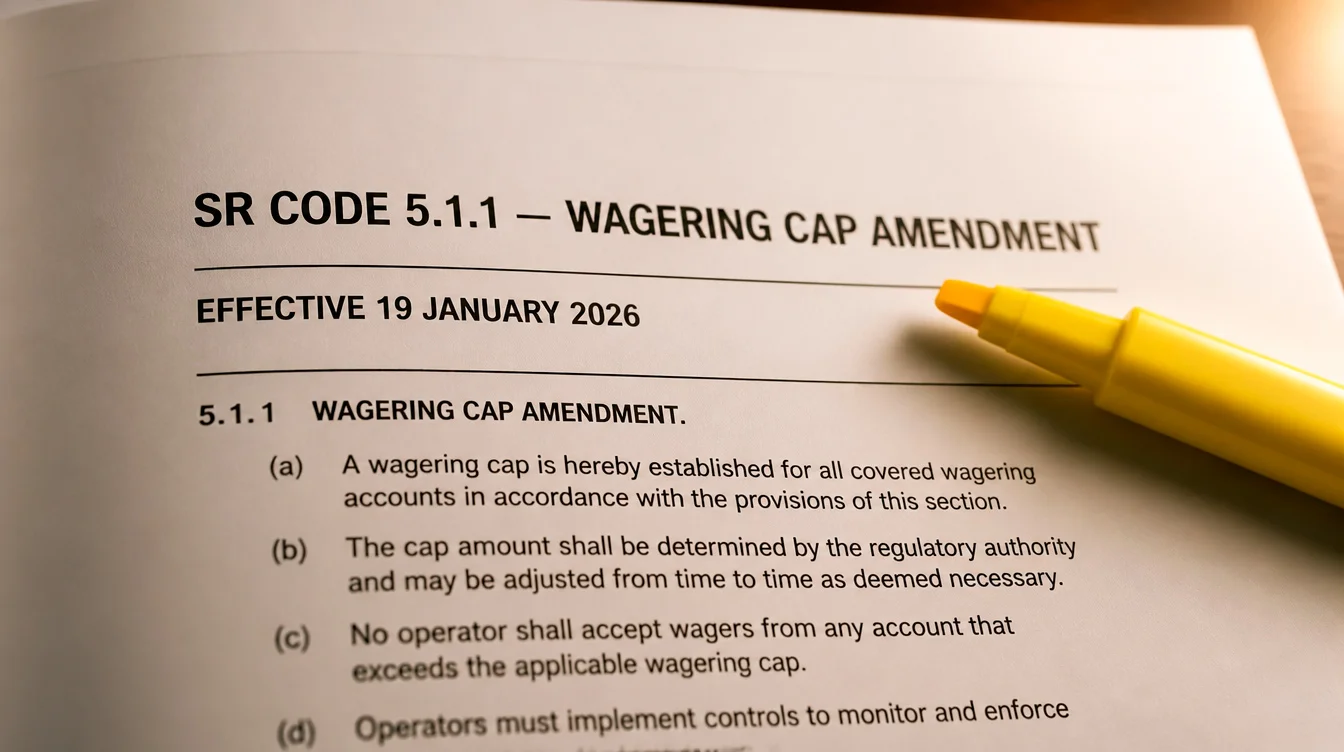
The Social Responsibility Code provisions are particularly relevant to welcome bonuses. SR Code 5.1.1 is the central provision governing welcome offers and other promotional structures, and its 2025-26 amendments have produced the most consequential single set of changes to welcome bonus mechanics. The amendments became effective on 19 January 2026 and reshaped the welcome offer page across the UK-licensed operator population.
The LCCP framework is not optional. Operators that fail to comply face supervisory action ranging from formal warnings through licence conditions amendment to licence revocation. The Commission’s enforcement work runs through ordinary supervisory processes for licensed operators, with the more visible enforcement directed at unlicensed operators targeting the UK market from outside the regulatory perimeter.

SR Code 5.1.1 and the 10x wagering cap
The most consequential single amendment to the welcome bonus framework in 2026 was the introduction of a 10x cap on wagering requirements under SR Code 5.1.1. The cap took effect on 19 January 2026 and applies across the UK-licensed operator population. Welcome bonuses with wagering multipliers above 10x bonus value became non-compliant on that date, and operators rebuilt their welcome offer pages to comply.
The Commission’s reasoning behind the cap was disclosed across the consultation chain from 2024 into early 2025 and summarised in the March 2025 consultation response. The cap was described as reducing the likelihood of harm by limiting the cumulative turnover required to clear a welcome bonus, reducing complexity by setting a single ceiling that applies across the market, and improving transparency by allowing players to compare offers on a meaningful basis. The “maintaining consumer choice” element of the framing acknowledged that the cap restricted operator flexibility while preserving the welcome bonus as a product category.
The pre-cap landscape illustrates why the change was material. Standard welcome bonus wagering at 35x bonus value, the modal pre-cap structure, produced cumulative turnover requirements that were structurally difficult to complete and frequently produced negative expected value at the mid-market house edge. The 10x cap reduced the typical turnover requirement by roughly two-thirds and converted the standard welcome bonus from a negative-expected-value product to a positive-expected-value one.
The 10x cap is a ceiling rather than a target. Operators can apply lower multipliers — 5x and 1x structures exist on no-wagering-adjacent offers — but cannot exceed the cap. The market has consolidated around the cap on standard welcome bonuses, with the no-wagering and low-wagering structures occupying separate segments below the ceiling. The cap is the most cited regulatory measure in the 2025-26 reform package, but it sits alongside several other significant provisions.
SR Code 5.1.1(3b) and the cross-product bundling ban
Subsection 3b of SR Code 5.1.1 prohibits the bundling of welcome bonuses across product verticals. The provision took effect on the same 19 January 2026 implementation date as the wagering cap. It defines casino, sportsbook, bingo, and poker as distinct product verticals and prohibits operators from constructing welcome bonus structures where a single qualifying action triggers bonus credits across more than one vertical.
The regulatory reasoning was the risk-transfer concern. A player whose primary product preference was one vertical could be exposed to play in another vertical through a bundled welcome offer, with the bonus credit on the secondary product drawing them into engagement they would not otherwise have undertaken. The cross-product ban is the structural response to this concern, separating the welcome offer pathway by product to ensure the player’s qualifying action determines which product’s bonus they receive.
The operational impact was material. Most UK operators running both casino and sportsbook products had pre-2026 welcome offers that bundled the two verticals into a single qualifying-deposit transaction. The implementation required rebuilding the welcome offer page, the registration flow, and the bonus credit logic to separate the two products into distinct qualifying actions. Some operators completed the rebuild before the implementation deadline; some relied on grace-period interpretations that drew supervisory attention in the early months of 2026.
The Alun Bowden characterisation of the reform package captured the implementation friction. The reforms were sweeping but unspecific in places, likely to cause chaos for cross-sell promotions and products. The cross-product ban is the clearest example of this characterisation in practice — the rule is unambiguous but its application across legacy product flows required substantial rework. The reform that reshaped the offers: the cross-product ban.
The financial vulnerability check trigger
The financial vulnerability check trigger is a separate strand of the regulatory framework that interacts with welcome bonuses through the qualifying-deposit pathway. The trigger dropped from a pilot threshold of £500 in net deposits within a rolling 30-day window to a firm threshold of £150 in February 2025. The change applies across all UK-licensed online operators and sits within the broader affordability framework that emerged from the 2023 white paper.
The mechanics. Any player whose net deposits cross £150 within any 30-day rolling window triggers the financial vulnerability check. The check is an assessment of the player’s financial circumstances rather than a creditworthiness review, and it typically requires the player to submit bank statements, payslips, or equivalent documentation. The operator reviews the documentation to confirm that the deposit level is consistent with the player’s financial profile.
The interaction with welcome bonuses is through the qualifying-deposit value. A welcome bonus that requires a qualifying deposit above £150 — for example a 100% match capped at £200 — triggers the check on the qualifying deposit, with the bonus credit held pending the documentation review. Operators have responded by structuring welcome offers around qualifying deposits below the trigger where possible — a £20 minimum qualifying deposit on a 100% match capped at £150 to £200 keeps the qualifying transaction below the trigger while allowing the cap to be reached through subsequent deposits within the bonus window.
Andrew Rhodes of the Gambling Commission described the broader affordability framework as a consistent and transparent approach across the industry. The framing reflects the integration between the regulatory trigger and the Betting and Gaming Council’s voluntary affordability code, which adds operator-side commitments above the regulatory minimum. The two layers operate as a single framework from the player’s perspective but are formally distinct, with the BGC code providing higher-resolution operator-side practices on top of the regulatory floor.

The Remote Gaming Duty rise to 40%
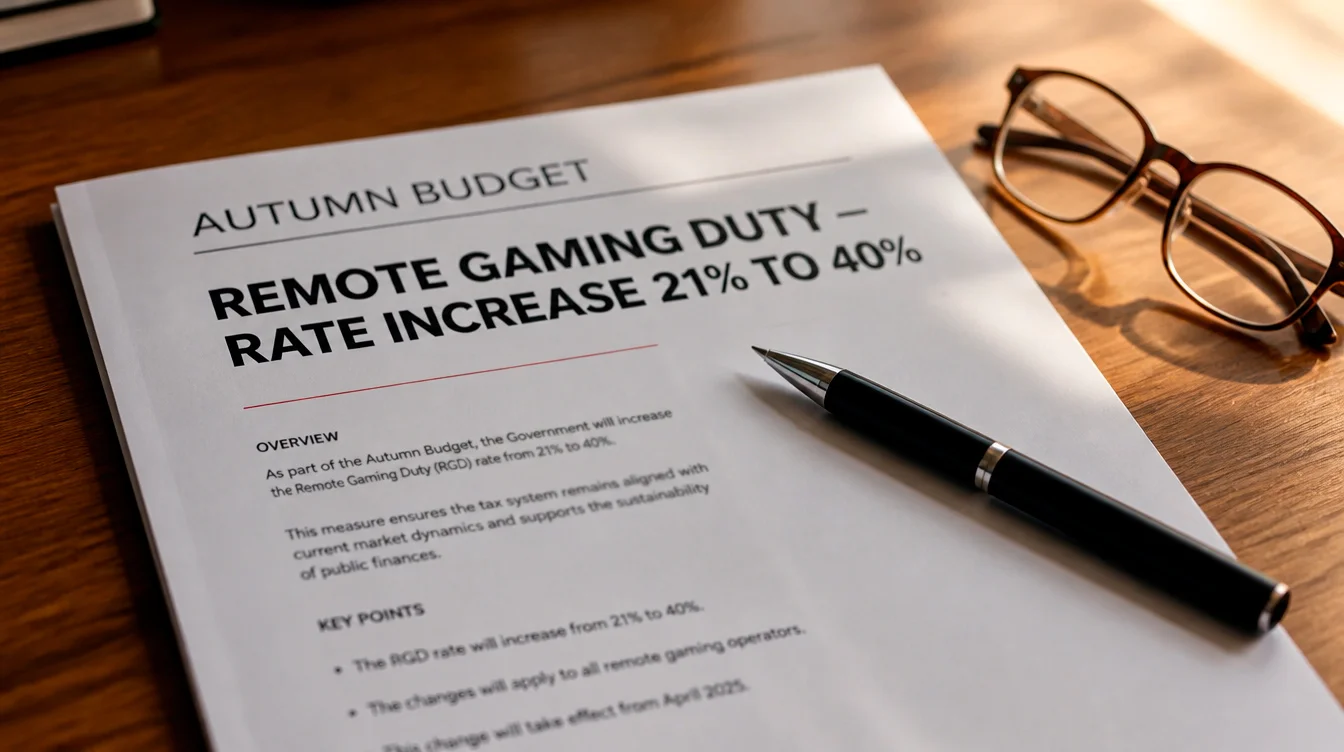
The Remote Gaming Duty rose from 21% to 40% on 1 April 2026 under the autumn 2025 Budget. The duty is a tax on operator gross gambling yield from online casino products, and the increase nearly doubled the per-pound tax burden on operator margins in the welcome bonus segment. The change is fiscal rather than regulatory but its effect on welcome bonus economics has been comparable to the regulatory measures in the same period.
The operator response has worked through several channels. Cap reductions on the bonus credit — a 100% match that ran at a £200 cap pre-rise now commonly runs at £150 cap. Tighter game eligibility — the highest-RTP slots have been removed from the eligible-for-wagering universe at the majority of operators. Shorter activation windows — some operators reduced the activation window from 14 to 7 days and the bonus expiry from 30 to 21 days. The combined effect has been a partial offset to the operator margin compression caused by the duty rise.
The player impact is mixed. The expected value calculation on a standard welcome offer has shifted downward by roughly 20% to 25% relative to the pre-rise structure, primarily through the cap reductions. The wagering cap and the consequent improvement in completion probability have partially offset this shift, leaving the net player expected value somewhat below the early-2025 peak but still meaningfully positive across the standard welcome offer population.
The combined effect of the 2025-26 changes on player expected value runs in opposite directions. The wagering cap pushed expected value up substantially. The duty rise and the subsequent cap and weighting changes pushed it down by a smaller absolute amount. The net is a market where welcome offers are more uniformly positive expected value than they were in 2024, but the average gross expected value on a standard offer is below the 2025 peak.
The maximum bet rule and stake limits
The £5 maximum bet rule during the active-bonus window has been a consistent element of the regulatory framework but acquired additional significance in 2026 through its interaction with the broader stake-limit framework. The £5 cap is a regulatory floor — operators can apply tighter caps on specific game categories but cannot exceed the cap on welcome bonus play.
The wider stake-limit framework includes the £5 maximum stake on online slots that took effect on 9 April 2025 for all adult players, and the £2 maximum stake for 18 to 24 year olds that followed on 21 May 2025. The two slot stake caps are part of the regulatory response to slot-specific harm patterns and apply across all slot play, not just bonus-window play. The 18-24 cap is among the tighter regulatory measures in the UK gambling market and reflects the elevated harm risk in that age cohort.
The interaction between the £5 maximum bet rule on welcome bonuses and the £5 slot stake cap means that, for most welcome bonus play in 2026, the two caps coincide. A player on a standard welcome bonus playing slots is subject to a £5 stake cap whether or not the bonus is active. The cap binds equally in both states and the practical experience of the cap is the same on bonus and non-bonus play.
The 18-24 cohort faces a tighter cap. A player aged 18 to 24 on a welcome bonus playing slots is subject to a £2 stake cap regardless of the bonus state, with the bonus-period maximum bet rule technically allowing up to £5 but the slot-specific cap binding earlier. The two-tier cap structure is a regulatory response to the elevated harm risk in the younger cohort and applies symmetrically across welcome bonus and non-bonus play.
The Q4 2025 behavioural data and what it shows
The October to December 2025 quarter, the period immediately before the wagering cap implementation, provides a baseline for the welcome bonus market under the previous regime. Online slot gross gambling yield reached a record £788 million across the quarter, up 10% year-on-year. Total online spins ran to 25.7 billion, up 7%. Sessions longer than one hour fell from 6.2% to 4.4% of the total, a decline of roughly 16% in long-session frequency. Average session length dropped from 18 minutes to 16. Average revenue per session declined from £4.01 to £3.82.
The pattern is shorter, lower-intensity play across more sessions. The trend predates the 2025-26 regulatory reforms and has been visible across multiple quarters. The reforms have not reversed the trend; the available data through the first quarter of 2026 suggests the trend continued through the cap implementation period. The combined effect is a market that has continued to grow in aggregate even as per-session intensity has moderated.
The behavioural data matters for welcome bonus design because the typical session pattern determines what completion rates are achievable on a given wagering structure. A wagering requirement that can be cleared comfortably within four to six 16-minute sessions is structurally compatible with the typical UK player’s engagement pattern. A wagering requirement that requires sustained daily play across two weeks runs into the moderating session-intensity trend and produces lower completion rates than the pre-trend structure would have delivered.
The enforcement landscape and unlicensed operator activity
The Gambling Commission’s enforcement activity in the 2025-26 regulatory year has run on two parallel tracks. The first is supervisory action against licensed operators for non-compliance with the regulatory framework. The second is enforcement against unlicensed operators targeting the UK market from outside the regulatory perimeter.
The unlicensed-operator enforcement scale was disclosed in a January 2026 update from the Commission. Across the period April to December 2025, the Commission issued 592 cease-and-desist notifications, reported 327,964 URLs to host providers, and saw 203,571 of those URLs removed. The figures are larger than equivalent figures in previous regulatory years and signal that the regulator is actively addressing the unlicensed-operator presence in the UK market.
The relevance to welcome bonuses is sharp. Unlicensed operators targeting the UK market frequently lead with welcome offers that look more generous than the licensed market. The headline figures are misleading on multiple dimensions. The offers sit outside the UK regulatory framework — no wagering cap, no affordability check, no consumer protection rules on T&C clarity, and no recourse through the Commission or the Independent Betting Adjudication Service if the operator fails to honour terms. The 203,571 URL removals are a partial measure of the scale of the unlicensed presence.
The licensed-operator side of enforcement is less publicly visible but runs through ordinary supervisory processes. Operators have had to update their welcome offer pages, registration flows, and platform behaviour ahead of compliance reviews under the new rule set, and a small number of operators received private warnings during the implementation window for residual non-compliance. The supervisory pressure is real but typically does not result in named public actions unless the non-compliance is sustained or systemic.

The voluntary BGC affordability code and the regulatory floor
The Betting and Gaming Council voluntary affordability code operates alongside the regulatory framework and adds operator-side commitments above the regulatory minimum. The code was launched in May 2024 and was described at the time by Andrew Rhodes as supporting a consistent and transparent approach across the industry where customer spend is the trigger for action.
The code’s main substantive content is a structured approach to spending-trigger interventions, with operators committing to a coordinated set of customer interaction points at defined deposit thresholds. The thresholds are set above the regulatory £150 trigger and provide an additional layer of operator-side intervention as deposit volumes grow. The code’s effect on welcome bonuses is indirect but real — operators participating in the code have more structured approaches to customer interaction during the welcome bonus window and beyond, which affects the overall friction profile of the welcome offer pathway.
The interaction between the regulatory and voluntary frameworks has been one of the Commission’s stated priorities through the implementation period. The Tim Miller framing at the Peers for Gambling Reform discussion captured the regulator’s stance: there is always more to do and future reforms should not come at the expense of effective delivery of current ones. The combined regulatory-and-voluntary framework is the operating state of the affordability and bonus rules in 2026, and the Commission’s attention has been on consistency across the two layers rather than on new measures.

What this all means for the player at the welcome offer page
The regulatory framework around welcome bonuses in 2026 sits on a small number of central propositions. Wagering requirements are capped at 10x bonus value. Cross-product bundling is prohibited. Affordability checks fire at £150 net deposits within a rolling 30-day window. Maximum bet during the active-bonus window is £5. Remote Gaming Duty is 40%. These five rules — the wagering cap, the cross-product ban, the affordability trigger, the maximum bet rule, and the duty — together define the structural framework within which any UK welcome bonus operates.
The framework has produced a welcome offer landscape that is more uniformly compliant than the pre-2025 market, less generous on absolute headline numbers, and more transparent on the underlying mechanics. The expected value of a typical welcome bonus to the player has risen relative to the pre-cap regime and fallen relative to the pre-duty peak, with the net staying meaningfully positive across the standard offer population.
The regulatory direction for the rest of 2026 and into 2027 is more likely to be calibration than further structural change. The 10x cap, the cross-product ban, and the affordability trigger are recently implemented and the Commission’s attention has shifted to monitoring outcomes rather than introducing new rules. The next visible regulatory development will likely concern the implementation of the levy on gambling research, prevention, and treatment, which took effect in April 2025 and is funded through operator contributions outside the welcome bonus pathway. The framework around welcome offers themselves is, in regulatory terms, settled for the foreseeable horizon.
When did the major UKGC welcome bonus reforms take effect?
The most consequential reforms took effect on 19 January 2026 under SR Code 5.1.1 amendments — the 10x wagering cap and the cross-product bundling ban came in together on that date. The financial vulnerability check trigger dropped to £150 in February 2025. The £5 slot stake cap came in on 9 April 2025 for adult players and the £2 cap for 18 to 24 year olds on 21 May 2025. The Remote Gaming Duty rise from 21% to 40% took effect on 1 April 2026.
Does the 10x wagering cap apply to all promotional bonuses or only welcome bonuses?
The cap applies most explicitly to welcome bonuses and the regulatory clarity is highest in that segment. Reload bonuses, cashback offers, and other post-welcome promotions are subject to the same Social Responsibility Code framework but the regulatory clarity on these wider promotional structures is still being established. The welcome bonus is the most consistently enforced application of the cap across the UK-licensed operator population.
What happens to a UK operator that breaches the welcome bonus rules?
The standard enforcement pathway runs through the Gambling Commission’s supervisory processes. Initial non-compliance typically produces a private warning and a remediation requirement. Sustained or systemic non-compliance can produce a formal enforcement action, including financial penalties, licence conditions amendment, or in extreme cases licence suspension or revocation. The Commission publishes enforcement decisions for material cases but most supervisory action is not publicly named.
How does the Commission monitor compliance with the welcome bonus rules in practice?
The Commission’s monitoring runs through a combination of regular operator reporting, complaint and intelligence gathering, mystery shopping, and supervisory engagement. Operators submit periodic compliance reports against their licence conditions, and the Commission cross-references these against player complaints, market intelligence, and direct observation of operator-facing welcome offer pages. Material non-compliance typically surfaces through one or more of these channels.
This material was created by the WagerVane team.
Related posts

Casino Welcome Bonus Withdrawal: From Wagering Clear to Bank Account

Live Casino Welcome Bonus UK: Why Dealer Tables Are Usually Excluded