100% Match Casino Welcome Bonus: When Doubling Your Deposit Pays
 Available in GB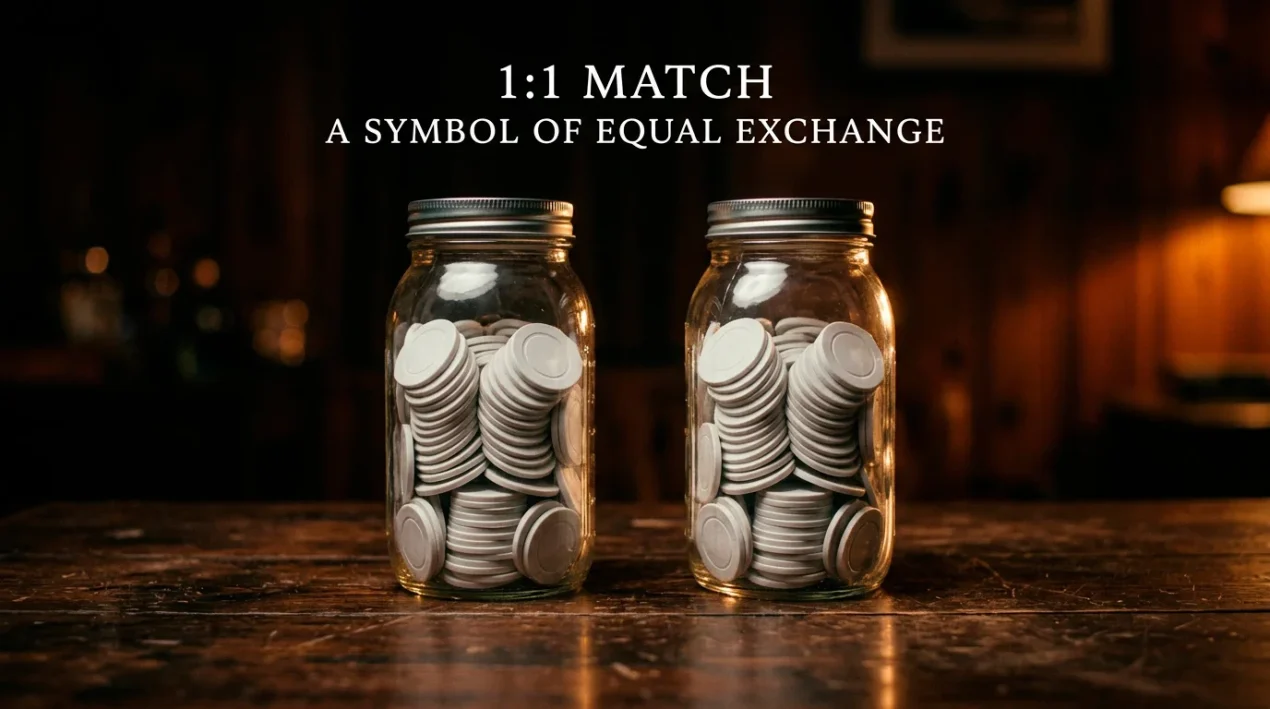
Why 100% Became The Default Shape
If you scan the UK welcome bonus landscape for an afternoon, the headline that recurs more than any other is some version of ‘deposit £20, play with £40’. The 100% match has become so universal that newer designs are usually expressed as deviations from it — a 200% offer is sold as ‘better than the standard match’, a 50% offer as ‘easier to clear than the usual one’. The 100% match is the reference point everything else is measured against.

That reference status is not an accident. It is the only match ratio that creates a symmetric proposition: half the playable balance is the player’s risk, half is the operator’s marketing spend. Below 100% the player carries more skin in the game than the operator. Above 100% the operator is exposed beyond the headline deposit, which forces compensating restrictions in the small print that almost always erode the apparent generosity. The full picture is in our guide to the UK casino welcome bonus.
The Symmetry That Makes The Maths Honest
A 100% match has a clean mental model. You deposit £20. The operator credits a £20 bonus. Your playable balance is £40. From the player’s side, the operator has provided a 1:1 marketing budget against your stake. From the operator’s side, the bonus liability equals the deposit it is paired with, so the maximum loss from a perfectly variance-fortunate player is bounded by the bonus pool, not the deposit.

Symmetry is also what lets the wagering ceiling work cleanly. Under Social Responsibility Code Provision 5.1.1, wagering on the bonus portion is capped at 10× the bonus value. A £20 bonus requires £200 of turnover. At a 4% house edge the expected friction across that turnover is £8. The bonus is theoretically positive-EV before the conversion cap is applied, and only mildly negative-EV after it. The post-reform 100% match is the closest the UK market gets to a fair bonus that still functions commercially. How it sits against the alternatives: the bonus types.
Compare that to a 200% match. Deposit £20, receive £40 in bonus, play with £60. Wagering on £40 of bonus at 10× is £400 of turnover, with expected friction of £16. The headline is bigger; the turnover is doubled, the friction is doubled, and the conversion cap is the same. The Commission’s view on the cap is that it ‘decreases the likelihood of harm, reduces complexity, and improves transparency while maintaining consumer choice’ — and the choice landscape post-reform actually disfavours large-match offers, because the underlying expected value to the player gets worse as the headline percentage rises.
Where The Minimum And Maximum Sit
The qualifying deposit window matters as much as the percentage. UK operators run minimum qualifying deposits between £10 and £20 across nearly every 100% match on the market. The maximum the match applies to varies more — the modal cap sits at £50 or £100, with a thinner tail running to £200 or £500 on high-roller-aligned offers.
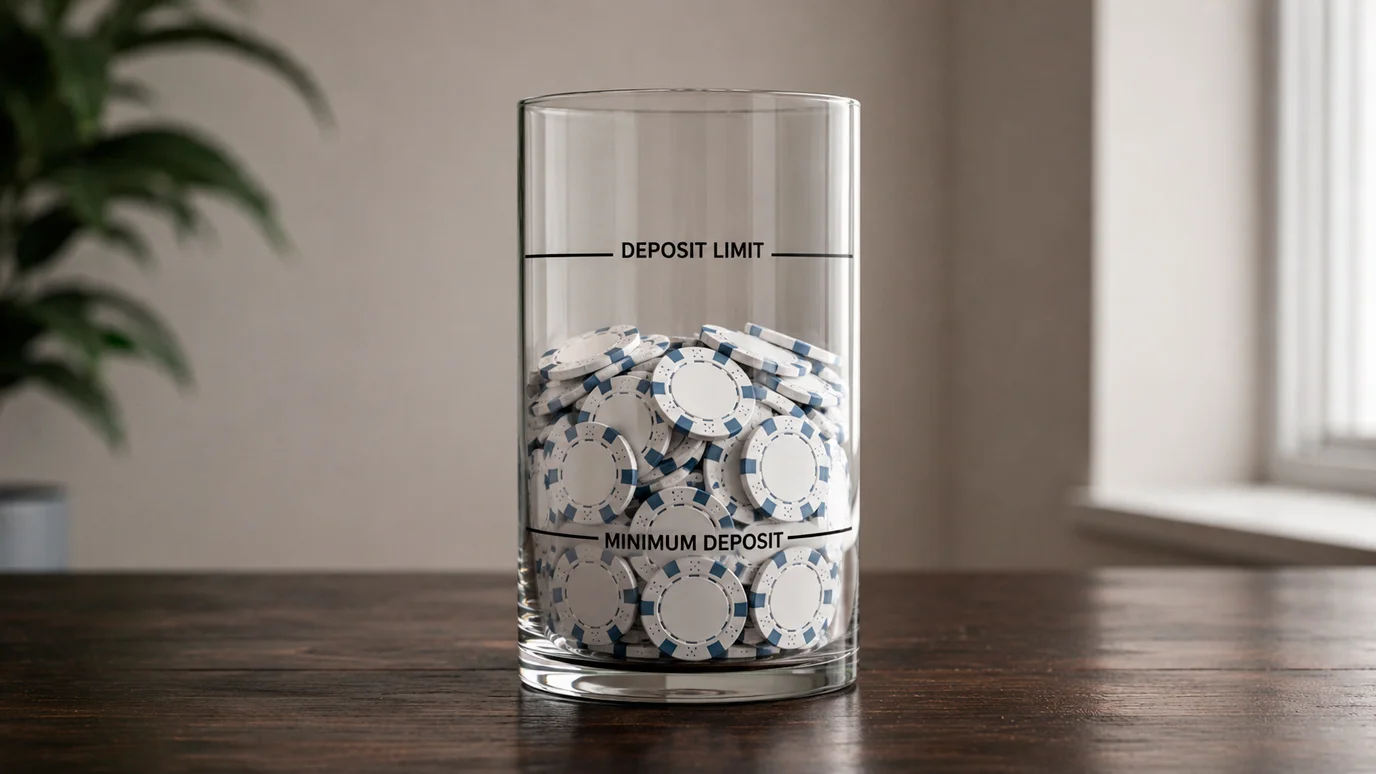
A practical illustration. A 100% match capped at £100 means a £200 deposit produces a £100 bonus, not a £200 bonus. The portion of your deposit above £100 sits in your cash balance untouched. That is fine — the cash portion is real money, withdrawable at any time, with no wagering attached. But it is the source of the most common reader complaint I read: ‘why didn’t I get £200 of bonus on my £200 deposit’. The answer is always in the cap, which is always in the headline T&Cs, and which is almost always invisible to a player whose attention was captured by the percentage figure.
I have a quiet rule for myself when evaluating these offers. The ratio between the maximum match and the minimum qualifying deposit tells you everything about who the offer is designed for. A 100% match with a £10 minimum and a £50 maximum is acquisition-led, targeting casual players. The same percentage with a £20 minimum and a £500 maximum is geared toward higher-deposit segments where the operator wants the qualifying spend to be substantial before crediting the bonus.
How Marketing Inflates Pieces Of The Same Headline
The phrase ‘up to £200 bonus’ is the most frequently misunderstood headline in the market. It does not mean every player gets £200. It means a £200 deposit gets a £200 bonus, and any deposit smaller than that gets a proportional bonus. A £20 deposit on the same offer gets a £20 bonus. The maximum figure is purely a ceiling, not a baseline.

The Commission has commented on this directly. The reforms were positioned as protections that ‘will better protect consumers from gambling harm and give consumers much better clarity on, and certainty of, offers before they decide to sign up’. Clarity around the size of the headline figure is exactly the friction that comment is aimed at. The mandatory wagering requirements calculator that operators now have to display reinforces the same shift — the player should be able to see, in pounds, exactly what the offer entitles them to before they commit a payment.
The marketing tactic to watch for is the bundled ‘up to’ figure that aggregates a match with spin volume. ‘Up to £200 plus 100 spins’ reads as one number — it is in fact two unrelated parts of the bundle, each with its own cap, eligibility window, expiry and wagering. Where the bundle is split into a multi-deposit package the structure becomes more complex still, and worth analysing as a separate type rather than as a 100% match. For readers wanting side-by-side expected-value workings on three real UK offer shapes, the comparison there breaks the parts down arithmetically.
Withdrawal Behaviour After A 100% Match
Clearing the wagering on a 100% match is the easier half of the journey. The harder half is the withdrawal process, which involves three structural quirks worth knowing about. First, the deposit method usually has to match the withdrawal method. If you deposited by debit card, the first withdrawal returns to the same card, even if you would prefer it to go to a bank account. The reasoning is anti-money-laundering policy, not bonus terms — but it shows up in the same paperwork.

Second, the conversion ceiling on a 100% match is usually higher than on no-deposit or free-spin offers, because the player has put real money on the table. I commonly see ceilings expressed as a multiple of the bonus value — 4× and 6× are typical, with 10× appearing on the more generous offers. A 4× ceiling on a £20 bonus means a maximum £80 withdrawal of bonus-derived winnings, ignoring the deposit portion which is uncapped if you have not bet it.
Third, reverse withdrawals — the option to cancel a pending withdrawal and put the funds back into play — are increasingly restricted on bonus-derived balances. This is partly a player-protection design and partly a reflection of operator margin pressure after the Remote Gaming Duty rise to 40% from April 2026. Some operators apply the restriction only during the first 24 hours after submission, others remove the option entirely on bonus funds. The trend across the market is firmly toward removing reverse withdrawals on any balance that touched a bonus.
The Quiet Case For Skipping The Match
I tell most readers who ask that the 100% match is a reasonable offer if you were going to deposit anyway, and a poor reason to deposit if you were not. The bonus does not change the underlying expected value of the slot you intend to play; it changes the volatility of the session by enlarging the starting balance. For a player comfortable with a £20 risk, the match doubles the playing time at the cost of attaching wagering to half the balance. That is a usable trade. For a player who was not going to deposit £20 at all, the match is an inducement to spend money they did not plan to spend, which is exactly the harm vector the Commission’s reforms were aimed at reducing.

The cleanest framing I have ever heard from a reader put it like this: ‘the bonus is worth claiming if I would have played without it, and a warning sign if it is the reason I played at all’. That distinction is not in any operator’s T&Cs, and it should be.
Frequently Asked Questions
Why don’t 200% match offers usually beat 100% match in true value?
The maximum conversion cap and the 10× wagering ceiling both scale with the bonus, not with the headline ratio. Doubling the match doubles the turnover requirement and the expected friction across it, while the conversion ceiling on bonus-derived winnings often stays the same in pound terms. The result is a larger nominal bonus with worse expected value per pound deposited. A 200% match also tends to attract tighter conversion ceilings and stricter game weighting tables, which compound the erosion.
Does the 100% match apply to the qualifying deposit or to subsequent reloads?
The welcome 100% match applies only to the first qualifying deposit made within the activation window — typically 7 to 30 days from registration. Reload bonuses are a separate category with their own T&Cs and are not part of the welcome offer. Some operators run a multi-deposit welcome package where second, third and fourth deposits each attract a percentage match, but those are negotiated under a different LCCP framework and have to be presented as a single bonded offer at registration.
Are debit-card-only 100% matches harder to clear than e-wallet ones?
The wagering and conversion mechanics are identical regardless of deposit method, but debit-card-only offers usually exclude Skrill, Neteller and Paysafe to prevent bonus abuse via prepaid funding. PayPal is increasingly accepted on welcome offers, although deposit and withdrawal limits inside PayPal itself can interact awkwardly with the bonus cap. The clearing experience does not change once the bonus is credited; the difference sits at the deposit step.
This material was created by the WagerVane team.
Related posts
Casino Welcome Bonus Withdrawal: From Wagering Clear to Bank Account

Live Casino Welcome Bonus UK: Why Dealer Tables Are Usually Excluded