Skrill and Neteller Casino Welcome Bonus Exclusion: Why E-Wallets Lose Out
 Available in GB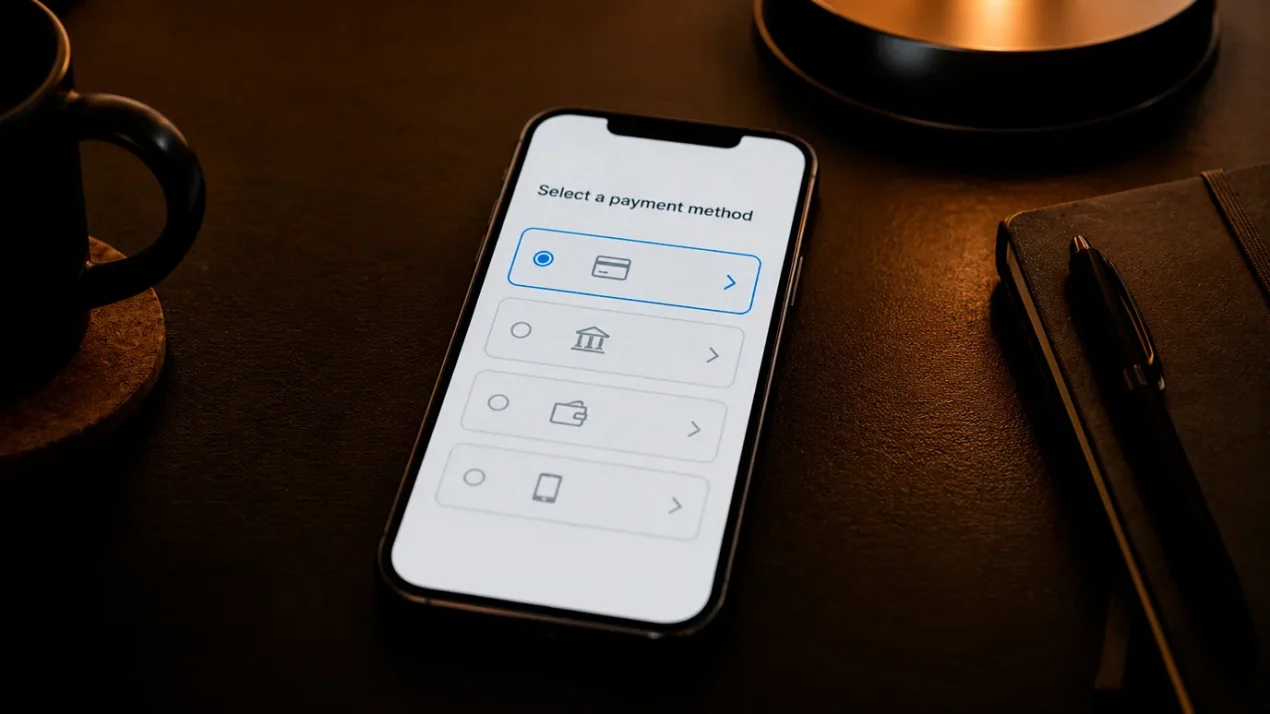
The Footnote That Costs Players More Than They Realise
A reader deposited £40 via Skrill at a UK-licensed operator last winter, expecting a £40 match. The bonus did not credit. Customer service explained, three days later, that Skrill deposits were excluded from the welcome bonus and pointed him at a clause buried on page two of the terms. He had read the headline copy. He had not read the payment method exclusion list. He is hardly unusual. The exclusion is one of the most widely applied conditions in the UK welcome bonus market and one of the least visible at the point of deposit. The pattern stays consistent against a market backdrop where the Q3 2025-26 slots GGY reached a record £788 million, up 10% year on year — operators are processing more deposits than ever, and the payment-method exclusion is doing more economic work than ever. The full picture is in our guide to the UK casino welcome bonus.

How The Exclusion Settled Into A Market Convention
The Skrill and Neteller exclusion did not begin as a regulatory requirement. It emerged as a market convention in the early 2010s, when operators began noticing that bonus claims from certain e-wallet deposits showed materially different behavioural patterns from card or bank deposits. The patterns suggested deliberate bonus farming — accounts that deposited, played minimum-stake wagering, withdrew the conversion ceiling, closed the account and never returned. The e-wallets in question made multi-account creation administratively easier than card-based deposits did.
The first operators to add the exclusion did so quietly, in updates to terms and conditions, without marketing communication. Other operators followed within a year. By 2015 the exclusion was standard across the regulated UK market and had spread to Paysafecash and prepaid Paysafe instruments. By 2018 some operators had extended the exclusion to all e-wallets — PayPal included — though the PayPal exclusion has since been partially reversed at many operators in response to consumer demand.
The result is a market in which Skrill and Neteller deposits are functionally second-class for welcome bonus purposes at the majority of UK-licensed operators. The player can deposit using these methods, can play, can withdraw — but the welcome bonus does not credit. The cash deposit is processed normally and behaves as a non-bonus deposit. The asymmetry is not always communicated clearly at the deposit screen.

The Industry’s Stated And Unstated Reasons
The publicly stated reason for the exclusion is fraud prevention and the operator’s obligation under anti-money-laundering rules. Skrill, Neteller and Paysafe instruments are easier to fund anonymously than a UK bank-issued debit card, particularly in their earlier configurations, and the operator’s customer due diligence is harder to satisfy on a thin instrument trail. The argument has merit but does not fully explain why the exclusion targets welcome bonuses specifically rather than the deposit itself.
The unstated reason is bonus economics. The welcome bonus is the operator’s single largest customer acquisition cost. The expected lifetime value of a player acquired via a card or bank deposit is materially higher than the expected lifetime value of a player acquired via an e-wallet deposit, because the e-wallet deposit population skews younger, more bonus-aware and more multi-account-prone. Excluding the e-wallet population from the welcome offer compresses the operator’s acquisition cost more effectively than any other single contract clause.
Industry commentary on the broader compliance environment in 2025 noted that the UK Gambling Commission’s reforms had moved “in a frustratingly unspecific way that is likely to cause absolute chaos for cross-sell promotions and products”. The remark was about cross-product bundling, but it reflects a wider unease in the operator community about how broadly the regulator’s expectations can extend. The Skrill and Neteller exclusion sits in a less regulated corner of the contract — payment methods are operator choice rather than UKGC mandate — and operators have been reluctant to relax it.
The unstated reasoning gets clearer when you compare the wording of payment-method exclusions across operators. The clauses that lead with fraud language are doing the regulatory work. The clauses that lead with “promotional eligibility” or “bonus terms” are doing the bonus-economics work. Most contracts blend both, but the underlying purpose is dual.

The Current State Of E-Wallet Exclusions In The UK Market
The exclusions in the 2026 UK market are easy to summarise once you know what to look for. Skrill is excluded from welcome bonuses at nearly all UK-licensed operators. Neteller is excluded at the same set, almost identically. Paysafecash and prepaid Paysafe vouchers are excluded at a similar majority of operators, though some smaller brands accept them for bonus purposes. The pattern is so consistent that “Skrill, Neteller, Paysafe excluded” can be assumed as the default unless the operator’s terms specifically say otherwise.
PayPal sits in a different category. PayPal was excluded across most of the market for several years, then partially reinstated by larger operators after consumer pressure. As of 2026, PayPal is bonus-eligible at a meaningful share of UK-licensed operators, though not all. The PayPal exclusion that remains is generally explained on transactional grounds — PayPal’s chargeback policies create operator exposure that other payment methods do not. The bonus economics argument is weaker for PayPal because the PayPal user demographic tracks more closely to the card-deposit demographic.
Apple Pay and Google Pay deposits behave like the underlying card. If the player’s Apple Pay routes through a UK debit card, the deposit qualifies for the welcome bonus on the same terms as a direct card deposit. If it routes through a stored prepaid instrument, the underlying instrument’s exclusion applies. The user interface does not always make the underlying routing visible, which is a source of occasional confusion.
Bank transfer, debit card and open banking deposits are the cleanest welcome-bonus-eligible methods across the UK market. They are the slowest to deposit in some cases and the fastest to clear in others, but the bonus eligibility is rarely in question. Credit card deposits are blocked across the UK market regardless of bonus considerations — the credit card ban that came in during 2020 applies to gambling deposits generally, not specifically to bonus claims.
The crypto question is straightforward in the UK licensed market: crypto deposits are not accepted at UKGC-licensed operators. The exclusion list does not need to mention crypto because the deposit itself is not permitted. Discussions of crypto eligibility for UK welcome bonuses are not coherent within the licensed regulated market and apply only to operators outside UKGC oversight.

What Happens If You Deposit Via An Excluded Method
The standard handling at most operators is for the cash deposit to clear normally and the welcome bonus simply not to credit. The player can play, can win, can withdraw — but the welcome bonus is not part of the balance. The deposit is treated as a non-bonus deposit and the player’s account is treated as a normal account. The welcome bonus offer typically expires on the account after a defined period, often the same period that applies to the bonus itself.
The less standard handling, which I have seen at a minority of operators, is more punitive. The deposit is held pending review, the player is contacted to confirm the deposit method, and the bonus is denied with a formal notice. In some cases the operator offers a substitute deposit route — usually card or bank transfer — and credits the bonus if the player re-deposits through the substitute method. The substitution offer is generous but rare; the more common outcome is straightforward bonus denial.
Mandatory regulation since 26 March 2025 requires UK-licensed operators to display the wagering requirement of any bonus in pound-denominated total turnover terms via the wagering requirements calculator. The same regulatory push toward transparency has put more pressure on payment-method exclusion language, and the better operators now display the excluded payment methods directly on the welcome bonus landing page rather than burying them in a clause. The worse operators still rely on the player reading the full terms.
The PayPal carve-out at some operators and the asymmetry between e-wallets has produced enough confusion that I generally recommend players check the welcome bonus terms page specifically — not the general payments page — to see which method qualifies at a given operator. The method that usually does qualify: PayPal deserves its own treatment because it behaves so differently from Skrill and Neteller.

The Choice The Player Actually Has
For the welcome bonus specifically, the cleanest deposit route in the UK licensed market is a debit card, an Open Banking instant transfer, or a direct bank transfer. These methods are bonus-eligible at essentially every UK-licensed operator, they clear quickly, and they do not produce the second-class treatment that the e-wallet exclusions do. The player who values speed of withdrawal on an e-wallet method can still deposit via the e-wallet after the welcome bonus phase concludes — the payment method choice at deposit affects the bonus eligibility, but does not constrain the withdrawal method indefinitely.
The smaller economic point worth registering is that the welcome bonus is a one-time event. Once it is claimed and cleared, the payment method exclusion becomes irrelevant for the player’s ongoing account. The choice of deposit method matters specifically at the welcome stage. After that, the e-wallet can be reactivated for routine deposits without affecting the cleared bonus. The exclusion is narrow in time even where it is wide in scope.

Why was the exclusion historically rolled out across operators simultaneously?
The exclusion spread across operators within roughly a year of the first one introducing it, because the bonus economics and fraud-prevention rationales applied across the licensed market in the same way. Industry information flow between compliance teams is good — operators participate in shared anti-fraud networks and exchange typology data — so when one operator’s analysis showed e-wallet deposits producing disproportionate bonus-farming behaviour, the same conclusion was reached at peer operators within a short window.
Does using a Skrill prepaid card change the exclusion outcome?
No, in most cases. The Skrill prepaid card is funded from a Skrill wallet, and operators that track funding source through the card network can identify the wallet origin. The exclusion applies to the underlying e-wallet account, not just to direct deposits from it. A small minority of operators treat prepaid card deposits as ordinary card transactions and do credit the bonus, but the safer assumption is that the Skrill-funded card produces the same exclusion outcome as a direct Skrill deposit.
Are crypto deposits treated like excluded e-wallets in 2026?
Crypto deposits do not arise within the UKGC-licensed market — operators holding a UK licence do not accept crypto as a deposit method. The question of crypto welcome bonus eligibility is therefore not really a licensed-market question. Operators outside UKGC oversight that accept crypto deposits sit outside the consumer protection framework that the licensed market provides, and any bonus terms offered there are not subject to the 10x wagering cap or the wagering requirements calculator requirement.
This material was created by the WagerVane team.
Related posts
Casino Welcome Bonus Withdrawal: From Wagering Clear to Bank Account

Live Casino Welcome Bonus UK: Why Dealer Tables Are Usually Excluded