Casino Welcome Bonus Withdrawal: From Wagering Clear to Bank Account
 Available in GB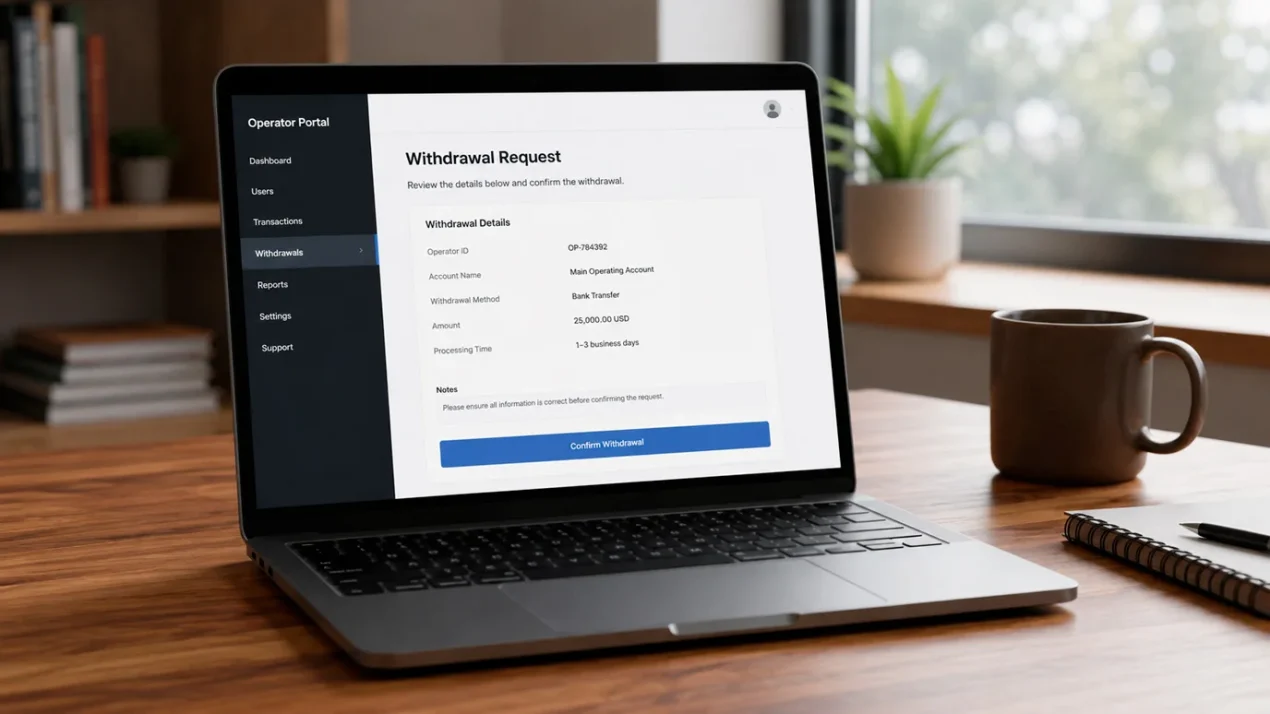
The Moment The Bonus Becomes Money You Can Actually Spend
I have walked dozens of readers through their first welcome bonus withdrawal over the years and the same surprises come up each time. The wagering clears, the balance shows a withdrawable figure, the player clicks the withdrawal button — and then a sequence of checks, delays and method requirements unfolds that no one quite expected from the welcome bonus marketing. The Q3 2025-26 figures put average monthly active slot accounts at 4.6 million across the UK online market, with the broader online total at 12.7 million. Most of those accounts will trigger a withdrawal process at some point that begins with bonus-derived winnings, and the path from cleared wagering to bank account is more structured than the deposit path was. Knowing the steps in advance is the difference between a smooth first withdrawal and a frustrated week of back-and-forth with customer service. The full picture is in our guide to the UK casino welcome bonus.

What ‘Wagering Clear’ Actually Means On The Balance
The wagering-clear state is the moment when the bonus’s required turnover has been completed and the bonus value plus any winnings derived from bonus play have transitioned into withdrawable cash. The transition is automatic on the operator’s back end — the bonus engine tracks turnover progress in real time, and the bonus status changes from ‘active’ to ‘cleared’ at the moment the required figure is reached.
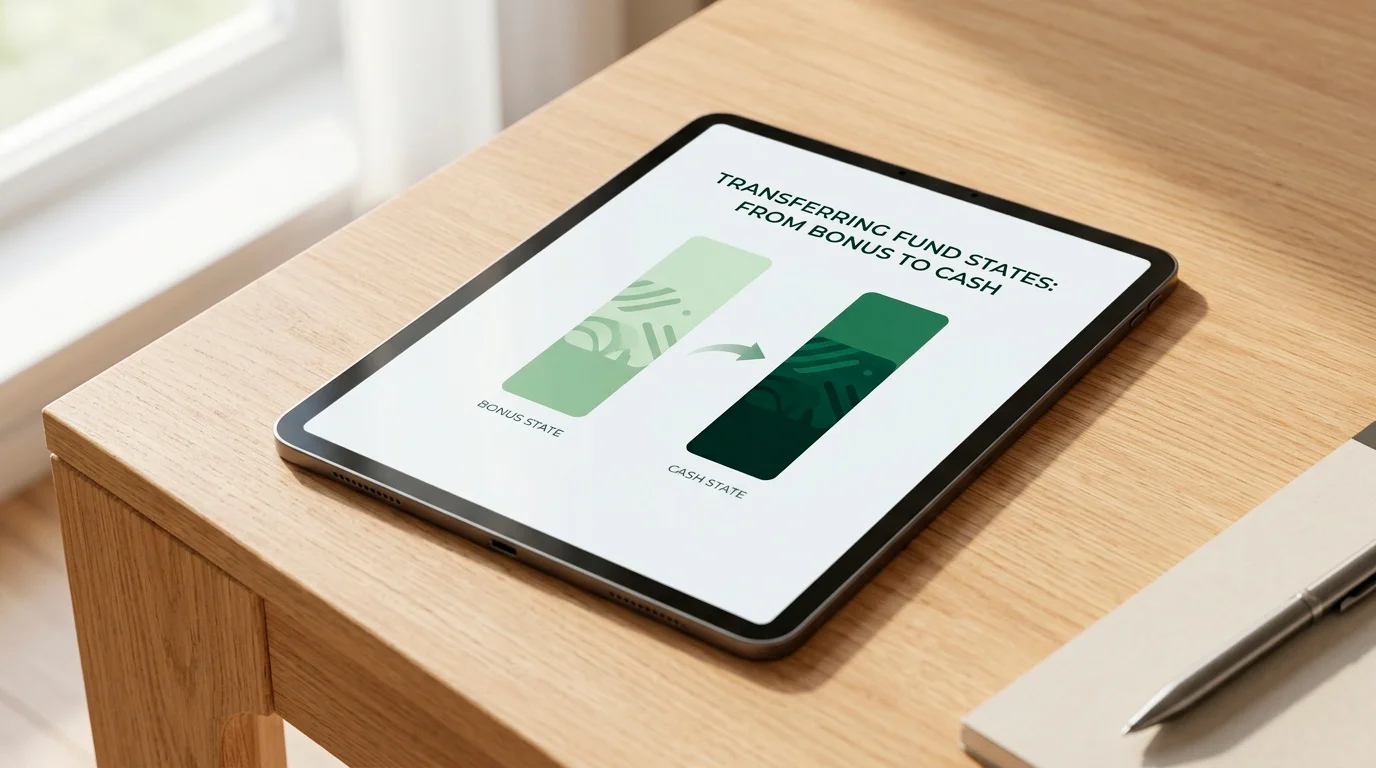
The displayed balance changes in a specific way at clearance. Before clearance, the playing balance is composed of cash funds (the deposit and any cash winnings from non-bonus play) and bonus funds (the bonus value plus any winnings derived from bonus play). The two are tracked separately. After clearance, the bonus funds — to the extent they sit within the conversion ceiling — become part of the cash balance. The bonus funds above the conversion ceiling are forfeited at the moment of clearance, not retained as a deductible carry-over.
The conversion ceiling effect is the part of clearance that catches some players off-guard. A £50 bonus with a 3x conversion ceiling produces a maximum bonus-derived withdrawable of £150. If the wagering completes with a closing balance that includes £200 of bonus-derived value, the £150 enters cash and the £50 above the ceiling is forfeited. The player who has been watching the balance climb above the ceiling expects to keep the full figure; the conversion ceiling reduces the withdrawable amount at the moment of clearance.
The withdrawal can be initiated immediately on clearance. Some operators offer a one-click ‘cash out’ option on the balance overview; others require navigation to the dedicated withdrawal section. The withdrawal request triggers the operator’s compliance review for the specific withdrawal, which is separate from the compliance review that ran at first deposit.
Why The Withdrawal Route Has To Match The Deposit Route
The matching rule applies across UK-licensed operators and is one of the cleaner standards in the welcome bonus market. The withdrawal must go back to the same payment method that funded the deposit, up to the amount of the original deposit. Withdrawals above the deposit amount can sometimes go to an alternative method, but the deposit portion specifically must return to its source.

The rationale is part anti-money-laundering, part fraud-prevention, part operator-side risk control. The deposit funds are the player’s money; returning them to the source confirms the player’s ownership of the originating account and prevents the operator from being used as a fund-transfer mechanism between accounts. The bonus-derived winnings above the deposit amount can be paid out by alternative methods at some operators because they did not originate from the alternative method — they are operator-side payments to the player rather than refunded player deposits.
The matching applies on a per-method basis rather than on an aggregate basis. A player who deposited via a UK debit card cannot have the withdrawal routed to PayPal, even if PayPal is also linked to the same account. The withdrawal-to-PayPal can be the option for bonus-derived winnings above the deposit, but the deposit refund itself must go back to the debit card. The asymmetry is occasionally confusing and is one of the more common sources of withdrawal-process delay.
Where the original deposit method is no longer available — a debit card that has expired or been cancelled, for example — the player must contact customer service to arrange an alternative. The standard route is to provide a replacement payment method in the same name as the original, with documentation linking the player to the new method. The replacement process can add several days to the first withdrawal.
Where the deposit was funded through a method that is excluded from welcome bonus eligibility but allowed for general play, the withdrawal handling can become more complicated. The deposit refund must go back to the excluded method even though the welcome bonus did not credit. The cleared bonus-derived winnings on subsequent non-bonus play can be paid out by other methods. The administrative friction here is real, and is one of the reasons the welcome-bonus payment-method choice matters more than just for bonus eligibility.
The Processing Times Across Channels
The end-to-end processing time depends primarily on the withdrawal channel and secondarily on whether KYC verification has been completed before the withdrawal request. For first welcome bonus withdrawals, both layers tend to interact.
Debit card withdrawals are typically processed within 2-5 working days end to end. The operator reviews the withdrawal request within 24 hours, releases the funds to the card network, and the card-issuing bank settles within 1-3 working days. The ‘instant withdrawal’ marketing language at some operators refers to the operator-side processing being immediate; the bank-side settlement still follows normal card-network timing.
Bank transfer and Open Banking withdrawals are typically 1-3 working days. The operator-side processing is similar to debit cards; the bank-side settlement is sometimes faster because the transfer is direct rather than card-network mediated.
PayPal withdrawals are typically faster on the bank-side — settlement within minutes to hours rather than days — but the operator-side review still applies and is the binding constraint. The operator may take 24 hours to authorise the withdrawal even though PayPal can settle the same day. The full processing time on PayPal is typically 24-48 hours end to end.
KYC verification adds to the processing time on first withdrawals. The standard customer due diligence runs at first significant deposit and at first significant withdrawal. If the deposit-stage KYC has been completed, the withdrawal stage is usually faster. If KYC is being initiated at the withdrawal stage, the documentary review can add 1-5 working days depending on the operator. The well-automated operators turn KYC around inside 24 hours; the manual-review operators can take a week.
The £5 stake limit on online slots that took effect on 9 April 2025 has not directly changed withdrawal processing times, but it has interacted with bonus completion patterns. The smaller per-spin stakes have lengthened the time required to complete wagering, which means more bonuses are clearing across longer time windows, which means withdrawal requests are more evenly spaced through the month. The operator-side processing capacity is less variable than it used to be at peak withdrawal moments. The checks that come first: KYC before release.
The Reverse Withdrawal Ban On Bonus-Derived Funds
The reverse withdrawal — the option to cancel a pending withdrawal and return the funds to the playing balance — has been progressively restricted in the UK licensed market over the past several years and is now functionally banned on bonus-derived funds at the majority of operators. The rationale is consumer protection: the option to reverse a withdrawal was being used by players who would otherwise have taken their winnings, and it interacted poorly with the broader gambling harm framework.

The ban operates differently across operators. Some have removed the reverse withdrawal option entirely from the customer interface — once a withdrawal is requested, it cannot be cancelled by the player, only by customer service intervention in genuinely exceptional cases. Others retain a limited reverse withdrawal option for cash funds but explicitly exclude bonus-derived funds from reversibility. A small minority still offer reverse withdrawal across the board, but the practice is increasingly outside market norms.
The interaction with the welcome bonus is straightforward. The bonus-derived winnings that have cleared into cash on completion of wagering are subject to the same reverse withdrawal treatment as other cash funds in the account. At operators with the reverse withdrawal ban, the bonus winnings are not reversible once withdrawal is requested. At operators that retain the option, the bonus winnings can sometimes be reversed.
The cooling-off and self-exclusion mechanisms intersect with this. A player who has triggered a cooling-off period after requesting a withdrawal will not have the withdrawal reversed by the cooling-off itself — the withdrawal proceeds, the funds reach the bank, and the cooling-off restricts further play but does not interfere with the pending payout. The protection is one-directional.
The £5 slot stake cap and the broader stake-limit framework operate alongside the reverse withdrawal restriction as part of the operator’s consumer protection toolkit. The withdrawal itself is fast or slow depending on the channel, but the option to cancel and return to play has largely been removed from the welcome bonus journey at the point of withdrawal request.
The Path That Stays Clean After The First Withdrawal
The first withdrawal is the slowest. Subsequent withdrawals at the same operator are usually faster because the KYC and customer due diligence have been completed and the operator’s compliance machinery has the player’s documentation on file. The payment method handling becomes routine once the matching has been established. The processing times shrink to the channel’s natural settlement window without the customer-due-diligence overlay.
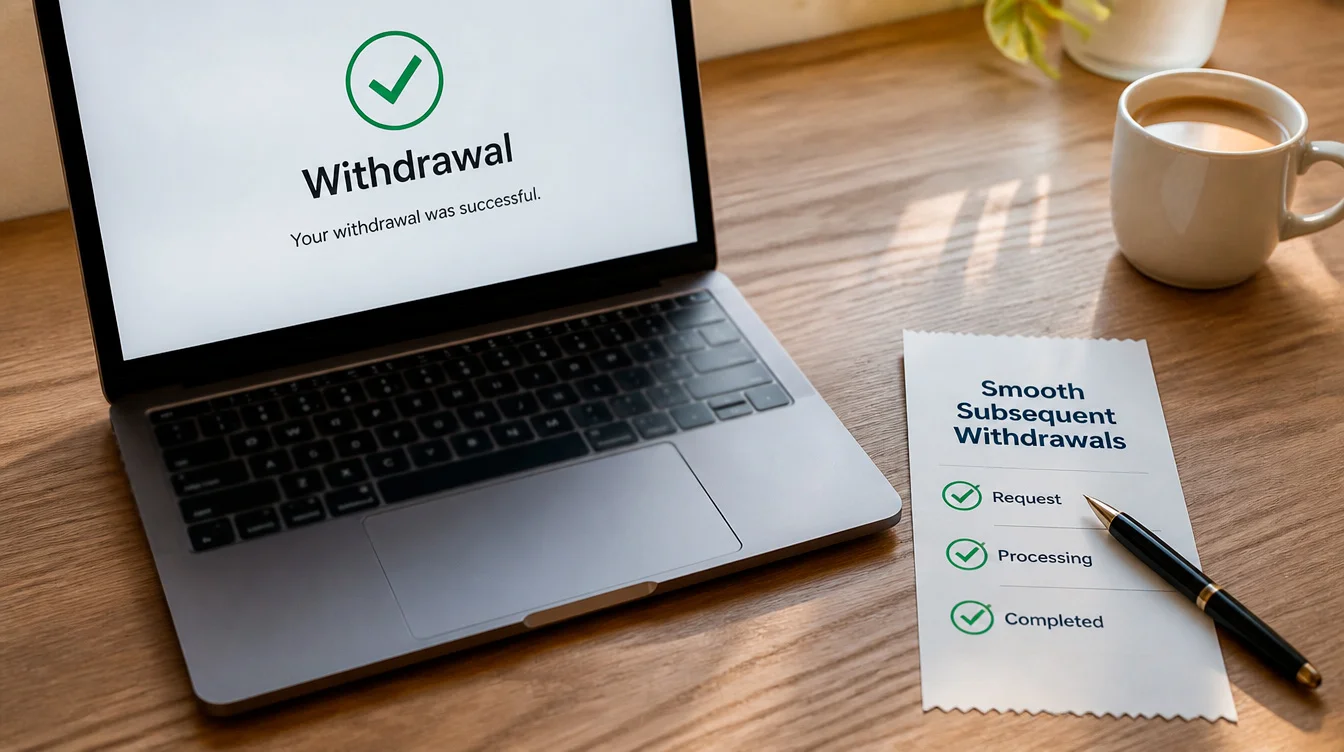
The welcome bonus withdrawal is functionally a one-time gateway through the operator’s compliance machinery. Once the player has cleared a first withdrawal cleanly, the subsequent welcome bonus offers at sister brands or the same operator’s other product categories run through a streamlined process. The lesson the first withdrawal teaches is the lesson the player carries through the rest of the operator relationship.
Why must withdrawal route match the deposit route for the welcome bonus payout?
The matching rule applies to anti-money-laundering and fraud-prevention requirements that the operator must satisfy under UK regulation. Returning deposit funds to their source confirms the player’s ownership of the originating account and prevents the operator from being used as a fund-transfer mechanism between accounts. The deposit portion must go back to its source; bonus-derived winnings above the deposit amount can sometimes be paid out by alternative methods, but the deposit refund itself is bound to the original method.
How long does a first welcome-bonus withdrawal typically take in 2026?
A debit card withdrawal typically takes 2-5 working days end to end, including operator-side review and bank-side settlement. Bank transfer and Open Banking are typically 1-3 working days. PayPal is typically 24-48 hours. KYC verification, if not completed at the deposit stage, can add 1-5 working days. The first withdrawal is the slowest because both compliance review and payment processing occur together; subsequent withdrawals are usually faster.
Are reverse withdrawals still permitted on bonus-derived funds?
The reverse withdrawal option has been progressively restricted in the UK licensed market and is now functionally banned on bonus-derived funds at the majority of operators. Some operators have removed the option entirely; others retain it for cash funds but exclude bonus-derived funds. A small minority still offer reverse withdrawal across the board, but the practice is outside market norms. The trend has been toward the ban rather than away from it.
This material was created by the WagerVane team.
Related posts

Live Casino Welcome Bonus UK: Why Dealer Tables Are Usually Excluded

Bingo Welcome Bonus UK: Now a Mixed-Product Offer