Mobile Casino Welcome Bonus UK: App-Exclusive Offers and Restrictions
 Available in GB
The Bonus I Couldn’t Claim Twice
I registered an account with a UK operator on my iPad one Sunday morning, claimed the welcome offer, and then logged into the same account on my desktop later that day to find the offer had quietly been replaced by a slightly worse one. The original bonus was app-only. The desktop showed a default web offer with different headline value and different conversion ceiling. The account was the same; the device was different; the operator had decided which offer applied based on where I first claimed it.
That experience is the spine of everything in this category. Mobile welcome bonuses are not the same product as desktop welcome bonuses, even when they appear on the same operator’s marketing materials. The channel is treated as part of the offer’s identity, and the operator’s promotional system can — and frequently does — present different parameters to the same player on different devices. Average monthly active accounts on slots reached 4.6 million in the third quarter of 2025-26, with the total online figure at 12.7 million, and mobile dominates that engagement. The category is too commercially important for operators to treat as a passive translation of their desktop offer. The full picture is in our guide to the UK casino welcome bonus.
Web And App Eligibility: Not The Same Thing
The first useful distinction is between registering through the mobile website and registering through a downloaded app. Both happen on the same device. Both produce an account that can be used on either channel afterwards. But the registration channel is captured by the operator’s analytics, and it tags the resulting bonus with a channel marker that some campaigns enforce strictly.
A common pattern is a ‘web-only’ welcome offer that the app does not honour, paired with an ‘app-only’ offer that mobile web cannot trigger. The decision to register via the app or via the browser locks the bonus shape for the lifetime of that account. The operator’s view is that the channels are economically distinct — app installs are more valuable acquisitions than mobile web registrations, because the app produces deeper engagement metrics over the customer lifetime. The bonus shape reflects that.
The practical advice I give readers is to decide which bonus they want first, and let that decision dictate the registration channel. If the app-exclusive offer is the better deal, install the app and register inside it. If the web bonus is better, register through the mobile browser before opening the app. Cross-channel migration after registration is possible — but the bonus parameters are usually fixed at the first claim and cannot be swapped to the other channel’s offer.
Where App-Exclusive Spin Packages Sit
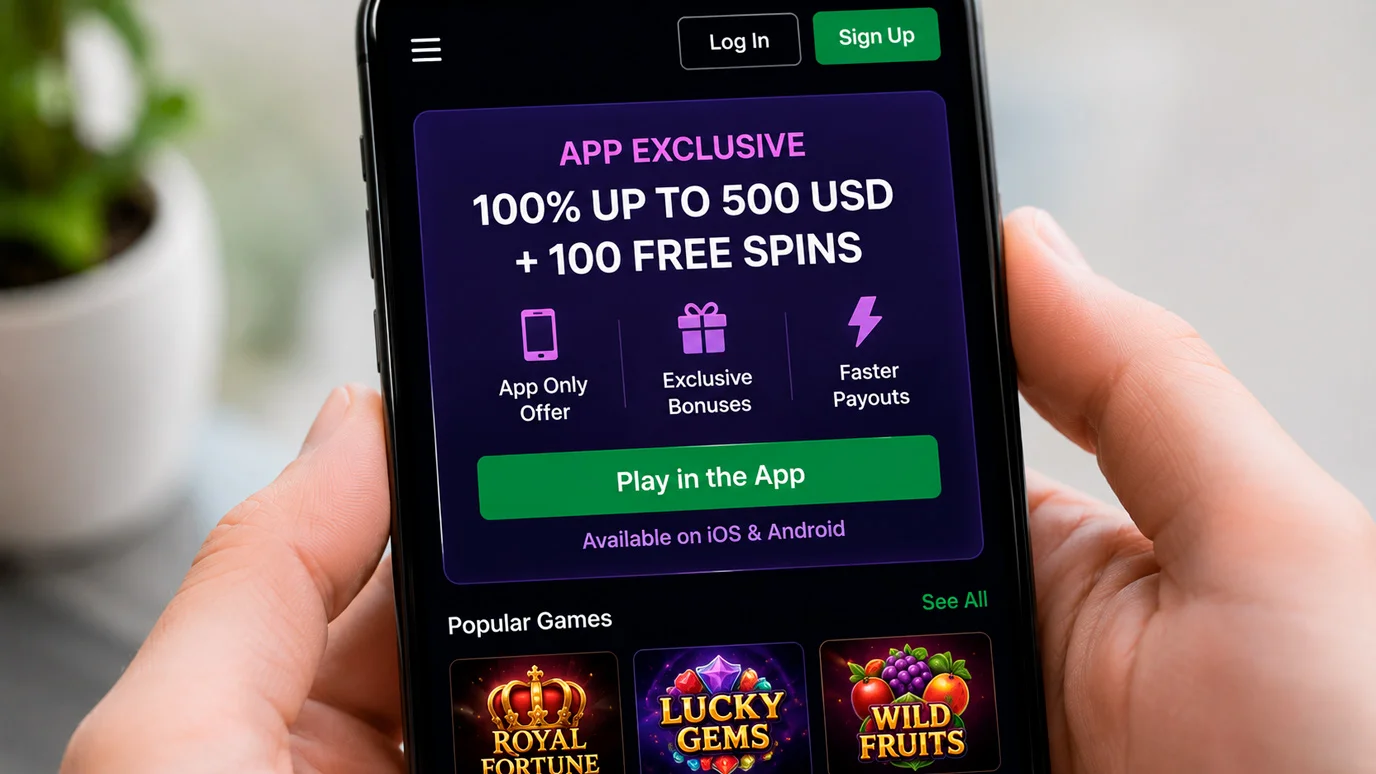
The app-exclusive bonus most commonly takes the form of a spin bundle. The headline is usually a count of free spins higher than the web offer’s equivalent, sometimes paired with a smaller matched-deposit component. The reasoning is that spins are a lightweight commitment for the player and a high-engagement product for the operator — they encourage repeat sessions, which is the metric app installs are evaluated against.
The Commission’s position on welcome offer transparency applies equally on app and on web. The mandatory wagering requirements calculator must be visible inside the app at the point of opt-in, displaying the turnover requirement in pound terms. The 10× wagering ceiling under Social Responsibility Code Provision 5.1.1 applies to app offers as it does to web offers. The intent of the changes was, in the Commission’s framing, to ‘better protect consumers from gambling harm and give consumers much better clarity on, and certainty of, offers before they decide to sign up’ — and that clarity requirement does not weaken because the screen is smaller.
What does change on the app is the surface area of the small print. A landing page on desktop has room to display the full T&Cs alongside the headline. An app screen has to compress the same information into a smaller frame, usually behind a tap-to-expand interaction. The information is there; it is one click further away. Players who skim the desktop T&Cs and skip the app T&Cs are not making a like-for-like comparison, and the operator is structurally less responsible for that distinction than the player is.
iOS And Android Policy Differences
Apple’s App Store policies and Google’s Play Store policies impose different constraints on real-money gambling apps in the UK, and the welcome offer presentations differ accordingly. iOS apps for UKGC-licensed operators have to pass App Store review under specific gambling categories, and Apple’s review historically has flagged any presentation that could be construed as encouraging deposit beyond the player’s intent. The result is that iOS welcome offer presentations tend to be more conservative — smaller headlines, more visible T&Cs, less aggressive opt-in flows.
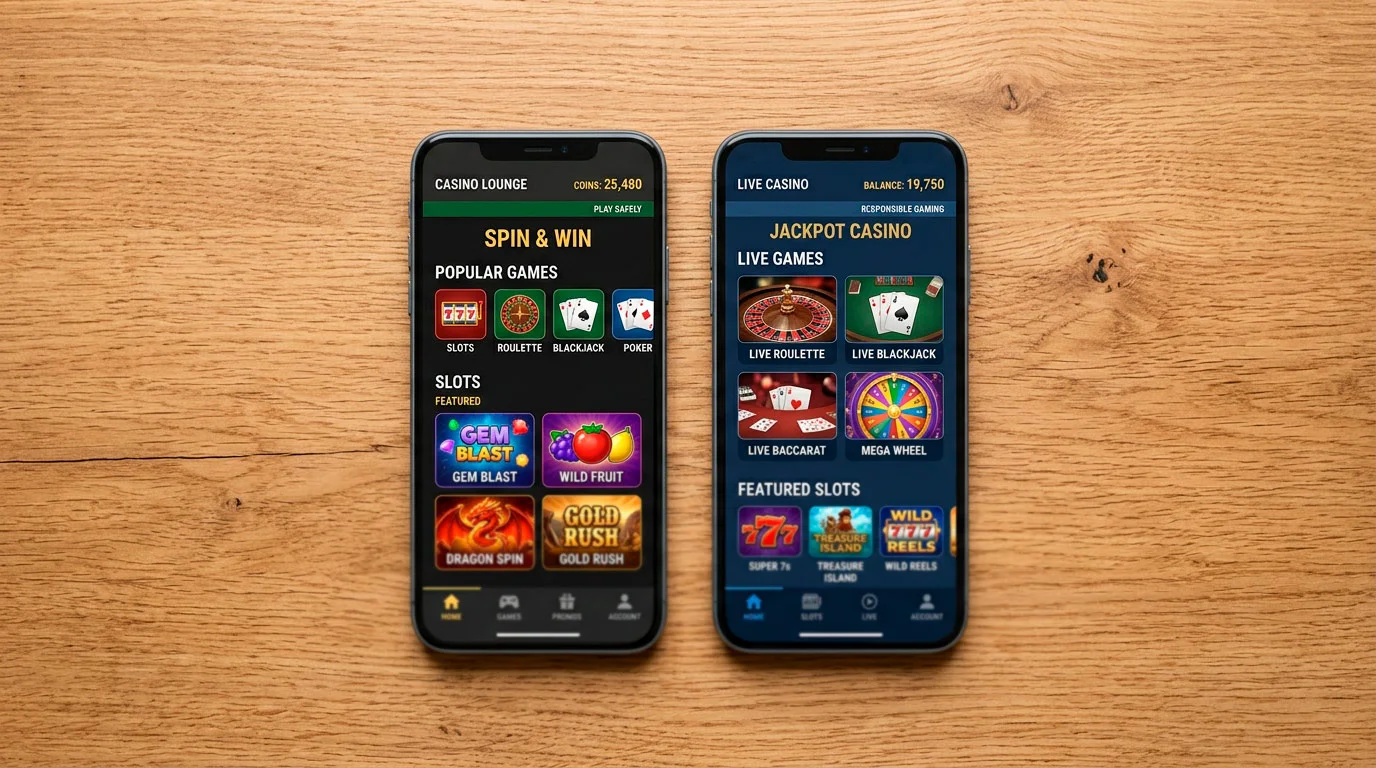
Android apps distributed via Play Store face a different review process, and the welcome offer presentations are typically closer to the operator’s preferred design. Where an operator runs an Android app that is sideloaded — installed via an APK from the operator’s own site rather than via Play Store — the welcome offer presentation can be closer still to the operator’s commercial preferences. UKGC rules apply equally regardless of how the app reaches the device, so the compliance burden is uniform; the presentation is what varies.
One quirk worth knowing about. Some operators require app-exclusive codes to be entered via the in-app browser rather than the native app interface, which is a workaround for app store policies that restrict in-app promotional inputs. The reader is shown a banner that opens a web view to a registration page that looks app-native but is actually mobile web. The bonus then attaches as an app-channel claim despite the registration technically happening through a browser. The distinction is invisible to the player and rarely matters in practice — but it surfaces in customer service escalations when an operator queries which channel a bonus was claimed through.
Device Fingerprinting And The One-Account Rule
Every UK operator runs device fingerprinting to enforce the one-account-per-household rule and to detect duplicate registrations. The fingerprint includes information about the device, the network, the browser or app version, and a range of other passive signals that identify a returning device even when the account is new. Trying to claim a second welcome bonus on the same device, under a different identity, triggers the fingerprint check immediately and almost always results in account freezing pending verification.
The fingerprint also operates across devices owned by the same household. A second account from a different family member on a different device sharing a network can be flagged if the fingerprint heuristics see a sufficient overlap. Operators usually err on the side of allowing the second account through to registration, then asking for additional verification before the bonus releases. The system is designed to catch fraud, not to obstruct legitimate dual-household play, but the heuristic can produce false positives. The full picture of how payment-channel identity links to the device check and the welcome bonus eligibility sits in the adjacent payments coverage.
The practical implication for a single-account, single-device player is that the fingerprint is invisible until something goes wrong. If you register through the same device that previously held a closed account, expect manual verification to release the bonus, even when the previous account is dormant or self-excluded under a different identity. The bonus does not release until the operator has reconciled the device history with the new account’s documentation. That is a delay, not a refusal — but it can push the bonus past its activation window if not resolved promptly.
The Quirk Nobody Mentions Up Front
Switching device mid-bonus is something I see readers do without realising it could affect the bonus. You opt in via the app, start clearing the wagering, then continue on desktop later in the day. The bonus follows the account, not the device, so the wagering progress carries over. What does not carry over reliably is the visibility of the wagering counter — operators sometimes display app-channel counters and desktop-channel counters with slight syncing delays, and a player who finishes wagering on one channel may need to refresh on the other before the cleared status registers.

I have not seen a case where switching device caused a bonus to be voided, provided the account itself remained the same. The fingerprint check operates at the account level — it cares whether two accounts share a device, not whether one account uses two devices. Cross-device play on a single account is normal and expected. The wagering grind, the conversion cap and the expiry clock all sit on the account, not on the channel. The offer itself is unchanged: the bonus types.
Frequently Asked Questions
Does claiming on iOS lock me out of the desktop welcome bonus?
It locks you into the offer parameters of the iOS claim, which may or may not match the desktop default. The account itself is usable on either channel afterwards, but the welcome bonus is the one you claimed first. If the iOS-channel offer was a spin bundle and the desktop offer is a matched deposit, the spin bundle is what attaches to your account regardless of which channel you play on later. The lock-in happens at the moment of opt-in, not at registration.
Why do some apps require the code via the in-app browser?
App store policies — particularly Apple’s — restrict certain promotional inputs inside native gambling apps. The workaround is to direct the player through an in-app browser that loads a mobile web registration page, where the code field is presented under standard web rules. The bonus attaches to the app channel for attribution purposes despite the registration technically happening through a browser view. The distinction does not affect the player experience but matters when the operator’s analytics tag the acquisition.
Can switching device mid-bonus trigger forfeiture?
The bonus follows the account, not the device, so switching device on the same verified account does not void the bonus. Wagering progress, conversion cap, and expiry all sit on the account. What can happen is a temporary syncing delay between channels — wagering completed on one device may take a few minutes to reflect on the other. If a bonus appears to have reset or disappeared after a device switch, refreshing the account on the original channel usually resolves the visibility issue without customer service involvement.
This material was created by the WagerVane team.
Related posts
Casino Welcome Bonus Withdrawal: From Wagering Clear to Bank Account

Live Casino Welcome Bonus UK: Why Dealer Tables Are Usually Excluded