UKGC Wagering Requirements Calculator: How the £-Total Display Works
 Available in GB
The Number That Stopped Players Underestimating Wagering Overnight
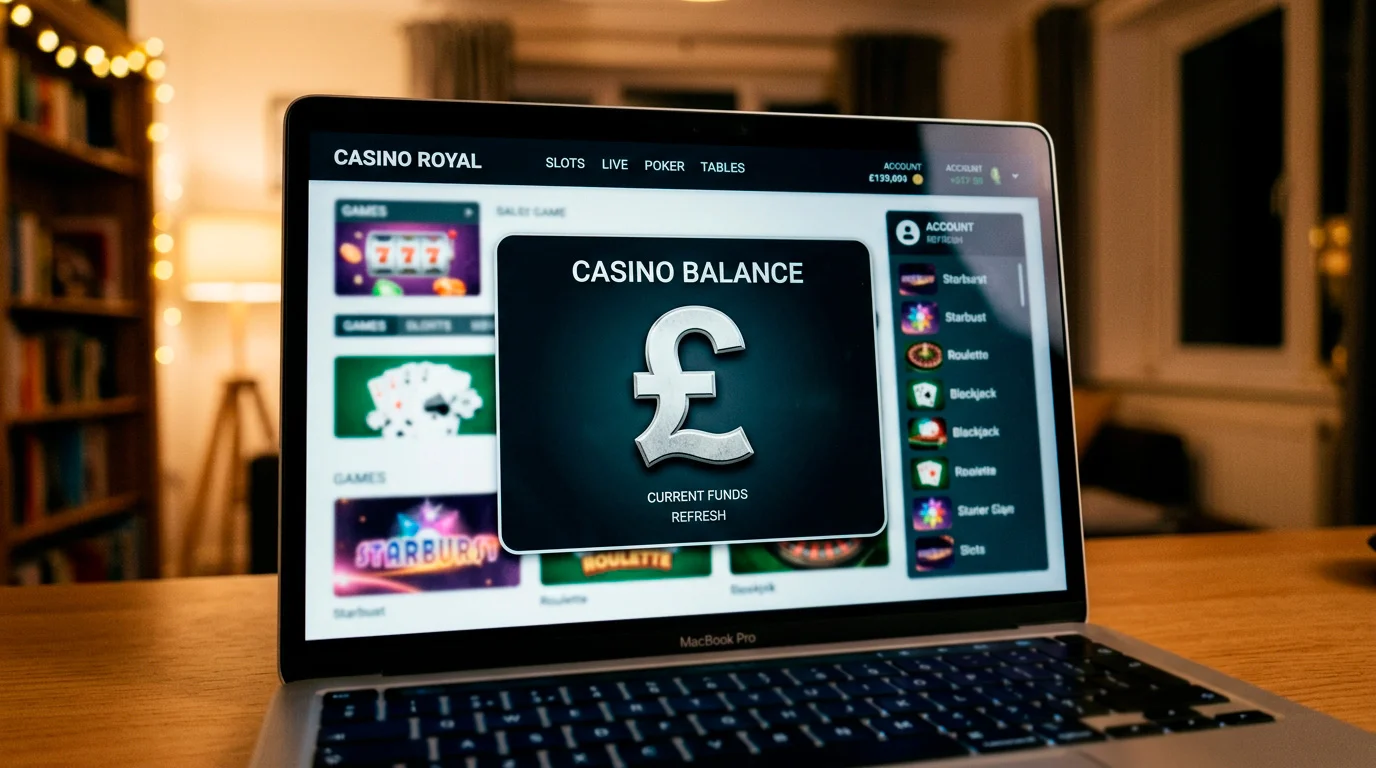
The first time I tested a freshly-deployed wagering requirements calculator on a UK operator’s welcome bonus page, the £-denominated figure that appeared was £1,250. The headline had said ’50x wagering on bonus’. The bonus was £25. The arithmetic was correct on both sides — 50 multiplied by £25 is £1,250 — but only one of those numbers told the player what they actually needed to bet. The shift from abstract multiplier to pound-denominated total turnover became mandatory on 26 March 2025 under updated UKGC requirements, and the visible effect on player decisions has been measurable. The change forced the welcome bonus market to confront its own arithmetic in a way that headline figures alone never did. The full picture is in our guide to the UK casino welcome bonus.
Why The Calculator Became Mandatory In The First Place
The wagering requirement is the single concept that confuses new players most reliably. A ’50x wagering’ figure looks small. The pound-denominated total looks large. The two are arithmetically identical for a given bonus, but they read very differently. The operator who advertised ’50x wagering’ was technically being transparent. The operator who displayed ‘£1,250 of bets required before withdrawal’ was being transparent in a way the player could actually use.
The regulator’s framing of the reform package, of which the calculator is one element, was direct. The senior policy figure responsible described the intent in the announcement of the rule changes: the reforms “will better protect consumers from gambling harm and give consumers much better clarity on, and certainty of, offers before they decide to sign up”. The clarity argument is what the calculator delivers. The certainty argument is what the broader reform package — the 10x wagering cap, the conversion ceiling transparency, the payment method exclusion clarity — is supposed to deliver alongside. What the calculator is counting: the wagering requirement.

The mandate landed on operators as a UI requirement rather than as a back-office requirement. The wagering arithmetic was already calculated on the operator’s side for compliance and finance purposes. What the rule changed was the requirement to display the pound total to the player before claim, at the moment the player makes the decision. The change was administrative for the operator; the effect for the player was the difference between a clear decision and a guess.
The pre-calculator market had relied on the player to do the arithmetic themselves. Most players never did. The post-calculator market puts the arithmetic on the page in front of the player, in the same currency the player thinks in. The behavioural effect was visible within months — the share of welcome bonus claims at offers with high wagering multiples dropped sharply, while no-wagering and low-wagering offers gained market share. The calculator did not cause the shift directly, but it made the previously invisible cost of high wagering visible at the point of decision.
What The Display Must Show
The minimum information the calculator must display includes the pound-denominated total turnover required to clear the bonus, calculated at the wagering multiple specified in the offer terms. The total is shown as a single figure — not as a multiplier — and is updated dynamically if the player adjusts the deposit amount on the same screen.

The bonus value used in the calculation is the bonus value, not the deposit value. A 100% match welcome bonus on a £50 deposit produces a £50 bonus, and the calculator shows the wagering total on the £50 bonus value. The deposit of £50 itself does not need wagering — the bonus does. The distinction is important because some operators in the past had advertised wagering on ‘deposit plus bonus’ rather than ‘bonus only’. The mandatory display surfaces this distinction in the pound total: deposit-plus-bonus wagering produces a larger figure than bonus-only wagering at the same multiplier.
Where the wagering applies to deposit plus bonus, the calculator must show that. Where the wagering applies to bonus only, the calculator must show that. The operator’s choice between the two structures becomes visible at the moment of claim, rather than hidden in a clause that the player would need to read carefully to identify.
The game weighting layer is the more complex piece. The pound total assumes 100% game weighting — slot play at full contribution. The calculator does not generally show the adjusted total for non-slot play, because the calculation depends on which game the player will actually choose. Some calculators include a game weighting note alongside the headline total; most do not, and the player is expected to read the game weighting table separately to understand how the £-total adjusts for other game types.
The currency unit must be pounds. Operators serving multiple jurisdictions sometimes default to a different currency on the calculator if the player’s account is set to a non-UK currency, but for UK-registered accounts the pound display is the standard requirement.
Reading The £-Total Correctly
The £-total is the cumulative turnover required across all wagering on the bonus. It is not the net loss the player should expect. The net loss across the wagering depends on the house edge of the game played — at a 4% house edge on slots, the expected loss is approximately 4% of the £-total. A £1,250 turnover requirement at 4% house edge produces approximately £50 of expected loss across the wagering. The £50 is the player’s expected cost; the £1,250 is the player’s required activity to satisfy the bonus.

The interaction between the £-total and the bonus value is the part that takes some practice to read. A £25 bonus with a £1,250 turnover requirement produces an expected loss of £50 across the wagering — which exceeds the bonus value. The expected outcome on the bonus is negative before any consideration of the conversion ceiling or the bonus expiry. This is the arithmetic that the multiplier-only display obscured.
By contrast, a £25 bonus with a £250 turnover requirement (the post-reform 10x cap) produces an expected loss of £10 across the wagering. The expected outcome on the bonus is positive — £25 bonus value minus £10 expected friction equals £15 of expected return. This is the arithmetic that the £-total display makes visible, and it is one of the reasons the wagering cap reform paired with the calculator delivered more meaningful protection together than either would have done alone.
The £-total is one of the variables that should drive the welcome bonus claim decision — alongside the conversion ceiling, the bonus expiry, the qualifying game requirements, the payment method eligibility. The full set of variables that determine whether a wagering requirement is workable for a given player includes time commitment, bankroll, variance tolerance and the game weighting structure. The £-total is the first number, but it is rarely the only one that matters.
The Edge Cases The Display Does Not Always Handle
The calculator works cleanly for the standard single-stage match bonus. It works less cleanly for multi-stage welcome packages, where the wagering applies separately to each stage and the cumulative total across the full package can be misleading if displayed only stage by stage. The better implementations show the per-stage total at each claim point and an aggregate total for the full package; the weaker implementations show only the current stage.

Free-spin offers produce a different calculation. The bonus value for wagering purposes is usually the cash value of the spin winnings, not the nominal stake value of the spins themselves. A 100-spin offer with 10p stakes that produces £30 of cash winnings requires wagering on the £30, not on the £10 of stake exposure. Some calculators handle this distinction clearly; others do not, and the player can underestimate the wagering required by reading the stake-based calculation rather than the winnings-based one.
Live updates during play are not generally required by the rule. The calculator must show the £-total at the point of claim; whether the operator’s interface continues to show the remaining required turnover as the player progresses is operator discretion. The better operators do show a running counter; many do not, and the player has to track the wagering progress manually or rely on a separate ‘bonus status’ page.
Mobile-app displays must include the same £-total, but the screen real estate constraints can produce smaller or less prominent figures. The rule specifies that the display must be presented to the player at the point of claim; it does not specify font size or visual prominence. The variation in mobile implementation quality is meaningful.
Cross-currency edge cases produce occasional confusion. The player whose account holds a non-pound currency may see the calculator default to that currency rather than to pounds. The UK-licensed operator is required to show the pound figure for UK-registered accounts; for accounts registered in other jurisdictions the requirement does not directly apply.
The Bottom Line On What The Calculator Actually Tells You
The £-total is the single most informative number on the welcome bonus landing page in 2026. It compresses the wagering multiple, the bonus value and the underlying turnover requirement into one figure that the player can compare directly against their own bankroll and time commitment. A £-total that is many multiples of the player’s typical session turnover is signalling that the bonus may not be practically clearable; a £-total that fits comfortably within the player’s normal play volume is signalling that the bonus is workable.

The calculator did not eliminate the need for the player to think about the wagering requirement. It moved the thinking from arithmetic to comparison. The player who could not calculate 50x times £25 in their head can now read £1,250 directly. Whether £1,250 fits their bankroll is a question only the player can answer, but the question is now askable in a way it was not before March 2025.
Does the calculator include game weighting in the £-total?
Generally no. The £-total assumes 100% game weighting — slot play at full contribution. The calculator does not usually show adjusted totals for table games, live dealer or other partially-weighted games, because the calculation depends on which game the player will actually choose. Some calculators include a note alongside the headline total flagging that game weighting can change the figure; the player is expected to consult the game weighting table for non-slot play.
Is the calculator required on mobile app screens?
Yes. The requirement applies to the point of claim regardless of channel, which includes mobile app interfaces. Mobile implementations are sometimes less prominent than desktop because of screen real estate, but the £-total figure must be visible to the player before they confirm the welcome bonus claim. Variations in font size or visual prominence are operator discretion, but the figure itself must be present.
Must operators recalculate live as the player progresses?
The rule mandates the calculator display at the point of claim. Live recalculation of remaining wagering as the player progresses is not strictly required, though many operators provide a running counter on a bonus status page as a useful feature. Where live progress display is absent, the player has to track wagering manually or rely on periodic queries to the bonus status page.
This material was created by the WagerVane team.
Related posts

Casino Welcome Bonus Withdrawal: From Wagering Clear to Bank Account

Live Casino Welcome Bonus UK: Why Dealer Tables Are Usually Excluded