Live Dream Catcher Casino UK: Game Format and Rules
 Available in GB

Dream Catcher is presented through a live-casino interface, but the label alone does not establish how its rules or results work.
What Dream Catcher Is—and What “Live” Means
Dream Catcher is the name of a casino game. When you see it described as a live-casino game, “live” refers to the way the game is presented: it is offered through a live format rather than as a conventional computer-generated casino game. That distinction helps explain what the label means, but it does not, by itself, tell you how the game works, who supplies it or what you may be asked to do when you open it.
A live casino brings a game to you through an online interface. The screen is the point of contact, but the experience is presented as a live event rather than simply as software generating a result on your device. The word can therefore describe the format in which a game is delivered, not a promise about its pace, atmosphere, interaction or outcome. Those details depend on the particular game and the information made available with it.
That matters because “live” is sometimes read as though it were a description of the rules. It is not enough to establish whether a game uses a wheel, cards, a host, a particular sequence of actions or any specific way of determining results. A game’s name and its live label are not a substitute for its own rules and help material. If those are unclear, the sensible response is not to fill the gaps with assumptions.
Dream Catcher sits at the meeting point of two familiar terms: a named casino game and the live-casino format. Searches for Dream Catcher live casino or a Dream Catcher casino UK experience may be looking for either one. Some readers want to understand what the game is; others want to know what “live” means in the context of an online casino. Keeping those questions separate makes the description less misleading.
The format can also affect how you encounter a game. A live-casino interface may put the game itself, a video presentation and on-screen controls together. But the exact layout and any available features are matters for the specific version shown by an operator. The word “live” alone does not confirm that a host is visible, that players can communicate, or that every session follows the same presentation. Nor does it establish that the game is available at every casino.
Live Roulette UK with English-Speaking Dealers
It is useful to distinguish the game from the interface around it. Dream Catcher is the game being offered; the live-casino area is the setting through which an operator may present it. The interface may include descriptions, instructions or controls, but those do not change the basic point: a label is only a starting point. Before taking part, you need to understand the information attached to the actual game, not rely on an assumption drawn from its title.
“Live” also does not mean that a game is risk-free, more predictable or more favourable to a player. It describes presentation, not a guarantee about what will happen. A live format can make an online game feel closer to a shared event, but that impression should not be confused with a change in the financial nature of casino gambling. If money is involved, the possibility of losing it remains part of the decision.
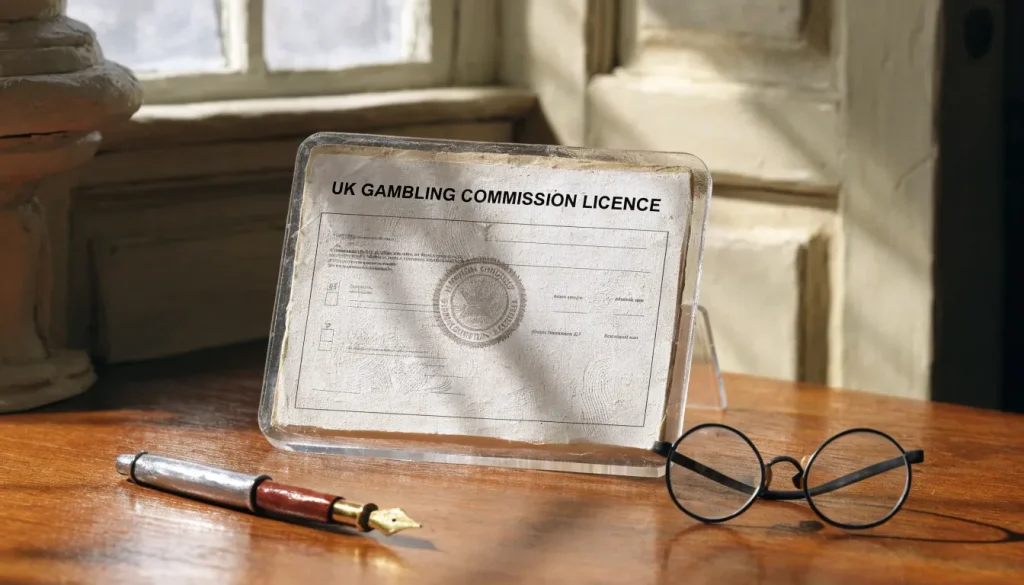
The UK context is relevant to any real-money online casino serving players in Great Britain. Remote operators offering gambling to those customers must hold the relevant UK Gambling Commission licence, regardless of where their equipment is located. That is a separate question from whether a casino lists Dream Catcher or labels it as live. The format describes how a game is presented; it does not tell you whether the operator is authorised to offer gambling in the market.
There is no need to infer technical details from the game’s name. The words “Dream Catcher” do not, on their own, establish a particular set of rules, a provider, a payout structure or a specific wheel design. Those are details to confirm from the game information supplied where it is offered. Treating the name as proof of features would turn a recognisable title into a claim it cannot support.
So, in plain terms, Dream Catcher is a named casino game, while “live” describes its mode of presentation in an online casino. The distinction gives you a useful starting point without pretending to explain the game’s mechanics. When you encounter the game, its own instructions and the operator’s presentation are what can clarify the practical details; the label alone cannot.
DO
- Verify the operator’s legal name on the UK Gambling Commission register.
- Check that the game title in the catalogue matches what you intend to play.
- Set financial limits before making your first deposit.
DON’T
- Rely on a casino logo or statement as proof of a valid licence.
- Assume a game’s title confirms its specific rules or payout structure.
- Use credit cards for gambling deposits.
Our top casino picks for the UK
- EvoSpinBonus: 125% up to €2500 + 125 Free Spins · Payout speed: 1-3 business days
- x3betBonus: Welcome Pack 100% Up to £1.000 + 200 Free Spins · Payout speed: 1-3 business days
- ChanzeBonus: Slots Welcome Bonus #1 200% up to €500 · Payout speed: 1-3 business days
- SlotoSportBonus: 500% up to £ 10 200+ 777 FS · Payout speed: 1-3 business days
- NightLuckBonus: Welcome Pack + 805% Up To 6400€ + 280 FS · Payout speed: 1-3 business days
- WinBeastBonus: €5000 + 500 FS + €650 Freebet · Payout speed: 1-3 business days
Finding Dream Catcher in an Online Casino
When you open an online casino, finding Dream Catcher is a question of navigating its game catalogue. Availability can vary between operators, so a game’s presence at one casino does not establish that another offers it. Nor does a title appearing in a search result prove that it is currently accessible through the operator’s own site.
Start with the casino’s games area. If it has a search box, enter “Dream Catcher” as the game name; otherwise, browse the live-casino category and use any filters the site provides. A result may appear under a broad live-games section rather than a dedicated Dream Catcher category. If several similarly named entries appear, open the relevant listing and check its title before launching it. The aim is to confirm that you have found the game, not merely a page mentioning it.
You may also come across Dream Catcher while browsing a provider or live-casino lobby. Treat those labels as navigation aids, not as proof of who operates the casino or whether it is authorised for British customers. A casino can make a particular game easy to find and still require separate checks before you decide whether to deposit.
Live Casino Lightning Roulette in the UK: How It Works
Availability and permission are separate questions
The UK Gambling Commission oversees gambling in the UK, including online casino activity. In Great Britain, it is the sole regulator for commercial gambling. Remote operators serving consumers there must hold the relevant Commission licence, even if the equipment running the gambling service is located elsewhere.
That makes two checks necessary. First, does the casino actually offer Dream Catcher? Second, is the business behind the site licensed to provide remote gambling to customers in Great Britain? A game listing answers only the first question. A polished lobby, familiar title or working game link is not a substitute for checking the operator’s regulatory status.
The Commission issues operating licences to gambling businesses and personal licences to individuals who perform certain roles in the industry. For a player deciding whether to deposit, the practical concern is the business responsible for the casino. Look for the operator’s legal name and licence details on the site, then compare them with the UK Gambling Commission’s public register. Check that the licence belongs to the business behind the website and covers the relevant remote gambling activity. Do not rely on a logo or a licence number displayed without checking the register.
Live Baccarat Online Casinos in the UK: How They Work
Before putting money into an account
Once you have found the game, pause before depositing and check the site itself. Make sure its terms identify the operator, and that the operator’s name matches the entry you have checked on the Commission’s register. If the site’s branding, domain or company details make it unclear who would hold your account, resolve that uncertainty first.
Age verification is another required part of the process: an operator must verify a customer’s age before allowing a deposit into a gambling account. You should expect the site to ask for the checks it needs rather than treating immediate access to payment as evidence that everything is in order.
Review the payment method before using it. Remote gambling operators cannot accept credit-card payments for gambling, including credit-card funding routed through a money service business. A digital wallet is not a workaround if it allows credit-card funds to be used for gambling; operators cannot accept those payments either. If the payment route is unclear, check the operator’s terms or ask its customer service team before transferring money.
You should also be able to find account controls and information about customer support without having to search through promotional pages. UK-licensed operators must prompt new customers to set a financial limit before their first deposit and provide accessible account-level limit controls. They must also offer an internal complaints process and access to an approved Alternative Dispute Resolution service. These are useful checks on how the operator handles accounts and disputes, but they do not tell you whether Dream Catcher is available; confirm that separately in the game catalogue.
A search for an online casino offering Dream Catcher can help you locate a listing, but it cannot establish that the business behind the listing is licensed. Keep the two decisions distinct: verify the game in the casino’s own lobby, then check the operator against the Commission’s register before depositing. If you choose to play, gamble only what you can afford to lose.
Online Casino Games for Real Cash in the UK
How to Assess a Casino Offering Dream Catcher
A casino’s game catalogue cannot establish whether the business behind it is reliable. Dream Catcher may be the reason you visit, but the more important checks concern the operator: who holds the account, which regulator oversees the gambling, and what happens if something goes wrong. There is no sound basis here for naming a “best” Dream Catcher casino; a careful assessment starts with evidence you can check.
Confirm the operator’s licence
For real-money gambling offered to customers in Great Britain, the operator must hold the relevant UK Gambling Commission licence. The Commission is the regulator for commercial gambling in Great Britain, and its public register lets you check businesses and their licensed activities. Do not rely on a badge, a logo or a statement on a casino’s own page. Find the operator’s legal name and licence number, then verify that information in the Commission’s register before depositing.
Check that the register entry matches the business named in the casino’s terms and conditions. A brand can differ from the company operating the account, so follow the details rather than assuming a familiar site name identifies the licence holder. The domain matters too: confirm that the site you are using is the one associated with the operator, not a lookalike or a different business using similar branding. If the operator’s identity or licence details cannot be reconciled with the register, stop rather than treating the game’s presence as reassurance.
Register information is time-sensitive. A specialist review reported that a search of the public Gambling Commission register dated 26 September 2026 did not show a LuckyPays entry under that brand or its stated domain, including luckypays.io. That is a dated report about a particular search, not a substitute for checking the register yourself or evidence about another casino. The practical point is to verify the current entry for the operator you intend to use.
Understand how complaints are handled
A licensed operator must provide an internal complaints process. Read how to submit a complaint, what information the operator asks for, and where it explains the next steps. The terms should also identify access to an approved Alternative Dispute Resolution service, often shortened to ADR. ADR is an independent route for unresolved disputes; it is not the same as a customer-support chat or the operator reviewing its own decision.
Alternative Dispute Resolution (ADR) is an independent route for resolving disputes that remains unresolved through a licensed operator’s internal complaints process.
Look for clear instructions on both routes before you need them. If the complaint page is difficult to find, or the casino’s terms do not explain how an unresolved issue can proceed to ADR, that is a reason to pause and clarify matters. Keep copies of relevant account messages and transaction records if you later need to raise a complaint.
Check account controls before funding
A UK-licensed remote operator must prompt new customers to set a financial limit before their first deposit and provide accessible account-level limit controls. Check that you can find these settings in the account area and understand what they do before transferring money. Limits are useful only if they are visible and practical to manage; do not assume a tool exists merely because the casino describes itself as responsible.
Age verification is another required protection. An operator must verify your age before allowing you to deposit into a gambling account. Expect an identity-check process rather than interpreting a request for documents as optional housekeeping. If the site allows deposits before age checks are complete, do not proceed.
Responsible-gambling measures should include self-exclusion, which lets a customer request that gambling access be blocked. Consider whether the available controls are clearly explained and easy to locate. If you think gambling may be becoming difficult to control, use support rather than relying on a limit alone; a tool can help restrict access, but it cannot decide what is affordable for you.
Online American Roulette in the UK: Rules and Bets
Review payment restrictions
UK-licensed casinos cannot accept credit cards for gambling. This also rules out credit-card funding routed through a money service business, and an operator cannot accept a wallet payment where the wallet allows credit-card funds to be used for gambling. Check the payment terms and the funding method shown at checkout. If a route appears to bypass these restrictions, do not treat it as an ordinary alternative payment option.
A dependable assessment is not a score based on the game’s name or presentation. It is a set of verifiable checks: the correct operator and licence in the public register, a usable complaints and ADR route, visible account limits, age checks before deposits, lawful payment methods and meaningful protection tools. Only gamble what you can afford to lose.
Dream Catcher Across Live Casino Sites
The same named game can sit within very different casino websites. One operator may place live games in a dedicated lobby, while another may group them by title, provider or game type. Menus, filters and the route from the home page to a table can therefore vary, even when you are looking for the same experience. A site’s layout tells you how it organises its catalogue; it does not establish that Dream Catcher is available there.
Availability can also change. A title may appear in a catalogue at one point and later be removed, or it may be visible only after you sign in. Treat a general live-casino page as a starting point, not confirmation. Look for the game’s exact name in the operator’s own catalogue, and check whether the listing opens in your account and location before making plans around it. A search result or promotional banner can be out of date.
Attention A game listing or promotional banner in a casino catalogue is not a guarantee of availability or a confirmation of the operator’s regulatory status.
The experience around the game is another point of difference. Some sites make it easier to move between the live lobby and your account; others use more menus or separate pages. The screen may also need to work on the device you intend to use. If a title is listed, check its launch page and any on-screen information rather than assuming every casino presents the same interface or access conditions. The operator’s explanation is the relevant place to confirm how its version is offered.
Account access can shape the practical choice, too. A casino may require registration before showing its full catalogue, while another may display game listings to visitors. Either way, the fact that you can see a title is separate from whether you can play it. Operators serving consumers in Great Britain must hold the relevant Gambling Commission licence; a game listing is not evidence of that licence. Check the operator behind the site and its entry on the Commission’s public register before depositing.
Payment arrangements are not interchangeable across sites. For gambling, UK-licensed operators cannot accept credit cards, including credit-card funds routed through a money service business. They also cannot accept a wallet payment if that wallet lets you use credit-card funds for gambling. Read the payment terms for the method you plan to use; a familiar logo does not tell you which funding sources are permitted.
A useful comparison is therefore about access and clarity, not a promise that one site is better. Can you find the title in the casino’s own catalogue? Does the page explain what happens when you open it? Are the operator and its terms clear before you fund an account? If an answer is hard to establish, pause rather than treating a polished lobby as proof. Availability can be convenient; verification is less decorative, but more useful.
Playing the Dream Catcher Casino Game
When you open Dream Catcher, take a moment to distinguish the game from the wheel shown on screen. The wheel is its central visual element, but seeing it does not tell you the full rules, how a round works or what a wager covers. Those details should be explained in the game’s own information panel or rules page before you decide whether to play.
Online European Roulette in the UK: How It Works
Start by checking that the title on the game screen matches the game you intended to open. Then look for the rules and any information about the available choices, how a round is resolved, and how the game displays a result. Read the wording rather than relying on the wheel’s appearance or on a short description in the casino lobby. If a term is unclear, pause and find its explanation before staking money.
The distinction matters because the game is more than its main image. The wheel may draw your attention, but it is not a substitute for the instructions that define play. Do not assume that the layout, labels or movement of the wheel explain every condition. Nor should you infer a rule from another casino game that looks similar. A clear set of rules should let you understand what you are choosing and what happens after a round ends.
If the game is presented as live, check the information shown in the game itself to understand what that means in this particular instance. Do not treat the label alone as proof of specific features, procedures or presentation details. The key question before playing is whether the available explanation tells you enough to make an informed choice. If it does not, leaving the game unopened is a reasonable decision.
Mines Casino Game UK: How It Works and the Risks
Before making a real-money wager, check the amount selected and confirm that it is the amount you intend to stake. Pay attention to any on-screen confirmation and to the balance display; do not assume that a click has selected the amount you meant. Keep track of your spending, and use account controls if you need to set or change a financial limit. Only gamble what you can afford to lose.
Age and payment rules also matter before you play. A casino must verify your age before allowing you to deposit, and licensed remote operators cannot accept credit-card payments for gambling, including credit-card funds routed through a money service business. They also cannot accept wallet payments where the wallet lets credit-card funds be used for gambling. These are account and payment protections, not game rules, but they affect whether you can fund play.
Finally, avoid treating a run of results as evidence of what the wheel will do next. A visual sequence can be engaging without providing a reliable basis for predicting a future outcome. Make your decision from the written rules and your own spending limit, not from a pattern you think you have spotted. If the instructions are incomplete or the controls are confusing, do not wager until you understand them.
Casino Dice Games in the UK: Formats and Rules
The Dream Catcher Wheel and Slot Rules
The wheel is the visual centre of Dream Catcher, which is why descriptions of the game often refer to it as a casino wheel. But a wheel on screen does not, by itself, establish how the game is classified under gambling rules. Its name, appearance or live presentation is not enough to decide whether rules for online slots apply.
That distinction matters in Great Britain. A specialist review reports that the online-slot stake cap is £5 for each game cycle for players aged 25 and over, and £2 for those aged 18 to 24. The same type of source says those slot caps do not apply to roulette or blackjack. These figures should not be treated as a classification test: whether Dream Catcher is subject to slot-specific limits depends on how the game is formally categorised, not on whether it has a wheel.
If you are deciding what a stake means in this game, check its rules and game information on the operator’s site. Look for an explicit description of the game category and any applicable stake restrictions. If the presentation is unclear, ask the operator rather than assuming that a wheel makes it roulette or that the casino setting makes it a slot.
Where an online game is classified as a slot, British rules also affect how it can be played. A slot spin must last at least 2.5 seconds before another game cycle can begin, and autoplay is banned. These requirements concern online slots; they should not be applied to Dream Catcher without confirming its category. Nor should a fast-looking animation be taken as evidence that a game cycle is shorter than the required minimum: the relevant measure is the time between the start of one cycle and the point at which the next can commence.
The practical point is to separate the wheel’s role in the game from the legal category assigned to the product. Check the operator’s stated rules before playing, particularly if you need to understand which stake restrictions apply. A wheel is easy to recognise; its regulatory classification is less visible, and should not be guessed from the artwork.
UK Slot Stake Caps
In Great Britain, specific stake caps may apply to online slots, such as £5 for players aged 25+ and £2 for those aged 18-24, though these do not necessarily apply to games like Dream Catcher unless formally categorised as such.
What to Check on a Dream Catcher Casino Site
A site can display Dream Catcher without making clear, at first glance, which company is responsible for the gambling account. Before using it, identify the operator named in the site’s terms and conditions or account information. The brand on the homepage may not be the legal business that takes deposits and handles complaints.
Check that business against the UK Gambling Commission’s public register. Search for the operator’s licence number and confirm that the registered business corresponds to the company named on the site. A logo or a statement that a casino is “regulated” is not a substitute for a register entry. For customers in Great Britain, remote gambling businesses must hold the appropriate Commission licence, even when their equipment or offices are elsewhere.
Read the terms for the relevant domain, not just the casino brand. Make sure they identify the operator, explain how to contact it and set out the complaints process. A mismatch between the site’s domain, the company in its terms and the register is a reason to pause and seek clarification before sharing payment or identity details.
A licensed operator also has customer-protection duties. It must check your age before allowing a deposit, prompt new customers to set a financial limit before their first deposit, and make account-level limit controls accessible. It must offer an internal route for complaints and access to an approved Alternative Dispute Resolution service if a complaint remains unresolved. Responsible-gambling tools, including self-exclusion, must also be available.
Payment options provide another practical check. UK-licensed remote casinos cannot accept credit cards for gambling, including when credit-card funds are routed through a money service business. A wallet that lets you use credit-card funds for gambling is not an acceptable workaround either.
Online Casino Tournaments UK: Rules and Prizes
These checks concern the operator behind the site, not the availability or presentation of Dream Catcher. If the company’s identity or licence cannot be confirmed, do not treat the game listing as evidence that the site is authorised. Only gamble what you can afford to lose.
Trying Dream Catcher in Demo Mode
A demo version can be useful for seeing how a game is presented before you decide whether to play for money. For Dream Catcher, that might mean checking whether the screen is clear on your device, whether the controls are understandable and whether the pace suits you. These are practical observations, not evidence that a demo is available at every casino or that it behaves exactly like a real-money version.
The label “demo” can also cover different arrangements. A game may open in a free-play mode, require an account, or be unavailable to try without depositing. The terms matter: check whether the mode uses fictional credits, whether those credits can be replenished and whether the game’s presentation differs from real-money play. Do not assume that a demo guarantees identical conditions.
If you find a Dream Catcher demo, use it to familiarise yourself with the interface rather than to predict results. A run of outcomes in free play cannot establish what will happen later, and practice does not remove the financial risk of wagering real money. If the game does not offer a demo, that absence does not by itself tell you whether the operator is reliable or whether the game is suitable for you.
Can I use a demo mode to practice?
Yes, a demo version can help you familiarise yourself with the interface and pace, but it cannot predict future results or remove the financial risk of real-money play.
Is Dream Catcher a slot game?
Not necessarily. Whether it is subject to slot-specific rules depends on its formal regulatory category, not just because it features a wheel.
Why can’t I use my credit card?
UK-licensed remote gambling operators are prohibited from accepting credit-card payments for gambling.
Before opening any version, make sure you are on the intended casino site and understand whether the mode is free or involves a real-money account. In Britain, a casino must verify your age before it allows you to deposit. If you move from free play to money play, check the operator’s licence on the UK Gambling Commission’s public register and use the account controls available to set a financial limit. UK-licensed operators must provide responsible-gambling tools, including self-exclusion.
A demo is a way to inspect the experience, not a substitute for those checks. If you choose to wager, do so only with money you can afford to lose.
A Careful Review of Dream Catcher Live Casino
A useful review separates what can be assessed from what should not be guessed. For Dream Catcher, that means treating the game and the casino hosting it as related but distinct parts of the experience. A favourable impression of the presentation does not establish that the operator is properly authorised, while a licensed operator does not, by itself, tell you whether the game suits your preferences.
When considering the game, focus on information available in its own screen and rules panel. Check how the game describes its format, what choices it presents, and how any outcomes are explained. Avoid relying on summaries that make claims about rules or features without pointing to the game’s own information. If the displayed rules are unclear, that is a reason to pause rather than fill in the gaps from another game with a similar name or appearance.
A review of the host should consider its record and customer protections, not merely whether Dream Catcher appears in its catalogue. Grosvenor, for instance, introduced live casino games in 2013, with offerings that included Blackjack, Texas Hold’em and Roulette. That history is relevant context about the operator’s live-casino presence; it does not prove that Dream Catcher is currently available there, or that any particular experience will meet your expectations.
Crazy Time Live Casino Game: UK Guide
The overall assessment should therefore be modest. You can judge whether the game’s presentation is understandable and whether the operator explains its terms clearly. You can also assess how the service handles account safeguards and complaints. But a review cannot establish the quality of a session you have not experienced, and a listing or promotional description is not independent evidence of how the game works.
For real-money play, keep the financial risk separate from the entertainment value. Use the operator’s available account controls and do not treat a game review as a prediction of results. Gamble only what you can afford to lose.
Before You Play Dream Catcher Live
Before wagering real money on Dream Catcher, pause to check who is providing access to the game. Remote gambling operators serving consumers in Great Britain must hold the relevant licence from the Gambling Commission. Find the operator’s licence number and confirm it on the Commission’s public register; a logo or a claim on a casino site is not a substitute for checking the register. Make sure the licence relates to the operator behind the site, not merely to a similarly named business.
Age checks are part of the process, not an optional extra: an operator must verify your age before allowing you to deposit. Before adding funds, review the account controls. UK-licensed operators must prompt new customers to set a financial limit before their first deposit and make account-level limit controls available. Set a limit that fits your circumstances, and look for responsible-gambling tools such as self-exclusion if you need to step away from gambling.
Check payment terms before choosing a method. UK-licensed casinos cannot accept credit cards for gambling, including through a wallet that lets you use credit-card funds for that purpose. If a payment option is unclear, do not assume it is permitted simply because the site displays it.
Keep the decision to play separate from the decision to deposit. Read the game and account information, decide in advance what you are comfortable spending, and stop if play no longer feels manageable. A licence and account tools are safeguards, not a promise of a particular outcome. Only gamble what you can afford to lose.
Are online casino games licensed and regulated?
Yes. The UK Gambling Commission regulates online gambling, and remote operators offering gambling to consumers in Great Britain must hold the relevant licence, regardless of where their equipment is located.
What are the online slot stake limits in Great Britain?
The limit is £5 per game cycle for adults aged 25 and over, and £2 for adults aged 18 to 24. These limits do not apply to roulette or blackjack.
Is LuckyPays licensed by the UK Gambling Commission?
The Gambling Commission’s public register dated 26 September 2026 does not list LuckyPays under its brand or stated domain, including luckypays.io.
Related posts

Terms of Use
UK Gambling Casino Sites and Slots: Licensing and Play