VPN-Friendly Casinos in the UK: Rules and Risks
 Available in GB

VPN access depends on each operator’s rules, while licensing, player location and account checks remain separate considerations.
What “VPN-Friendly” Means—and What It Does Not
A VPN-friendly casino is an online gambling site that permits players to connect while using a virtual private network, or VPN. The label describes the site’s approach to VPN connections; it does not identify a particular type of game, payment method or licence.
That distinction matters because the phrase can sound like an assurance. It is not. A site described as VPN-friendly may accept a connection made through a VPN, but the label alone does not tell you which countries it accepts players from, what its terms require, or whether its policy will remain the same. Those details belong to the operator’s own rules and can differ from one site to another.
In practice, VPN-friendly casinos are mostly offshore operators licensed in Curaçao, the Isle of Man or Malta. “Offshore” means the operator is based or licensed outside the UK; it does not, by itself, describe how a site handles VPN connections. The two ideas often appear together because many sites associated with VPN play operate under licences issued in those jurisdictions. They are still separate questions: where an operator is licensed, and whether it allows a VPN connection.
The word “allows” also needs care. It refers to the operator permitting a player to access its site through a VPN under its stated conditions. It should not be read as permission for every player in every location, or for every way of using a VPN. A site might accept VPN connections while its terms set other restrictions on who may register or play. The label is therefore a starting point for checking the operator’s policy, not a substitute for reading it.
Nor does “VPN-friendly” mean that the casino was built specifically for VPN users. It is a descriptive label, not a formal category shared by all gambling operators. A site may be described this way because it does not automatically refuse all VPN connections, but the wording does not establish that every connection will work or that the operator has made a lasting commitment to accept them.
Casinos & Safety: UK Casino Topics and Licensing
This is why broad labels such as “VPN casinos” can be imprecise. They group together sites that may have different licences, terms and approaches. Even when two operators both permit VPN connections, that does not make them equivalent. The shared label says something narrow about access; it says nothing by itself about the wider service.
A “VPN-friendly casino site” should therefore be understood literally and narrowly: an online casino whose policy permits VPN connections. It is not a quality rating, a guarantee of privacy or a recommendation. It does not establish that a site is suitable for a UK player, that its games or services are available in every location, or that its conditions will match those of another operator using the same description.
The same caution applies when a site calls itself VPN-friendly. Marketing language may make a policy sound straightforward, but the meaningful detail is in the terms that explain where the operator accepts customers and what conditions apply to access. If the wording is unclear, the label alone cannot resolve that uncertainty. Policies can also change, so a description seen elsewhere may not reflect the operator’s current position.
Online Casino No Registration in the UK: What It Means
It helps to separate three ideas that are often bundled together. A VPN-friendly description concerns whether the operator permits VPN connections. A licence identifies the jurisdiction under which the operator is authorised. The operator’s terms set the conditions for using its service. One does not automatically answer the other two.
For UK readers, “VPN-friendly” is best treated as a narrow description of connection policy, not as a signal that a casino is officially approved or that using it carries no conditions. The phrase identifies a feature some offshore operators permit; it does not, on its own, say anything more.
How VPN Connections Interact with Online Casinos
A virtual private network, or VPN, routes your internet traffic through a server operated by the VPN provider. The casino therefore receives a connection associated with that server rather than your usual internet connection. This changes the IP address the site sees. It does not change who is using the account, where you live or the details held in your identity documents.
A VPN changes your IP address, but it does not change your identity, where you live, or the details held in your identity documents.
That distinction matters because a casino can treat the network connection and the person behind the account as separate things to assess. A VPN may affect whether the website loads or whether you can sign in, while identity checks remain a separate process. An online casino’s ability to accept a connection is not proof that it has verified the player.
Why a casino may block a VPN connection
Most UKGC-licensed operators block VPN connections. One reason is that UKGC-licensed operators must verify a player’s location. An IP address can provide information about a connection’s apparent location, but routing traffic through a VPN server changes that signal. The operator may be unable to rely on the connection in the same way, or its systems may identify the traffic as coming through a VPN and refuse access.
This can happen before you reach the games. You might find that the site will not load, that a login attempt is rejected or that access stops during a session. The outcome depends on the operator’s systems and policy. A blocked connection does not necessarily mean the account holder’s identity has failed a check; it can simply mean the site does not accept that network connection.
The important point is not to treat a VPN as a way to make a location check disappear. A UKGC-licensed operator has a legal duty to verify player location, and changing the IP address does not remove that duty. The VPN changes what the connection appears to be, not the operator’s obligation to establish where a player is.
Curaçao Casino Licence in the UK: What It Means
Location checks are not identity checks
KYC, short for “know your customer”, refers to checks used to establish a customer’s identity. These checks are distinct from determining the apparent location of an internet connection. A VPN changes the IP address visible to a casino, but it does not replace identity verification.
That separation explains why a site may ask for personal information or documents even after it has allowed someone to connect. The connection itself cannot establish that the account belongs to the person using it. Nor does a VPN alter the information used to verify an account holder. A player may therefore encounter a connection block, an identity check, or both, and one does not settle the other.
It is also possible for the connection and account checks to lead to different outcomes. A VPN might prevent a site from accepting a connection even when the account details are in order. Conversely, being able to open a casino page does not mean that identity or location checks are complete. Access to the website is only an access decision.
What “VPN-friendly” tells you
The phrase “VPN-friendly” describes a casino that allows players to connect through a VPN. It is a statement about the operator’s approach to network connections, not a guarantee that every VPN server will work or that every account will pass the casino’s checks. An operator may permit VPN traffic while still carrying out separate identity and location procedures.
VPN-friendly vs. Player Verification
While a site may permit VPN connections, it may still carry out separate identity and location procedures to verify who you are.
The operator’s VPN policy is therefore more useful than the label alone. Terms may explain whether VPN connections are accepted, whether there are restrictions, or what may happen if the operator cannot verify a player. Policies and technical controls can differ between casinos, so a connection that works at one site may be blocked at another. Even within one site, a change in connection or account review may affect access.
Searches for an online casino that works with a VPN often focus on whether a site opens. That is only one part of the picture. A working connection tells you that the network route has been accepted at that moment; it does not show that the casino has completed its checks or that its terms permit every use of a VPN. Those are separate questions.
A VPN can alter the network information a casino receives. It cannot turn that information into proof of identity, nor can it substitute for a location check where one is required. Understanding that boundary makes the difference between a connection that happens to work and an account that has been properly verified.
Can You Use a VPN to Gamble Online from the UK?
Using a VPN to gamble online is not, by itself, a criminal offence under UK law. That answers only the question of criminal liability for the player. It does not mean every casino accepts VPN connections, or that using one protects your account if an operator objects.
Best Offshore Casino Sites: UK Rules and Risks
A casino’s terms set a separate condition. If they prohibit VPN use, or do not accept customers from the UK, connecting through a VPN does not override those rules. The operator may treat a hidden or misrepresented location as a breach of its terms. Your account could be closed, and winnings could be withheld or confiscated. The fact that UK law does not criminalise VPN gambling does not prevent those consequences under the casino’s own rules.
The same distinction matters when a site does allow VPN connections. Permission to connect is not a promise that the casino will accept every player, preserve an account after a review or pay winnings where it believes its terms were broken. Before depositing, read the operator’s terms on VPNs, eligible countries and account closure. If the wording is unclear, you cannot safely assume that a connection working today means your play is permitted.
There is also a consumer-protection cost to consider. Playing at an offshore casino that allows VPNs means giving up UK consumer protections. A dispute with the operator may therefore leave you without the protections you would expect when using a UK-regulated service. A casino’s willingness to accept a VPN connection should not be mistaken for oversight by a UK authority.
If you decide to proceed, do not treat a VPN as a way to conceal information the casino requires. The practical risk is not limited to being blocked at login: a location question may become significant when the operator reviews an account or a win. Providing misleading information can make a dispute harder to resolve, not easier. If the casino’s terms exclude UK players, using a VPN to appear elsewhere does not change that exclusion; an account may be closed after a win and the winnings confiscated.
Financial Risk
If you breach a casino’s terms by using a VPN to misrepresent your location, your account could be closed and your winnings confiscated.
So, can you play at an online casino using a VPN? The legal answer is that using a VPN for gambling is not criminalised in the UK. The contractual answer depends on the individual casino’s terms, and the financial answer may be severe if those terms are breached. These are separate issues, and confusing them can leave you with an account you cannot use and winnings you cannot recover.
Before you fund an account, make sure you understand whether the operator accepts VPN connections and UK customers, and what it says it can do if it later considers your location concealed. If the terms prohibit your circumstances, the VPN does not make the arrangement compliant. A working connection is only a technical result, not evidence that the casino has approved your play.
What to Check Before Using a VPN Casino in the UK
Before depositing, separate two questions that are often treated as one: whether UK law makes it a criminal offence for you to play at an offshore casino, and whether the operator is authorised to provide gambling to people in Great Britain. The answer to the first is no: a UK resident is not committing a crime simply by playing at an offshore casino. That does not make the operator part of the UK regulatory system, or give you the protections that come with using a UKGC-licensed site.
£10 Minimum Deposit Casino UK: What to Check · US Casinos for UK Players: Rules and Risks
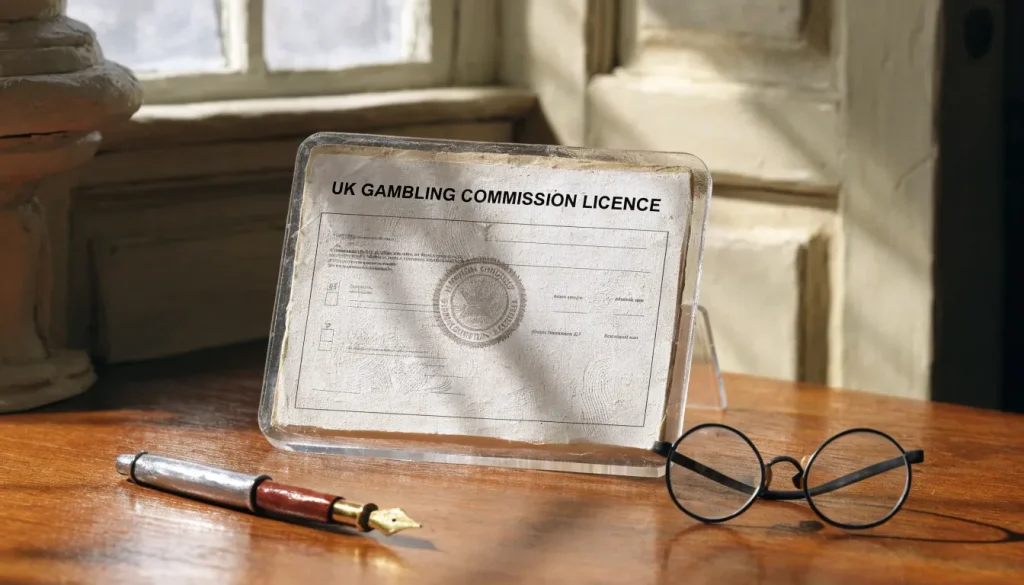
The Gambling Commission regulates commercial gambling in Great Britain, including online casinos. It is the sole regulator for commercial gambling there. Its remit over remote gambling offered to Great Britain consumers does not depend on where an operator keeps the equipment that runs its service. In other words, an offshore location does not by itself remove the requirement to hold the relevant UK licence when an operator offers remote gambling to customers in Great Britain.
The Commission issues operating licences to businesses and personal licences to individuals who work in regulated roles. For you, the practical distinction is whether the casino serving you holds the appropriate UKGC operating licence. An offshore casino may display a licence from another jurisdiction, but that is not a UKGC licence and does not place it under the Commission’s supervision. A claim that a site is “licensed” is therefore incomplete unless it is clear which regulator issued the licence and what market that licence covers.
Check who regulates the operator
Look for the operator’s legal name, stated licensing jurisdiction and licence information in the site’s terms or regulatory section. Then check that the information is consistent: the company named as the operator should match the entity identified in the licence details. A logo or a general claim of being regulated is not enough to establish that the site is authorised to serve Great Britain.
DO
- Check the operator’s legal name and licensing jurisdiction.
- Verify that the company name matches the entity in the licence details.
- Confirm if the licence is issued by a specific regulator.
DON’T
- Rely on a general claim of being “regulated”.
- Assume a logo alone proves regulatory oversight.
- Assume an offshore licence provides UKGC protections.
This check matters especially when a VPN-friendly casino accepts a connection from the UK. Technical access does not establish that the operator is authorised to offer gambling here. Nor does a licence from an offshore regulator transfer the Gambling Commission’s oversight or remedies to you. If the operator is offshore and does not hold a UKGC licence, you are dealing with a business outside the UKGC regulatory system.
The distinction is not a judgement about whether a site looks polished or whether its games appear familiar. It is about who is responsible for regulating the service for the market in which you are playing. A site can be easy to reach and still leave you without the local oversight that UKGC licensing provides. Convenience is not a regulatory status.
Understand what you give up offshore
Playing at an offshore casino that permits VPN connections means giving up UK consumer protections associated with the UK regulatory system. If a dispute arises, you cannot treat the operator as though it were supervised by the Gambling Commission simply because you live in the UK or have used a familiar payment method. The fact that playing there is not itself a criminal offence does not create a UKGC route for resolving problems with the operator.
Malta MGA Licence and Online Casinos in the UK
Read the terms before registering, with particular attention to the operator’s identity, the jurisdictions it says it accepts and the rules governing accounts and disputes. Check that the terms do not contradict the site’s public claims. If the operator’s documents say that UK residents are not accepted, a VPN connection does not make that restriction disappear. Proceeding despite such a term can put your account at risk, including account closure and the loss of access to funds or winnings.
Do not assume that a site’s willingness to accept a connection amounts to consent to your play. The operator’s terms set the conditions under which it offers the service. If those terms exclude UK players, the fact that a page loads or registration appears possible is not a substitute for permission. A VPN-friendly label describes access through a VPN; it does not certify the operator for the UK market or guarantee that your account will remain open.
There is an uncomfortable gap between legal liability for the player and practical protection as a customer. You may not be committing a crime by playing at an offshore casino, but if the operator acts against you, you do not gain UKGC consumer protections merely because you are based in Great Britain. Those are separate issues, and confusing them can make an offshore site seem more secure than its regulatory position warrants.
Check the self-exclusion position
Self-exclusion is another point to verify before you open an account. Offshore casinos do not provide GamStop self-exclusion tools. GamStop is a UK self-exclusion scheme for gambling sites that participate in it; do not assume an offshore operator will recognise an existing exclusion or allow you to use the same tool there.
GamStop
Offshore casinos do not provide GamStop self-exclusion tools, so an existing UK exclusion may not be recognised.
If you rely on self-exclusion to prevent yourself from gambling, that difference is decisive. A site that is accessible through a VPN is not a safe workaround for an exclusion from UKGC-licensed gambling. The absence of GamStop tools means that you should not expect the same barrier to account access. Consider that consequence before creating an account, not after you have deposited.
Make the decision with the full picture
A sensible pre-registration check is brief but specific:
- Identify the company operating the casino, not just the brand shown on its homepage.
- Confirm which regulator issued its licence and whether it holds a UKGC licence.
- Read the terms for restrictions on UK residents and for the conditions that can lead to account closure.
- Check whether the operator offers GamStop self-exclusion, and do not assume that an offshore site does.
- Treat the ability to connect as a technical fact, not proof of UK authorisation or consumer protection.
These checks cannot turn an offshore operator into a UKGC-licensed one. They help you understand which rules apply and what protections are absent before you decide whether to proceed. If the site’s licensing details or terms are unclear, that uncertainty is itself relevant: you would be relying on an operator whose position you cannot confidently establish.
For a UK player, the central question is not simply whether a VPN casino will let you through. It is whether the operator is authorised to serve your market, whether its stated rules allow your participation, and whether you accept the consequences of being outside the UKGC system. The UK law position for the player and the operator’s regulatory status are not interchangeable. A legal lack of criminal liability does not amount to an endorsement, a licence, or a promise of recourse if something goes wrong.
Crypto, KYC and Withdrawals at VPN-Friendly Casinos
Using cryptocurrency to deposit can make a small transaction less dependent on conventional payment checks. It may also reduce some location checks and KYC friction at VPN-friendly casinos. That is a limited convenience, not anonymity: operators can still collect device fingerprints, records of IP addresses and browser data.
Anjouan Casino Licence in the UK: What It Means
KYC, or “know your customer”, means checks used to establish who an account holder is. A casino may let you make a small withdrawal without providing documents, then ask for identity checks once your withdrawals pass a larger threshold. Some offshore casinos set that point at $1,000 or its equivalent in cryptocurrency. The precise policy depends on the operator, so a small initial payment does not establish that later withdrawals will be document-free.
This distinction matters when choosing a payment method. Crypto can reduce friction at the point of a small transaction, but it does not remove an operator’s ability to request documents later. If a request is made, the withdrawal may depend on completing the checks; the fact that earlier payments went through without them is not a guarantee about a larger cash-out.
Withdrawal timing depends on the method
A specialist review of VPN-friendly casinos reports fiat withdrawals by e-wallet or bank transfer taking between one and five days. The same type of review gives a shorter estimate for crypto withdrawals: from minutes to a few hours. These are reported timings, not a dependable promise for every operator or transaction. Processing rules can vary, and the time quoted for a method does not show whether an account has cleared any required checks.
Fiat Withdrawals
Methods like e-wallets or bank transfers typically take between one and five days.
Crypto Withdrawals
Digital currency transfers are often faster, typically taking from minutes to a few hours.
An e-wallet is a payment service that lets you send or receive money through an account with that provider. Its withdrawal estimate is distinct from a bank transfer’s, even when both are grouped as fiat methods. Crypto transfers, meanwhile, involve digital currency rather than a bank or e-wallet payout. The route may be quicker according to the review, but speed alone says nothing about what information the casino has retained or may ask for later.
Before depositing, read the operator’s payment and verification terms together. Look for which methods are available for both deposits and withdrawals, what documents may be requested, and when checks can be triggered. A payment option that appears simple at the deposit stage may not offer the same ease when you try to withdraw.
For any payment route, keep the transaction record and the operator’s stated terms. That gives you a clear reference if the casino later asks for verification or handles a withdrawal differently from the published timing. Neither crypto nor an earlier successful payout removes the possibility of further checks.
Our top casino picks for the UK
- EvoSpinBonus: 125% up to €2500 + 125 Free Spins · Payout speed: 1-3 business days
- x3betBonus: Welcome Pack 100% Up to £1.000 + 200 Free Spins · Payout speed: 1-3 business days
- ChanzeBonus: Slots Welcome Bonus #1 200% up to €500 · Payout speed: 1-3 business days
- SlotoSportBonus: 500% up to £ 10 200+ 777 FS · Payout speed: 1-3 business days
- NightLuckBonus: Welcome Pack + 805% Up To 6400€ + 280 FS · Payout speed: 1-3 business days
- WinBeastBonus: €5000 + 500 FS + €650 Freebet · Payout speed: 1-3 business days
What “Best for VPN Use” Can—and Cannot—Mean
A casino described as “best for VPN use” should not be judged by whether its site loads through a VPN alone. That says little about the terms you agree to, the regulator responsible for the operator or whether you can withdraw funds using a method available to you.
Trusted UK Casino: How to Check a Site
Start by identifying the operator’s jurisdiction and licence. VPN-friendly casinos are mostly offshore operators licensed in Curaçao, the Isle of Man or Malta. Those locations are not interchangeable labels: check which regulator the operator names and whether its terms actually permit customers connecting from the UK. A prominent licence badge is not a substitute for reading the operator’s own rules.
Next, look for a clear VPN policy. It should explain whether VPN connections are allowed, whether restrictions depend on the player’s location, and what the operator can do if it decides the terms have been breached. Policies can change without notice, so information in an old review or comparison may no longer match the current terms. Recheck the operator’s pages before registering and again before making a deposit.
Withdrawal rules also matter. Read which payment methods are supported, whether the method used to deposit affects how you can cash out, and what restrictions apply to withdrawals. Bank-card withdrawals are described as rare at VPN-friendly casinos in a specialist review; treat that as a report about the operators it assessed, not a reliable rule for every casino. Confirm the available methods directly with the operator rather than assuming your preferred option will be offered.
The word “best” is therefore a question of fit, not a dependable ranking. An operator with a clearly disclosed jurisdiction and consistent terms may be easier to assess than one whose VPN rules or withdrawal conditions are difficult to find. But clear information does not establish that the operator will accept your account or that its policies will remain unchanged.
Summary
- A VPN-friendly label describes technical connection policy, not regulatory approval.
- Using a VPN does not exempt you from identity or location verification.
- Offshore casinos operate outside the UKGC consumer protection system.
- Always read the specific terms regarding VPN use and UK residency before depositing.
If an operator’s terms are vague, conflict with information elsewhere on its site or do not state how VPN use is treated, that uncertainty is itself relevant. Do not infer permission from the fact that you can reach the site. A VPN-friendly label may describe technical access; the operator’s current terms determine what it says it allows.
Why Players Consider VPN Access—and the Trade-Offs
People may turn to a VPN for reasons that have little to do with a casino’s own rules. One is access: some UK internet service providers restrict access to particular sites. A VPN can mask your IP address and route your connection through a network outside the UK, which may bypass that restriction. This changes how your connection appears to the service provider; it does not establish that a casino accepts players connecting this way.
Privacy is another motivation. A VPN encrypts the internet connection, making information harder for hackers or cybercriminals to intercept while it is travelling between your device and the VPN service. That protection has limits: it does not make every activity online anonymous, nor does it show that a gambling site itself is trustworthy. You are also placing trust in the VPN provider handling your connection.
These benefits explain why someone might look for VPN-friendly casinos, but they should not be confused with permission or safety. A casino’s terms determine whether it accepts VPN connections, and those terms can differ between operators. A VPN cannot make a prohibited connection permitted, and it cannot guarantee that access will continue.
There is a practical trade-off, too. A connection routed through another network may help you reach a site blocked by your provider, but it does not remove the need to understand who operates the casino and what its rules say. Encryption protects data in transit; it is not a substitute for checking the operator’s stated jurisdiction, licence and VPN policy.
Non-UK-Regulated Casinos: Rules for Great Britain
So, the reasons to use a VPN are clear: masking an IP address may get around an ISP access restriction, and encryption can help protect personal information on the connection. Neither point proves that an offshore operator is safe, that a UK player is allowed under its terms, or that the player will avoid account consequences. Access and approval remain separate matters.
VPNs and Casino Games: Access Is Not Permission
A VPN can alter the IP address a casino sees, making your connection appear to come from a different network location. That may affect whether a game site loads, but access is not the same as permission to play. The operator’s terms still govern who may use the service and from where.
This distinction matters when you use a VPN for casino games. A site might let you reach its pages while prohibiting VPN connections or excluding players in the UK. If its terms do not allow your situation, getting through the front door does not make the account compliant. The operator may close your account, and winnings could be withheld.
At UKGC-licensed casinos, a changed IP address can also lead to a blocked connection. It does not replace identity checks: know-your-customer verification is a separate process from identifying your network location. A VPN therefore cannot make an account appear eligible under an operator’s rules or remove the need to verify who you are.
Before playing, read the casino’s terms on both VPN use and eligible locations. If the terms conflict with how you are connecting, do not treat a successful login as approval. A game loading on screen is evidence only that the page loaded; it is not evidence that the operator has accepted your location or granted permission to play.
Why do UK players use VPNs for casinos?
You may use a VPN to mask your IP address and get around access restrictions imposed by UK internet service providers. It also encrypts your connection, helping protect personal information from hackers.
Do VPN-friendly casinos pay out winnings?
Yes, VPN-friendly casinos can pay out winnings, but withdrawal checks and processing times vary by method. Fiat withdrawals typically take 1–5 days, crypto withdrawals minutes to a few hours, and e-wallet withdrawals about a day.
How do I withdraw winnings from a VPN casino?
You can withdraw by fiat methods such as an e-wallet or bank transfer, or by cryptocurrency. You may need to complete KYC checks, especially for larger withdrawals; bank card withdrawals are rare.
Can I use a VPN to play at online casinos in the UK?
You can use a VPN, but most UKGC-licensed casinos block VPN connections. Some offshore casinos permit them, but check the operator’s terms because access conditions vary.
Are VPN-friendly casinos legal for UK players?
It is not illegal for a UK resident to play at an offshore casino, and using a VPN to gamble is not criminalised by UK law. However, playing at an offshore casino means you forfeit UK consumer protections, and those casinos do not provide GamStop self-exclusion tools.
Is it illegal to use a VPN to gamble in the UK?
No. UK law does not criminalise using a VPN to gamble online, though a casino may block VPN connections under its own policy.
Related posts

Terms of Use
UK Gambling Casino Sites and Slots: Licensing and Play