Curaçao Casino Licence in the UK: What It Means
 Available in GB

A foreign gambling licence is not UK authorisation; the distinction matters for regulation, player protections and access from Great Britain.
What a Curaçao Casino Licence Does—and Does Not—Tell You
A Curaçao casino licence is a claim about the jurisdiction under which an online gambling business operates. It does not mean the casino is regulated by the UK Gambling Commission, nor does it establish that the operator is authorised to serve customers in Great Britain. Those are separate questions, governed by different regulators.
Curaçao is one of several jurisdictions associated with online casinos that fall outside UK Gambling Commission oversight. Others include Malta, Gibraltar and Anjouan. A site licensed in one of these places may describe itself as an international or foreign-licensed casino. In practical terms, that label distinguishes its regulatory home from the UK system; it does not make it a UK-regulated casino.
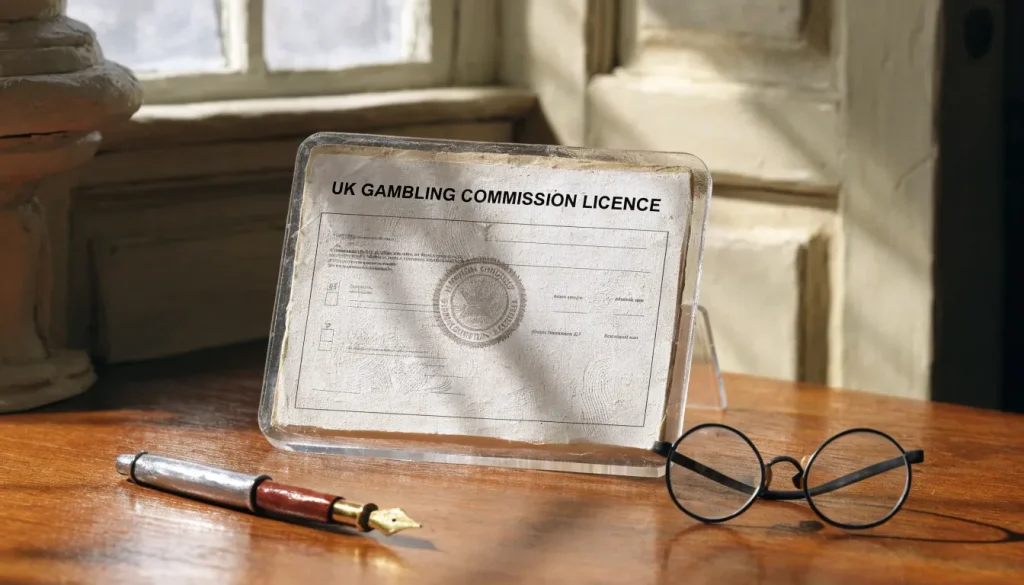
The UK Gambling Commission’s role is tied to the market an operator serves, not simply to where its offices or servers are based. An operator serving customers in Great Britain needs a Commission licence regardless of its location. A Curaçao licence, by itself, is therefore not a substitute for UK authorisation. The two licences answer different questions: one concerns the jurisdiction named by the casino, the other concerns permission to serve the British market.
This distinction matters when you encounter claims about Curaçao online casinos aimed at UK readers. A site’s use of British currency, a UK-facing page or an accessible website does not change the regulator stated on its licence. Nor does the word “licensed” on a homepage tell you that the operator has UK Gambling Commission approval. Read the jurisdiction attached to the claim rather than treating licensing as a single, universal status.
The term “Curacao casino” can also be used loosely in advertising. It may refer to a site that says it operates under Curaçao authority, but the wording alone does not establish who holds the licence or what entity runs the casino. The label should be understood as a description of the claimed regulatory jurisdiction, not a guarantee about every aspect of the business.
Anjouan Casino Licence in the UK: What It Means
That makes “Curacao casinos UK” an ambiguous phrase. It might mean casinos with a Curaçao connection that can be reached from Britain, or it might suggest casinos authorised for the British market. Those are not interchangeable descriptions. UK-facing availability does not turn a foreign licence into a British one, and a casino’s claims about its overseas status should not be read as proof of UK approval.
A useful starting point is to separate three ideas that are often blurred together: where a casino says it is licensed, whether it holds a UK Gambling Commission licence, and whether it serves customers in Great Britain. The first identifies a claimed overseas regulator. The second concerns British authorisation. The third describes the operator’s activity in the market. A foreign licence can answer the first point without answering the other two.
This is why lists of “top” or “best” Curaçao casino sites can obscure more than they clarify. A ranking label does not explain which regulator oversees the site, and it does not establish that the casino is permitted to serve customers in Great Britain. The important distinction is not whether a site uses the Curaçao name, but what that claim means in relation to UK regulation.
If a casino presents itself as Curaçao-licensed, treat that as a statement about its asserted regulatory base. Do not infer that the UK Gambling Commission has examined or approved it. Conversely, the existence of an overseas licence does not alter the requirement that operators serving Great Britain hold the relevant UK Gambling Commission licence. The phrase “Curaçao casino licence” therefore tells you where the operator says its regulatory authority comes from; it does not, on its own, tell you that the casino is authorised in the UK.
Our top casino picks for the UK
- EvoSpinBonus: 125% up to €2500 + 125 Free Spins · Payout speed: 1-3 business days
- x3betBonus: Welcome Pack 100% Up to £1.000 + 200 Free Spins · Payout speed: 1-3 business days
- ChanzeBonus: Slots Welcome Bonus #1 200% up to €500 · Payout speed: 1-3 business days
- SlotoSportBonus: 500% up to £ 10 200+ 777 FS · Payout speed: 1-3 business days
- NightLuckBonus: Welcome Pack + 805% Up To 6400€ + 280 FS · Payout speed: 1-3 business days
- WinBeastBonus: €5000 + 500 FS + €650 Freebet · Payout speed: 1-3 business days
How Curaçao-Licensed Online Casinos Operate
When you use a casino licensed outside the UK, the transaction process is shaped by the operator’s own payment arrangements rather than the systems used by a UK Gambling Commission-licensed casino. A Curaçao licence label may appear on a site, but it does not tell you which payment methods are available, how quickly a withdrawal will be processed or what checks the operator may request. Those details depend on the individual casino and the payment provider handling the transaction.
Payment methods and processing times depend on the individual casino and the specific provider handling your transaction.
Non-UK-regulated casinos may offer looser deposit or withdrawal policies, which can mean fewer restrictions or faster payouts. That possibility is not a promise: payment options and processing times can vary, and an operator may apply conditions that are not obvious from the cashier page. Before depositing, read the payment terms and check whether the method you use for funding an account can also be used to receive a withdrawal. A deposit method being available does not, by itself, establish that withdrawals can be sent back through it.
Payment routes and processing
A casino operating outside the UK may accept credit cards, e-wallets, bank transfers or cryptocurrency. Payments may go through alternative processors rather than the routes commonly associated with UK-licensed gambling. This can affect the name shown on a bank or card statement, the time taken for a transaction to appear, and the steps needed if a payment is delayed. The operator’s cashier should set out the methods it accepts, but the payment provider may also have its own rules.
Cryptocurrency can be another option at some sites. It can bypass the UK restriction on credit-card-funded gambling, but that does not make it equivalent to a card payment. The value of a cryptocurrency can change, and sending funds to the wrong address may be difficult or impossible to reverse. Check which currency the casino accepts, how it records the deposit and what method it will use to pay a withdrawal. A wallet option in the cashier is not a guarantee that every transaction will be available to you or that a deposit route will be used for a payout.
Casinos & Safety: UK Casino Topics and Licensing
The same caution applies to e-wallets and bank transfers. A payment can be declined or delayed by a bank, card issuer, wallet provider or intermediary, even if the casino lists the method as supported. If the casino uses a processor, the transaction may also appear under a different business name. Keep transaction records and avoid assuming that a successful deposit establishes how a later withdrawal will be handled.
Withdrawal timing is not uniform
Reported withdrawal periods differ. One general account puts payouts at non-GamStop casinos between 24 hours and five business days, depending on the payment method; another says that withdrawals at non-UK-regulated casinos can take as long as three or four weeks. These accounts do not describe a single dependable timetable. Treat any stated estimate as the operator’s claim about its own process, not as a deadline that guarantees when money will arrive.
There may be separate stages: the casino reviews a withdrawal request, completes any account checks, and then sends the funds through the selected provider. A delay at any stage can lengthen the wait. Check whether the published processing estimate refers only to the casino’s review or also includes the time for the payment to reach your account. If the terms are unclear, do not rely on a promotional promise of fast payouts.
Some specialist reviews also report that certain operators set daily, weekly or monthly withdrawal ceilings, so a larger balance may have to be paid in instalments. That should be treated as a reported feature of particular casinos, not as a standard condition across Curaçao-licensed sites. Look for any cap in the payment terms and check whether it applies to the amount requested, the amount approved or the amount actually sent. A limit can change the practical value of a quick-processing claim: the first payment may be sent promptly while the remaining balance takes longer to clear.
Withdrawal timing estimates
Reported withdrawal periods can vary significantly. Some sources suggest payouts at non-GamStop casinos take between 24 hours and five business days, while others report timelines as long as three or four weeks.
Check the rules before funding an account
The cashier explains what the site says it accepts; the terms explain how deposits and withdrawals are treated. Read both before sending money, including any requirements to use a particular withdrawal method or to complete checks before a payout. Keep a copy of the relevant terms and confirmation of each transaction. If a site’s payment page and its terms appear to conflict, clarify the point before depositing rather than relying on the more favourable interpretation.
A Curaçao label alone cannot predict the payment experience. Two casinos with the same licence description may use different processors, support different currencies and apply different withdrawal rules. For you, the practical question is not simply whether a method appears in a list, but whether its conditions, timing and route back to you are clear.
Curaçao Licence Claims: What You Can Verify
A casino’s claim that it holds a Curaçao licence is a claim about regulation outside the UK Gambling Commission system. Non-UK-regulated casinos operate without UKGC oversight, and operators serving customers in Great Britain are required to hold a UK Gambling Commission licence regardless of where they are based. A foreign licence label, by itself, does not establish that a casino is authorised to serve people in Great Britain.
The label still matters, but it is not proof of every detail a player may assume it covers. A site may use “Curaçao licensed” in its footer, terms or promotional material. That tells you what the operator says about its status; it does not independently confirm the identity of the company behind the site, the scope of any permission, or whether the claim applies to the particular service you are using.
Casinos Without a Swedish Licence: UK Regulation
Read the claim as a claim
Start with the casino’s own legal information. Look for the name of the operating company and the exact wording used about its licence. Check whether the same company name appears consistently in the terms, privacy information and account pages. If the site names only a brand, or gives a broad statement without identifying the company, you have less information with which to assess who is responsible for the service.
Treat references to “Curaçao eGaming” with the same care. A regulator’s name or logo on a website is not, on its own, confirmation that the site has a valid licence. Nor does the word “licensed” tell you which activities are covered or whether the operator’s arrangements extend to customers in your location.
A practical check is to compare the site’s wording across its key pages. If the footer names one company but the terms name another, or the licence statement is absent from the legal documents, pause before relying on it. An operator’s explanation can help you understand what it claims; it is not independent verification.
Separate licensing from UK authorisation
Curaçao is among the jurisdictions that typically license non-UK-regulated casinos, alongside Malta, Gibraltar and Anjouan. That broad category is not the same as UKGC regulation. A casino may have a foreign licence and still sit outside the UK system; the foreign label should not be read as a UK authorisation.
This distinction is especially important when a site describes itself as a Curaçao casino accepting UK players. The wording describes the operator’s presentation of its market, not a confirmation that it is permitted to serve Great Britain. A Curaçao licence claim cannot substitute for a UK Gambling Commission licence where one is required.
Regulatory Distinction
A foreign licence identifies a claimed jurisdiction but is not a substitute for UK Gambling Commission authorisation.
If you cannot establish who operates the site or what its licence statement actually refers to, do not treat the label as a checked credential. Be cautious about lists or recommendations that group sites together simply because they display the same licensing phrase. A shared label does not establish that each casino’s company details or regulatory status have been independently confirmed.
For a reader, the sound conclusion is narrow: note exactly what the casino claims, identify the company it says is responsible, and keep that separate from the question of UK authorisation. The wording on a website may be a starting point for scrutiny, but it is not the scrutiny itself.
Using an Offshore Casino from the UK: The Legal Position
The legal distinction is mainly between the business providing gambling and the person using it. The Gambling Act 2005 is directed at operators who supply gambling services into the UK market. It is not a law that makes an individual player a criminal simply for placing a bet with a site licensed abroad.
That does not mean a foreign licence gives an operator permission to serve customers in Great Britain. A company’s location does not change the requirement: operators offering gambling to people in Great Britain must hold a licence from the UK Gambling Commission. A Curaçao casino licence, or a licence from another jurisdiction, does not replace that UK requirement.
For players, the position is different. British citizens are not expressly barred by UK law from using gambling services licensed in another country, and gambling on a site that lacks a UK licence is not itself a criminal offence for the player. The distinction matters: the rules governing an operator’s right to serve the British market are not the same as rules imposing criminal liability on a customer.
US Casinos for UK Players: Rules and Risks
So, if you are considering a Curaçao casino from the UK, two points can be true at once: UK law does not make the player’s use of a foreign-licensed service a criminal offence, while the operator still needs UKGC authorisation to offer gambling to customers in Great Britain. Do not treat the first point as confirmation that the second requirement has been met.
The scope of the Gambling Act 2005 is also geographically specific. It applies to gambling in England, Wales and Scotland, but not Northern Ireland. That boundary is relevant when describing UK-wide rules: the legal framework should not be assumed to operate identically in every part of the United Kingdom. If you are in Northern Ireland, check the rules that apply there rather than relying on a summary of the Act.
In practical terms, a Curacao casino may be accessible to a British player, but accessibility is not the same as UK authorisation. Nor does the absence of criminal liability for the player amount to a recommendation to use the service. You remain responsible for checking the laws that apply where you live and understanding the implications of using a gambling service licensed abroad.
This is a narrow legal overview, not a guarantee about any particular operator or account. A claim that a casino holds a foreign licence does not establish that it has permission to serve Great Britain. Likewise, the fact that an individual player is not criminalised under the stated rules does not give the player access to UK regulatory processes if a dispute occurs. Those are separate questions, and confusing them can leave you with a misleading impression of what the law does—and does not—protect.
Legal Status
Attention While using a foreign-licensed site may not be a criminal offence for a player, the operator still requires UKGC authorisation to legally serve the British market.
UK Players, GamStop and Offshore Casinos
GamStop is the UK Gambling Commission’s self-exclusion scheme. It applies to gambling operators within the UKGC system; a casino operating outside that system is not part of GamStop. If you register with GamStop, you should not assume that the registration will prevent you from opening or using an account at a Curaçao-licensed casino.
That distinction matters if you are trying to stop gambling. GamStop is designed to block access to participating UK-licensed gambling services, not every website that offers casino games to people in Britain. A site’s use of phrases such as “not on GamStop” or “GamStop-exempt” describes its position outside the scheme. It does not mean GamStop has reviewed the site, approved it, or decided that it is suitable for people who have self-excluded.
The same point applies to searches for Curaçao casinos accepting UK players. A website may be accessible, or may state that it accepts customers from Britain, but that does not make it part of GamStop. Nor does the label establish that the site is safe or authorised to serve the British market. Those are separate questions; GamStop membership is not a general safety rating.
If you have self-excluded through GamStop, treat that choice as a boundary to maintain rather than something to work around. Do not rely on the scheme to block non-UK-regulated casinos. Avoiding sites outside it may require you to take additional steps, such as blocking access to gambling websites or asking someone you trust to help you keep to your decision. GamStop itself cannot impose its exclusion on an operator that is outside its coverage.
Merkur Casino Online UK: Games and Play Rules
There is also a difference between the protections attached to UK regulation and those available at a casino outside it. Non-UK-regulated casinos may apply less demanding responsible-gambling and data-protection rules than UKGC-licensed operators. A player using an offshore casino also gives up access to the UK’s Financial Ombudsman Service and the mandatory responsible-gambling tools associated with the UK system. Those limits are especially relevant if you are considering a site because it is described as a Curaçao casino for UK players.
Being outside GamStop is not evidence that an operator is acting improperly; it tells you that this particular UK self-exclusion scheme does not cover it. But it also cannot be treated as a benefit without considering why the scheme exists. If you are seeking a casino specifically because a GamStop exclusion will not apply there, pause before depositing. The fact that a site may be reachable does not mean it offers a safe route around a decision you made to stop gambling.
For anyone who has not self-excluded, the practical point remains the same: GamStop does not cover all gambling websites. A Curaçao casino may be outside the scheme, but that does not answer whether using it is appropriate for you or what protections you would have if something went wrong. Check the implications separately, and do not mistake absence from GamStop for endorsement.
Do
- Check the specific terms and conditions for any bonus
- Verify the name of the operating company
- Keep records of all transactions and communications
Don’t
- Assume GamStop registration blocks all offshore sites
- Treat a foreign licence as UK regulatory approval
- Rely on a site’s promotional claims without checking the legal details
What ‘Outside GamStop’ Means for Your Protection
For someone who has chosen to self-exclude, a casino operating outside the UK system may still be accessible. That is not a weakness in a block that the player can fix by selecting a different setting: the operator is outside the arrangements that make UK safeguards apply. A Curaçao licence, if a site claims to hold one, does not itself bring the site under UK Gambling Commission rules or make UK protections available.
The difference matters beyond self-exclusion. UK-licensed operators must provide mandatory responsible-gambling tools. At a non-UK-regulated casino, you may not have access to the same requirements or safeguards. Tools and policies can vary by operator, and a site’s own controls should not be treated as an equivalent substitute for UK protections.
Data handling is another concern. Non-UK-regulated casinos may follow less stringent data-protection rules than operators licensed by the UK Gambling Commission. Before providing personal or financial information, read the operator’s privacy terms and consider what they say about collecting, storing and using your data. A licence claim alone does not tell you what protections apply in practice.
Complaints and disputes
If a dispute arises, the routes available to you may also be different. Players using offshore casinos cannot take a complaint to the UK’s Financial Ombudsman Service, and they do not have access to the UK regulator’s complaints process for that operator. This can leave you relying on the casino’s own procedure rather than an independent UK route.
The position can be particularly limited where a site operates under an Anjouan licence. The Anjouan authority does not investigate, mediate or decide player complaints, and Anjouan-licensed casinos do not provide an independent dispute-resolution service comparable to the alternative dispute resolution providers used by UK-regulated operators. A complaint process run by the operator is not the same as an independent appeal.
Safe Online Casinos in the UK: How to Check
Read the complaints policy before registering. Check how to contact the operator, what information it asks you to provide and what happens if you disagree with its response. Keep copies of relevant terms, messages and transaction records. These steps do not create a regulator or guarantee a remedy; they simply leave you with a clearer record if a dispute develops.
A site may describe itself as one of the Curacao casinos outside GamStop, but that label says little about the support available if something goes wrong. Focus instead on the protections the operator actually offers and the independent routes that remain available. If you rely on self-exclusion or other UK safeguards to manage gambling, an operator outside the UK system may not preserve them.
Why This Guide Does Not Provide a Curaçao Casino List
A list of Curaçao-licensed casinos can look like a practical shortcut: choose a name, then decide whether to sign up. But a name beside a licence label is not enough to establish that an operator is suitable for someone in Great Britain. A directory can give an impression of endorsement even when it has not established what the licence covers or whether the casino may serve customers here.
“Non-UK-regulated casino” describes a site operating without oversight from the UK Gambling Commission. Such sites may be licensed in jurisdictions including Curaçao, Malta, Gibraltar or Anjouan. That foreign licence does not replace the British requirement: operators serving customers in Great Britain need a UK Gambling Commission licence, wherever they are based.
A list of casino names does not serve as an endorsement or verification of their regulatory status.
That distinction makes a named list especially easy to misread. A casino can describe itself as Curaçao-licensed, but the label alone does not show that it holds the licence it claims, that the licence relates to the company taking your payment, or that the operator is authorised to serve the British market. Listing it here would risk turning an unverified claim into an implied recommendation.
The same problem applies to casino reviews. A review may describe games, bonuses or the sign-up process, but those details do not establish regulatory status. Nor does the presence of a Curaçao slot or a familiar game provider prove that the casino’s licence claim is accurate. A polished site and a substantial game catalogue are not substitutes for evidence about who operates the service and which regulator oversees it.
A more useful guide separates what can be said with confidence from what needs checking for each individual operator. It can explain what a foreign licence label does and does not mean, why it differs from UK regulation, and what questions to ask before relying on a casino’s own claims. It should not turn a collection of names into a shortlist unless those names and their status can be substantiated.
For you, the practical point is straightforward: treat a Curaçao licence claim as a claim to investigate, not as a recommendation or proof of UK authorisation. A list may be convenient, but convenience is not verification.
Checking a Casino’s Licence and Company Details
A licence claim is only useful if it can be tied to the casino you are actually using. Start with the operator’s own terms, usually under headings such as “About”, “Terms and Conditions” or “Licensing”. Note the named company, the jurisdiction it says issued the licence and any licence reference shown. Then compare those details with the company named in the site’s terms and the entity that handles your account. A brand name alone does not identify the legal operator.
Be precise about the regulator. Non-UK-regulated casinos operate outside the oversight of the UK Gambling Commission and may be licensed in jurisdictions including Curaçao, Malta, Gibraltar or Anjouan. Those are separate licensing systems; a claim to be licensed somewhere outside the UK does not establish that the casino holds a UK Gambling Commission licence.
For a Curaçao casino licence check, look for consistency across the site’s legal pages. The operator name, jurisdiction and licence wording should not change between the footer, terms and account documents. If a company name is absent, different from the name in the licence statement, or difficult to identify, treat that as a reason to pause rather than filling the gap with an assumption.
You can also contact the operator and ask which legal entity accepts your account and what licence applies to it. Keep the reply and a copy of the terms you relied on. These records may help you understand what the operator is claiming, but they do not independently confirm that the claim is genuine or current.
A polished badge or copied regulator logo is not proof by itself. Nor does a licence claim settle whether a foreign-licensed casino is authorised to serve customers in Great Britain. Keep the distinction clear: checking what a company says about its licence is general diligence; confirming a particular Curaçao licence requires reliable, jurisdiction-specific verification. Do not treat the first as the second, or regard an offshore claim as a substitute for UK regulation.
Checking Bonus Terms
- Confirm the specific wagering requirement multiplier
- Check if the requirement applies to the deposit or just the bonus
- Note the expiration date of the bonus or free spins
- Verify any maximum withdrawal limits for winnings
Bonuses, Payments and the Cost of Withdrawing
A welcome offer can look generous before its conditions are applied. Wagering requirements set how much qualifying play is needed before bonus funds or winnings can be withdrawn. A specialist review has reported offshore welcome offers with requirements of 35 times the bonus or more, but that figure should not be treated as a standard applying to every casino. The terms of the specific offer matter.
A specialist review has also described offers with a 40-times requirement calculated in different ways: on the bonus and deposit together, on the bonus alone, or on the bonus and free spins combined. Those calculations produce different obligations, so check what amount must be wagered and which games count before accepting. Free-spin winnings may carry separate conditions. One specialist review reported requirements of 30 to 50 times the winnings, alongside withdrawal caps of £5 to £50. These are reported offer terms, not a promise that every promotion uses them.
A no-deposit bonus is not necessarily withdrawable cash. Check whether winnings must be wagered, whether a cash-out cap applies and when the offer expires. A specialist review has reported free-spin packages expiring within 24 to 72 hours; the operator’s own terms are the relevant guide for an offer you are considering. A deadline can make a promotion difficult to use, even where the headline offer sounds attractive.
Payments bring a separate uncertainty. A casino may accept a particular deposit method without allowing withdrawals through that same route. Read the cashier and withdrawal terms before depositing, including any method-specific conditions. Operators can also request identity or payment checks before releasing funds. A specialist review has reported requests for notarised documents or video calls; these are not established requirements across the market, but they illustrate why verification terms deserve attention.
Published withdrawal estimates are not consistent. Some sources describe payouts as taking from 24 hours to five business days, while others warn that delays can stretch to several weeks. Treat neither estimate as guaranteed: payment method, account checks and the operator’s handling can affect timing. Before accepting a bonus, consider whether its wagering rules, expiry conditions and cash-out limits are worth the restrictions attached to your balance.
Malta MGA Licence and Online Casinos in the UK
What an Offshore Gaming Licence Cannot Guarantee
A foreign gaming licence is not the same as UK-recognised protection. A Curaçao gambling licence may indicate that an operator is authorised under a foreign framework, but it does not give you the safeguards attached to a UK Gambling Commission licence. If a dispute arises, you cannot take it to the UK regulator simply because the casino accepts customers in Britain.
The distinction matters most when money or account access is at stake. A licence alone does not guarantee that a casino will pay a balance promptly, resolve a complaint fairly or remain in business. If an operator changes its terms, freezes an account or fails, the practical options available to you may be limited. You should understand those risks before depositing and check the law that applies where you live.
The level of financial protection also depends on the specific regulator and its rules; foreign licences should not be treated as interchangeable. For instance, Anjouan’s framework does not require casinos to keep player funds separate from operating funds, nor does it mandate independent audits or testing of random number generators. If an Anjouan-licensed operator fails, players may be unsecured creditors: they could have to claim alongside other creditors, without a guarantee of repayment.
That is a material difference from assuming your balance is ring-fenced or that games have been independently tested. The phrase “licensed casino” does not, on its own, tell you what happens to customer funds if a business collapses or what evidence supports the fairness of its games.
A Curaçao gaming licence, or any other foreign authorisation, should therefore be understood within the limits of its own jurisdiction. It cannot by itself create UK complaint rights, secure your funds or ensure that a dispute will be resolved in your favour. A licence is one part of the picture, not a promise of protection.
Is it legal for a UK player to gamble at an Anjouan-licensed casino?
Yes. UK law does not explicitly prohibit you from using gambling services licensed abroad, and players do not commit a criminal offence by gambling on an unlicensed site. However, an Anjouan licence does not authorise the casino to serve customers in the UK.
How do casinos outside GamStop operate?
They operate outside the UK Gambling Commission’s oversight and are not part of the UK’s GamStop self-exclusion scheme. They may use overseas licences and alternative payment processors, and their responsible-gambling protections and withdrawal rules can differ from those of UK-licensed casinos.
What payment options are available at Non UK Casinos?
You may find credit cards, e-wallets, bank transfers, cryptocurrencies, and, at some casinos, payments through a mobile phone bill or prepaid balance. Check the casino’s cashier and payment terms to confirm which methods work for both deposits and withdrawals.
Are Anjouan casinos legal to play at from the UK or Germany?
For UK players, using an overseas-licensed gambling service is not explicitly prohibited by UK law, and players do not commit a criminal offence by gambling on an unlicensed site. An Anjouan licence does not authorise the casino to operate in the UK or other restricted markets.
Is it safe to claim 500 free spins from an offshore casino?
A 500-spin offer does not guarantee a safe or unrestricted withdrawal. Free-spin winnings commonly carry wagering requirements of 30–50 times the winnings, withdrawal caps of £5–£50, and expiry periods of 24–72 hours; check the offer’s terms before claiming.
Related posts

Terms of Use
UK Gambling Casino Sites and Slots: Licensing and Play