Gibraltar Casino Licence and UK Market Rules
 Available in GB

A Gibraltar licence and UK Gambling Commission authorisation are separate approvals, with different roles in regulating gambling services.
What a Gibraltar Licence Does—and Does Not—Mean for UK Players
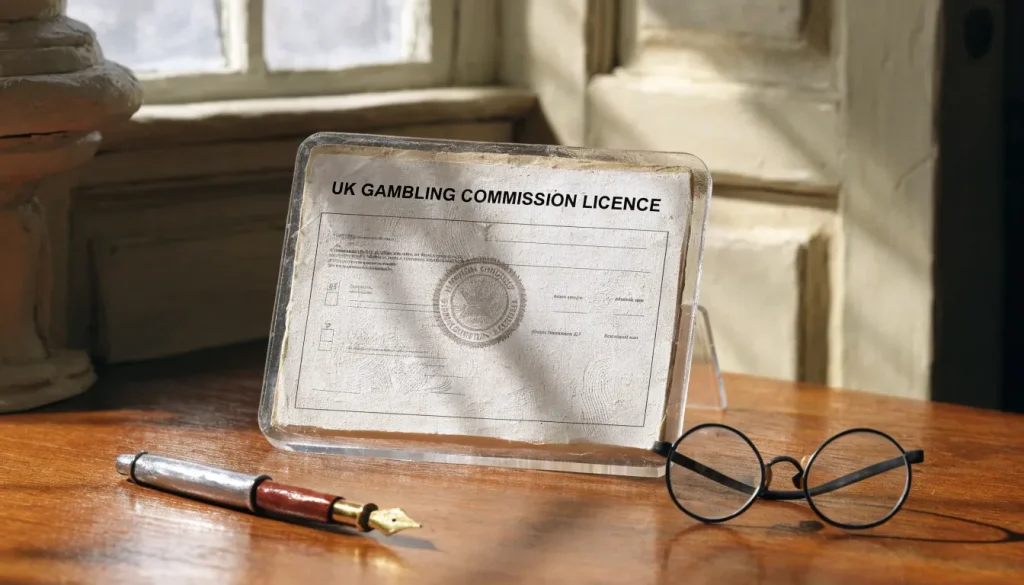
A Gibraltar gambling licence tells you something about the jurisdiction that has authorised an operator. It does not, by itself, establish that the operator is permitted to offer casino gambling to customers in Great Britain. For that, the relevant question is whether the operator holds authorisation from the UK Gambling Commission (UKGC), the regulator responsible for gambling services supplied to the British market.
The distinction matters because a company’s registered office, management base or licensing jurisdiction is not the same thing as the market it serves. An operator may be based in Gibraltar and hold a local licence, yet still need UKGC authorisation if it supplies gambling services to customers in Great Britain. Location does not provide an exemption.
Two licences, two different questions
A Gibraltar licence relates to Gibraltar’s regulatory framework. A UKGC licence relates to permission to serve the regulated British market. These are separate authorisations, issued by different regulators for different purposes; one is not a substitute for the other.
So when you see a reference to a Gibraltar online gambling licence, read it narrowly: it identifies a claimed regulatory connection to Gibraltar. It does not answer whether the operator may lawfully target or serve customers in Great Britain. The same applies to descriptions such as “Gibraltar-licensed casino” or “online casino with a Gibraltar licence”. Those labels may describe where an operator is licensed, but they do not establish its status under UK rules.
The UKGC requirement turns on the service being supplied, not the operator’s home address. An operator serving customers in Great Britain must hold the relevant UKGC licence whether it is based in Britain, Gibraltar or elsewhere. A Gibraltar authorisation may coexist with UKGC authorisation, but the Gibraltar licence alone does not satisfy the British requirement.
Merkur Casino Online UK: Games and Play Rules · Curaçao Casino Licence in the UK: What It Means
What the British rule covers
The Gambling Act 2005 governs gambling in England, Wales and Scotland. Its reach is directed at operators supplying gambling services into the British market, rather than at the individual who places a bet or plays a game. That distinction helps explain why the key licensing question concerns the operator and its activity.
In practical terms, if a site offers gambling to customers in Great Britain, its overseas location does not remove the UKGC licensing requirement. A business cannot turn a service aimed at British customers into a Gibraltar-only service simply by operating from Gibraltar or displaying a Gibraltar licence. The market being served is central.
This is why “Gibraltar casino” is not enough information to decide whether a site is authorised for British players. It may refer to an operator licensed in Gibraltar, a company with a Gibraltar connection, or a site that presents itself that way. None of those descriptions alone confirms permission to serve Great Britain. The question remains whether the operator has the appropriate UKGC authorisation for that activity.
What the law says about the player
The legal position for individuals is different from the rule imposed on operators. UK law does not set out a general prohibition specifically barring British citizens from using gambling services licensed abroad. The Gambling Act’s focus is on operators supplying services into the British market, not on making a player’s use of an overseas-licensed service a criminal offence.
That distinction should not be mistaken for approval or UK regulation. A person’s ability to access a site does not mean the site is authorised to serve Great Britain. Nor does the fact that an operator holds a licence elsewhere bring it within the UKGC system. The operator’s obligations and the player’s position are separate questions.
If you are considering whether a site is legally authorised for customers in Great Britain, the useful distinction is therefore straightforward: a Gibraltar licence concerns Gibraltar; UKGC authorisation concerns the regulated British market. Do not treat the first as evidence of the second.
A Gibraltar licence identifies a regulatory connection to Gibraltar, but it does not establish whether an operator is permitted to serve customers in Great Britain. For that, UKGC authorisation is required.
Reading claims about Gibraltar regulation
References to Gibraltar regulation can sound reassuring because they identify a recognised licensing jurisdiction. But a jurisdiction name is not a complete account of an operator’s permissions. It does not tell you, on its own, which customers the operator may serve, whether it holds a separate British licence, or whether a claim about UK access is accurate.
Non-UK-regulated casinos are sites that operate outside UKGC oversight. They may hold licences in places such as Gibraltar, Malta, Curacao or Anjouan, but those licences do not amount to UKGC regulation. The category is defined by the absence of UKGC oversight, not by whether the operator has any licence at all.
That is a useful distinction when a site describes itself as licensed or regulated without making clear by whom and for which market. “Licensed” is not a universal status. The regulator and the market covered by its permission matter. A Gibraltar licence may be relevant to the operator’s status in Gibraltar, while a separate UKGC licence is required for supplying gambling services to customers in Great Britain.
It is also worth keeping the geographic scope precise. The British-market licensing rule discussed here concerns Great Britain: England, Scotland and Wales. The Gambling Act 2005 does not govern Northern Ireland. A general statement about a “UK licence” can obscure that distinction, so claims about authorisation should be read in relation to the market and jurisdiction they actually cover.
A practical way to interpret the label
When you encounter a Gibraltar casino licence claim, separate three points rather than treating them as one:
- Where is the operator licensed? A Gibraltar licence identifies a connection to Gibraltar’s regulatory framework.
- Which market does the operator serve? The operator’s base does not determine whether it is supplying services to customers in Great Britain.
- Does it hold UKGC authorisation for that service? Operators serving Great Britain need the relevant UKGC licence regardless of where they are based.
It is a way to avoid confusing a foreign authorisation with permission to operate in Britain. A Gibraltar online casino may be described as licensed in Gibraltar, but that description alone does not settle its UK status. The decisive point for Great Britain is whether the operator has UKGC authorisation to serve that market.
The phrase “Gibraltar casino licence UK 2026” can therefore be read as a question about two different things: what a Gibraltar licence means, and whether that licence permits service to British customers. The answer to the second does not follow from the first. For customers in Great Britain, a Gibraltar licence on its own is not the required UKGC licence.
Gibraltar-Licensed Casinos and the UK Market
The phrase “online casinos in Gibraltar” can describe several different things. It may refer to a gambling company based in Gibraltar, a business that holds a Gibraltar licence, or a website that someone associates with the territory. Those descriptions are not interchangeable. A company’s address does not by itself establish which regulator licenses its gambling activity, and a licence does not, by itself, show which customers the operator is permitted to serve.
Regulatory Connection Gibraltar
Target Market Great Britain
Required Authorisation UK Gambling Commission (UKGC)
This matters because “Gibraltar casino” is often used as a market label, not as a precise statement about a particular website. A search for Gibraltar casinos online can bring together businesses with different corporate structures, regulatory arrangements and intended markets. The wording alone is not evidence that a site is operating under a Gibraltar licence, or that it is authorised to take customers in Great Britain.
Location, licence and customer market are separate
A gambling operator can have a connection to Gibraltar without that connection answering every regulatory question. Its registered company, operating business, website and licence may relate to different entities or places. To understand what a claim means, you need to distinguish the operator’s base from the jurisdiction that regulates the gambling service and the market the operator serves.
A non-UK-regulated casino is an online gambling site outside the oversight of the UK Gambling Commission. Such sites are commonly licensed in jurisdictions including Gibraltar, Malta, Curacao and Anjouan. The list describes possible licensing jurisdictions; it does not establish that every company based in one of them holds a licence there, or that every site associated with that territory is a licensed casino.
Nor does a foreign licence tell you that an operator can serve customers in Great Britain. Operators serving that market need a UK Gambling Commission licence, regardless of where their business is based. So a Gibraltar address, a Gibraltar company name or a claim to hold a Gibraltar licence should not be read as a substitute for UK authorisation.
Anjouan Casino Licence in the UK: What It Means · Casinos Without a Swedish Licence: UK Regulation
The reverse distinction matters too: a business’s association with Gibraltar does not prove that it is restricted to Gibraltar customers. The relevant question is not simply where the business is located. It is whether the operator is authorised for the market it is targeting. That is why a phrase such as “Gibraltar-licensed” needs to be read as a claim about a particular regulatory relationship, not as a complete description of the site’s legal position in Britain.
What “Gibraltar casino companies” might mean
People use “Gibraltar casino companies” to refer to different kinds of businesses: a gambling operator, a company that owns a website, a corporate group with several brands, or a service provider connected to the gambling industry. Only some of these may be the entity responsible for offering gambling to customers. A parent company’s name or a group’s office location does not necessarily identify the legal operator shown in the site’s terms.
The same caution applies to brand names. One company can operate a website under a different trading name, while a corporate group can own more than one brand. If a page describes itself as a Gibraltar casino, the label alone does not tell you which legal entity is responsible for the gambling service. The company name and licensing claim need to be understood together, rather than inferred from a familiar brand or a location mentioned in marketing.
DO
- Check the UK Gambling Commission public register.
- Verify the legal company name behind a trading brand.
- Match the operator name to their specific UK licence.
DON’T
- Assume a Gibraltar licence covers the British market.
- Treat a site’s location as proof of UKGC authorisation.
- Rely on marketing badges or logos as verification.
These distinctions are useful even when a site’s presentation appears straightforward. A logo, footer statement or reference to a Gibraltar office may communicate an association, but it is not a full account of who regulates the service or which customers may use it. A reader should treat the wording as a lead to a specific claim, not as a verification in itself.
Why lists can give the wrong impression
Lists described as the “best” or “top” Gibraltar online casinos can suggest that all the sites in them share a verified legal status. That may be more than the label establishes. A list might be organised by company location, stated licence, brand association or an editorial category; those are different criteria. Without knowing what the label means for each entry, the ranking can blur distinctions that matter to a reader in Great Britain.
The word “best” also implies a comparison based on consistent standards. A list cannot establish that a site is suitable for you merely because it appears alongside other Gibraltar-related names. Nor does its placement show that the operator is authorised to serve your market. Popularity, a shared location and a claimed licence are not substitutes for the regulatory status of the service you would actually use.
That is why “casino sites in Gibraltar” should not be treated as a ready-made directory of sites for British players. It is a broad description that can mix operators and corporate connections, while leaving the key question unanswered: whether a particular operator may serve customers in Great Britain. A label can be accurate in one limited sense and still be incomplete for the decision a reader is trying to make.
Read the claim at the right level
When you encounter a Gibraltar-related description, separate three claims that are often bundled together:
- Where the business is based: This is a statement about location or corporate presence.
- Which jurisdiction licenses the gambling service: This is a regulatory claim about the operator and its activity.
- Which market the operator serves: This concerns the customers the service is offered to and the authorisation required for that market.
One claim does not automatically prove the others. For instance, a company’s Gibraltar address does not establish that its website holds a Gibraltar gambling licence. A Gibraltar licence claim does not establish UK Gambling Commission authorisation. And a site’s availability to view from Britain does not itself show that the operator is authorised to serve British customers.
The distinction is not a technicality. It prevents a reader from mistaking a corporate location for permission to operate in another market. It also keeps the focus on the entity providing the gambling service, rather than on a broad label that might refer to a parent company, a brand or a place of registration.
Applying the terminology to Britain
For a reader in Great Britain, the practical interpretation is direct: Gibraltar may describe the operator’s location or licensing connection, but it does not displace the requirement for a UK Gambling Commission licence when an operator serves customers in that market. A site’s description as a Gibraltar casino therefore cannot, on its own, settle whether it is authorised to accept British customers.
Licensing Distinction
A Gibraltar licence concerns Gibraltar, while UKGC authorisation concerns the regulated British market.
This is different from asking whether a company is genuinely connected to Gibraltar. That may be relevant to understanding its corporate or licensing claims, but it is not the same question as whether the gambling service is regulated for Great Britain. Treating the two as one question risks taking a true location claim as proof of a separate authorisation.
The same applies to references to a “Gibraltar-licensed casino” in a company profile, directory or promotional description. The phrase may identify a claimed licence jurisdiction, but it does not automatically show the scope of that licence, the identity of the operator, or the markets for which the service is authorised. Those are separate matters, and the wording should not be stretched beyond what it actually says.
In short, Gibraltar-related labels can help describe where a gambling business is based or which jurisdiction it says licenses it. They do not, by themselves, identify a verified set of casinos for Great Britain. When interpreting a site’s claim, keep its location, licensing relationship and intended customer market distinct. A shared place-name is not a shared regulatory status.
Our top casino picks for the UK
- EvoSpinBonus: 125% up to €2500 + 125 Free Spins · Payout speed: 1-3 business days
- x3betBonus: Welcome Pack 100% Up to £1.000 + 200 Free Spins · Payout speed: 1-3 business days
- ChanzeBonus: Slots Welcome Bonus #1 200% up to €500 · Payout speed: 1-3 business days
- SlotoSportBonus: 500% up to £ 10 200+ 777 FS · Payout speed: 1-3 business days
- NightLuckBonus: Welcome Pack + 805% Up To 6400€ + 280 FS · Payout speed: 1-3 business days
- WinBeastBonus: €5000 + 500 FS + €650 Freebet · Payout speed: 1-3 business days
How to Assess a Casino Site Without a Verified Shortlist
A list labelled “best” or “top” can look like a shortcut, but a Gibraltar connection alone cannot establish that a casino is suitable for you or authorised to serve you. A responsible ranking needs evidence about the operator behind each site and the rules that apply to its service in Great Britain. Without that evidence, naming winners would give a false impression of verification.
International Casinos for UK Players: Licensing and Risks · Online Casino No Registration in the UK: What It Means
Start with the licence claim. Check whether the operator holds a current UK Gambling Commission licence for the gambling service it offers to customers in Great Britain. The operator’s address, the location of a company registration or a reference to Gibraltar regulation does not replace that requirement. A site may describe itself as Gibraltar-based while still needing UK authorisation to serve the British market. Treat the operator’s own wording as a claim to verify, not as proof.
Identify who is actually offering the service
A casino website can use a trading name that differs from the legal company name. Look for the company responsible for the gambling service and compare it with the details shown in the UK Gambling Commission’s public register. Check that the licence applies to the relevant operator and activity, rather than assuming that a licence held by a related company covers the site you are viewing.
If you cannot connect the website to a clearly identified operator and a relevant UK licence, do not treat its Gibraltar branding as a substitute. For customers in Great Britain, the key question is whether the operator is authorised here, not simply where it says it is based. This distinction matters even when a site presents its credentials prominently.
Verification Checklist
- Find the operator’s legal name in the terms.
- Confirm the licence on the UKGC public register.
- Ensure the licence matches the specific service offered.
- Check for clear protection and complaint procedures.
Be cautious of pages that use phrases such as “licensed in Gibraltar” without making clear which company holds the licence and what that authorisation covers. A badge or logo is easy to display; it does not, on its own, establish that the operator may provide gambling services in Great Britain. Follow the claim back to the regulator’s register rather than relying on a copied badge or a marketing description.
Look beyond a polished presentation
A site can look professional while leaving important responsibilities unclear. Read its terms and privacy information to see which legal entity runs the service, how it describes the relationship with customers, and where it directs complaints. Compare those details with the licence information. If the company name changes between pages, or the documents do not explain who is accountable, pause rather than filling in the gaps yourself.
Also consider what protections follow from the regulatory framework. A non-UK-regulated casino may apply less demanding standards for responsible gambling and handling personal data than an operator licensed by the UK Gambling Commission. That difference is practical, not cosmetic: you may also lose access to the Financial Ombudsman Service and the responsible-gambling tools that UK-licensed operators are required to provide. A site’s own safety statements do not necessarily give you equivalent protections.
Casinos & Safety: UK Casino Topics and Licensing
Do not assume that a reference to a self-exclusion service or a voluntary player-protection feature has the same effect as a UK regulatory safeguard. Check what the site says the tool does, who administers it and whether it applies to the operator you are considering. If the wording is vague, or the relevant terms are hard to find, that uncertainty should count against relying on the claim.
Treat rankings as claims, not findings
A page that calls a casino one of the best in Gibraltar may be an advertisement, an affiliate comparison or an operator’s own promotion. The ranking label does not tell you whether anyone checked the company’s licence, whether the site is authorised for Great Britain, or whether the assessment considered customer protections. Look for the method behind the ranking and whether it distinguishes commercial placement from independently checked information.
The same applies to “top” lists that offer no dated evidence or explain no criteria. A list may be useful as a starting point for questions, but it is not a substitute for checking each operator. If the page does not identify who runs the casino and how its UK authorisation was verified, it cannot support a confident recommendation.
Unverified Rankings
Lists of "top" or "best" casinos may be based on commercial placement rather than independent regulatory verification.
Be wary of statements that turn a single feature into a broad verdict. A large game catalogue, a familiar payment option or a high-profile brand does not establish that a casino is properly authorised or that its terms are fair. Those details may be relevant later, but they cannot answer the basic question of who is accountable for the service in Great Britain.
A practical test before relying on a recommendation
Use a short sequence of checks rather than accepting a star rating:
- Find the operator’s legal name. It should be clear in the site’s terms, not hidden behind a trading brand.
- Check the UK Gambling Commission register. Confirm that the named operator has the relevant current authorisation for customers in Great Britain.
- Compare the details. The company named on the site and the company in the register should match in a way that explains who provides the service.
- Read the protection and complaints information. Establish which responsible-gambling measures apply and where a customer can take a dispute.
- Assess the recommendation itself. Look for a clear method, evidence for its claims and transparency about commercial relationships.
These checks do not turn a ranking into a guarantee. They help you separate a verifiable claim from a promotional one. If a site’s legal identity, UK authorisation or customer protections remain unclear, do not infer that Gibraltar licensing fills the gaps. A cautious assessment may end without a shortlist; that is more useful than a list whose central claims cannot be checked.
Slots and Real-Money Play: Check the Terms Before You Deposit
A Gibraltar connection, a familiar slot title or a polished games lobby does not tell you whether a site is authorised to take bets from people in Great Britain. For real-money play in England, Scotland and Wales, the relevant point is whether the operator holds the required UK Gambling Commission licence. A game’s presence on a site is not proof of that authorisation, and it says nothing by itself about how a deposit or withdrawal will be handled.
Online slots at UK-licensed sites are subject to specific play rules. Each spin must last at least 2.5 seconds, and autoplay is not permitted. There is also a stake cap for each online slot game cycle: £5 for adults aged 25 and over, and £2 for those aged 18 to 24. These requirements concern play at regulated sites; a non UK regulated casino is outside the UK Gambling Commission’s system, so the same protections cannot be assumed there.
Non-UK-Registered Casinos: Licences and Risks
Treat the bonus as a set of conditions
A welcome offer can make a deposit look more valuable while making its withdrawal harder. The key term is the wagering requirement: the amount of qualifying play required before bonus-related funds can be withdrawn. Offshore offers can carry requirements of 35 times the bonus or more, according to a specialist review; that is a reported example, not a promise that every offer has the same terms.
A separate specialist review describes an offer with a 40-times requirement, but the calculation can apply to different bases: the bonus and deposit together, the bonus alone, or a bonus combined with free spins. Those are materially different conditions. Before accepting an offer, find the exact calculation in its terms and check which games count, whether contribution rates differ, and what happens if you withdraw before completing the requirement. If those points are unclear, the headline offer does not answer the practical question.
Free spins deserve the same scrutiny as cash bonuses. The terms may restrict which games you can play, set a time limit for using the spins or winnings, or cap the amount that can be withdrawn. A balance shown in your account is not necessarily cash you can take out; read the conversion and withdrawal conditions before playing.
Slot Play Rules in the UK
Online slots at UK-licensed sites are subject to specific play rules, such as a minimum spin duration of 2.5 seconds, no autoplay, and specific stake caps (£5 for adults 25+ and £2 for ages 18-24).
Look beyond the deposit button
Payment options do not establish that a site is licensed for Great Britain, and a method that accepts deposits does not necessarily support withdrawals. Check the cashier terms for the available payout routes, any identity checks, processing conditions and fees. Keep a record of the offer you accept and the version of the terms in force at the time. If a promotion changes, that record can help you understand which conditions were presented when you joined.
Withdrawal timing is not consistent across non UK regulated casinos. One account of non-GamStop withdrawals gives a range from 24 hours to five business days, depending on the payment method. Other descriptions warn that payouts can take as long as three or four weeks where there is no regulatory clock to enforce a deadline. The accounts disagree; neither range should be treated as a guarantee for a particular site. The operator’s stated processing time may also be separate from the time taken by a payment provider.
A specialist review has also reported withdrawal limits that can require a large win to be paid in instalments. Treat that as a site-specific claim to verify, not a settled feature of every casino. Look for daily, weekly or monthly caps and confirm whether they apply to the amount requested, the total balance or particular payment methods.
The distinction matters because a site can offer recognisable slots and still provide fewer protections than a UK-licensed operator. Non UK regulated casinos may have less stringent responsible-gambling and data-protection rules; players also lose access to the UK’s Financial Ombudsman Service and mandatory responsible-gambling tools. UK regulators cannot resolve a dispute on your behalf with an operator outside their system. Make your decision with the terms, the licence status and the limits on recourse in view—not with the game selection alone.
Malta MGA Licence and Online Casinos in the UK
New Casino Sites and the Risks of Deposits and Withdrawals
A newly launched casino claiming a Gibraltar connection should not be treated as established simply because its site looks finished. Before putting money in, read the payment and withdrawal terms together: a deposit route does not guarantee that the same route can be used to withdraw winnings, or that a payout will be straightforward.
Non-UK-regulated casinos may take deposits by credit card, e-wallet, bank transfer or cryptocurrency, sometimes using alternative payment processors. That variety is not proof of reliability. Check which company processes the payment, what the casino says about withdrawal methods, and whether the terms allow it to request further identity checks before releasing funds. Keep copies of the terms and transaction records; if the wording changes or an account is held for review, those details may matter.
Withdrawal timing is particularly uncertain. Published accounts disagree: some describe payouts arriving within 24 hours to five business days, while others warn that withdrawals can take three or four weeks. The longer delays may have no regulatory deadline behind them that compels enforcement. For a new site, there may also be little operating history to help you judge which description is realistic. Treat any precise promise cautiously and look for the conditions attached to it, including verification and payment-provider processing.
A request for documents is not automatically improper, but unclear or expanding requirements can leave you waiting after a deposit has already been accepted. Do not send money you cannot afford to have tied up, and do not assume that a Gibraltar label settles whether the casino may serve customers in Great Britain. You are responsible for checking the law that applies to you and understanding the consequences of using a non-UK-regulated casino.
Can UK players legally play at casinos licensed in Anjouan?
Yes, UK law does not explicitly prohibit you from using gambling services licensed abroad. However, an Anjouan licence does not authorise a casino to serve customers in Great Britain; operators serving that market need a UK Gambling Commission licence.
Is it legal for a UK player to gamble at an Anjouan-licensed casino?
UK law does not make it a criminal offence for you to use an overseas-licensed gambling service. But an Anjouan licence does not authorise the operator to serve customers in Great Britain, and you do not receive UKGC oversight by playing there.
Is an Anjouan licence as good as MGA or UKGC?
No. An Anjouan licence does not provide UKGC authorisation, and its framework does not require RNG testing, audits or segregated player funds. Anjouan-licensed casinos also do not provide an independent dispute-resolution route comparable to UKGC-approved services.
Are Anjouan casinos connected to the GamStop self-exclusion scheme?
No. Anjouan-licensed casinos are not required to integrate GamStop, so you should not expect a GamStop exclusion to block access to them.
What happens if I have a dispute with an Anjouan-licensed casino as a UK player?
The Anjouan authority does not handle or adjudicate player complaints, and these casinos do not provide an independent dispute-resolution route comparable to UKGC-approved services. Operators must respond to complaints within 30 calendar days under Anjouan’s framework.
Do non-UK-regulated casinos offer better bonuses than UK-licensed sites?
They may offer larger-looking bonuses, but the terms can be demanding: wagering requirements may be 35x or more, and free-spin winnings commonly carry 30–50x wagering requirements and withdrawal caps.
What is the biggest risk of playing at a non-UK-regulated casino?
You lack UKGC oversight and the protections and complaint routes associated with it. With Anjouan-licensed casinos, player funds are not guaranteed to be segregated, so you may be an unsecured creditor if the operator fails.
Related posts

Terms of Use
UK Gambling Casino Sites and Slots: Licensing and Play