International Casinos for UK Players: Licensing and Risks
 Available in GB

A practical guide to licensing, registration terms, bonuses, payments and the evidence available about international casino games.
What “International Casino” Means for UK Players
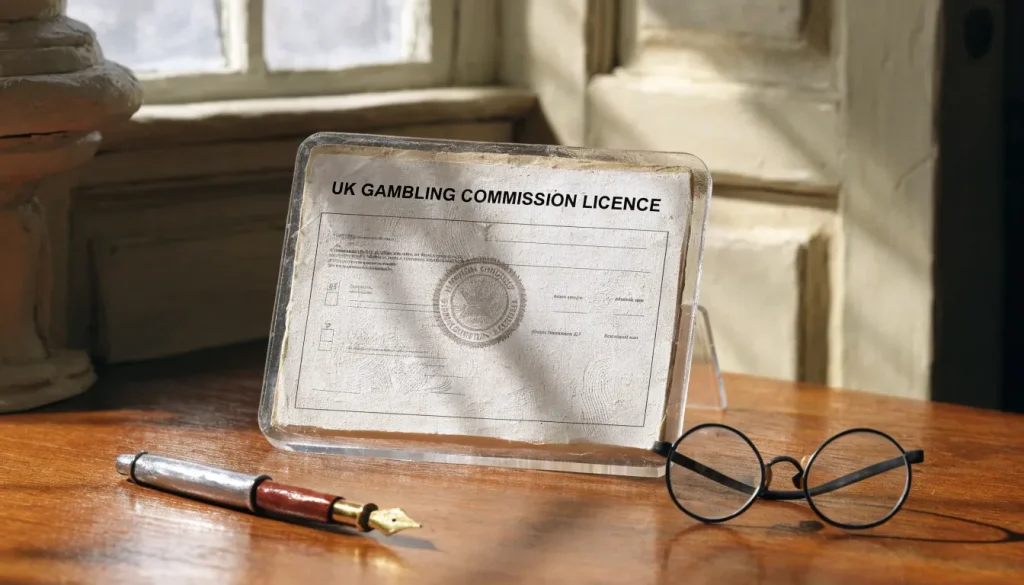
“International casino” is a broad label, not a legal category. In the UK context, it generally refers to an online gambling operator based outside the country that accepts customers in Britain. The important distinction is not the site’s branding, language or choice of games. It is whether the operator holds a licence from the UK Gambling Commission (UKGC) to serve the British market.
A casino licensed abroad but without a UKGC licence is not a UK-licensed casino. It may operate under a licence issued by another jurisdiction, but that does not give it permission to offer gambling services to customers in England, Scotland or Wales. For the purposes of this distinction, “international” describes where the operator is based or regulated; it does not mean the site has approval to serve people in the UK.
Why the licence matters
The Gambling Act 2005 governs gambling in England, Scotland and Wales. Under that framework, an operator offering gambling to customers in those parts of the UK must hold the relevant UKGC licence. The requirement applies even if the company is based overseas or has a gambling licence from another regulator. A foreign licence and a UKGC licence are separate permissions; one does not replace the other.
That makes “international casino” a potentially misleading description if it is taken to imply that a site is approved for UK customers. A site may be international in the ordinary sense and licensed somewhere else, yet still lack the UK authorisation required to offer its services in Great Britain. Calling it “licensed” without saying where the licence comes from leaves out the detail that matters most to a UK reader.
The distinction also avoids treating every casino operating online as part of one shared system. A UKGC-licensed casino is regulated by the UK Gambling Commission. An offshore casino operates outside that regulator’s system and is not regulated by the UKGC. The two should not be described as equivalent simply because both have a licence of some kind.
The operator’s position and the player’s position
The legal position differs for the company and the individual. An operator without the required UKGC licence acts unlawfully if it offers gambling services to customers in England, Scotland or Wales. That restriction is directed at the business providing the service.
Casinos & Safety: UK Casino Topics and Licensing
For an individual player, the position is different. UK law does not make it a criminal offence for a British resident to place a bet with an overseas operator, and there is no criminal penalty for the player simply for doing so. This does not turn the operator’s service into a legally authorised UK casino. It means the rules governing the operator and the player are not the same.
That distinction is easy to lose in everyday descriptions. “Illegal casino” can suggest that a customer automatically commits an offence by visiting or betting on a site, which is not the legal position described here. “International casino” can suggest that a foreign location alone makes a site acceptable for the British market, which is not right either. The more precise question is whether the operator has a UKGC licence to offer gambling to customers in Great Britain.
What the label can and cannot tell you
The word “international” does not identify the regulator, confirm that a UKGC licence exists or explain which country’s rules apply to the operator. Nor does the fact that a site accepts British customers establish that it is authorised to do so under UK gambling law. Those details need to be kept separate: a business can be located abroad, licensed offshore and accessible to a British player, while remaining outside UKGC regulation.
For the same reason, a foreign licence should not be treated as a substitute for UK oversight. It tells you that the operator is licensed offshore, but it does not make the operator part of the UK regulatory system. In the UK market, the meaningful dividing line is whether the company holds the licence required to serve customers in England, Scotland and Wales.
So, when people talk about an international online casino for UK players, they may mean an overseas site that accepts British customers, rather than a casino authorised by the UKGC. The phrase is descriptive, not an endorsement or a statement of legality for the operator. To understand what a site is, separate where it is based from where it is licensed—and check whether it has the UK licence required to offer gambling in Great Britain.
Licensing Status May be offshore and without UKGC authorisation
Player Legality No criminal penalty for British residents placing bets
Regulatory Oversight Outside the UK Gambling Commission system
Our top casino picks for the UK
- EvoSpinBonus: 125% up to €2500 + 125 Free Spins · Payout speed: 1-3 business days
- x3betBonus: Welcome Pack 100% Up to £1.000 + 200 Free Spins · Payout speed: 1-3 business days
- ChanzeBonus: Slots Welcome Bonus #1 200% up to €500 · Payout speed: 1-3 business days
- SlotoSportBonus: 500% up to £ 10 200+ 777 FS · Payout speed: 1-3 business days
- NightLuckBonus: Welcome Pack + 805% Up To 6400€ + 280 FS · Payout speed: 1-3 business days
- WinBeastBonus: €5000 + 500 FS + €650 Freebet · Payout speed: 1-3 business days
UK Access, Licensing and the Limits of Player Protection
An international casino may appear open to people in Britain, but being able to reach a website is not the same as being authorised to serve the British market. For real-money online gambling in England, Scotland and Wales, the operator must hold a licence from the UK Gambling Commission (UKGC). That requirement applies whether the business is based in Britain or abroad. An overseas licence does not replace it.
The distinction matters because a casino licensed elsewhere operates beyond the UKGC’s regulatory system. Its foreign regulator may set rules for the market it oversees, but the UKGC cannot enforce its requirements against an operator that has no UKGC licence. The operator is therefore not subject to UKGC supervision or enforcement, and you do not receive the protections that come with that regulatory relationship.
UK law places the licensing duty on the operator, not the player. Providing gambling facilities to customers in Great Britain without the required UKGC licence is unlawful for the business. Advertising such services in the UK is also unlawful. A British player does not commit an offence simply by placing a bet with an overseas operator, and there is no criminal penalty for doing so. That does not make the site an authorised option for the British market, nor does it give the player the same route to regulatory help.
US Casinos for UK Players: Rules and Risks
Why a site may still be reachable
Some offshore casinos are supposed to prevent access from Britain. A report by gambling.com says that some do not enforce that restriction, while users may also get around a block using a VPN. A site loading on your device, or allowing you to create an account, is therefore not proof that it is permitted to serve customers here. Nor does a working registration process demonstrate that the operator will resolve a later dispute fairly.
This access issue should not be confused with legal approval. A website can be technically available while remaining outside the UK licensing framework. If it accepts British customers without a UKGC licence, it has not acquired UK authorisation merely because the site can be reached or because another regulator has issued it a licence.
A specialist review may describe offshore platforms as holding licences from other authorities. That information needs careful interpretation: a licence from elsewhere is not evidence of UKGC oversight, and it does not establish that the operator complies with UK rules. The relevant question for a British customer is not simply whether a licence is mentioned, but whether the operator holds the British licence required to serve this market.
What protection is missing
UKGC regulation gives the Commission authority over licensed operators serving the market. Without a UKGC licence, an offshore operator is not subject to that enforcement. If the operator ignores a complaint or refuses to pay winnings, the UKGC cannot require it to put the matter right as it could with a business it licenses.
Regulatory Gap An offshore operator is not subject to UKGC supervision or enforcement, meaning you do not receive the protections that come with that regulatory relationship.
A report by gambling.com describes cases in which unlicensed sites withheld winnings and customers had no effective legal recourse. That is not a claim that every offshore operator will refuse a payout; it is a practical risk of dealing with a business beyond the UK regulator’s reach. A foreign licence may provide a complaint process under that regulator’s rules, but it should not be mistaken for access to UKGC enforcement or equivalent protection.
There is also no UKGC-mandated affordability checking at an offshore casino. UK-licensed operators must comply with British rules intended to identify and respond to gambling-related harm, including requirements relating to affordability. An operator outside the UKGC’s remit is not required by that regulator to apply those checks. The absence of a check may feel like less friction when opening or using an account, but it also means a key safeguard required of licensed operators is not there.
Nor should claims about security measures be treated as a substitute for regulation. Encryption may protect information as it passes between a device and a website, but it cannot guarantee that a casino will honour a withdrawal, handle a complaint properly or follow UK rules. Security claims and a foreign licence answer different questions from whether the operator is authorised and accountable in Britain.
The practical trade-off is not simply between a British site and an international one. It is between an operator subject to UKGC rules and enforcement, and one outside that system. Before treating a site as a viable choice, establish whether it holds a UKGC licence and understand that, without one, the Commission cannot provide the same oversight or enforcement route. A familiar design, a functioning site or an overseas licence does not change that boundary.
What UK Players Should Know Before Registering
Before opening an account, check what will be required to prove your age and identity, and whether the site’s rules are clear about when those checks happen. A registration form may ask for basic details, but that does not mean the operator has finished verifying you. Keep your information accurate and use details that match your identification; inconsistencies can complicate an account review.
Gibraltar Casino Licence and UK Market Rules
Age verification is not optional. Operators must establish that a customer is old enough before allowing a deposit into a gambling account. If a site lets you move straight from registration to depositing without checking your age, treat that as a warning about its safeguards, not as a useful shortcut.
Identity checks may also arise later. At UKGC-licensed casinos, an operator must confirm a customer’s identity before releasing a withdrawal. An offshore site is outside that UKGC requirement, so do not assume that its registration process or later checks will follow the same rules. It may request documents under its own terms, and you should understand what those terms say before you provide personal information or send money. A request for identification is not, by itself, proof that an operator is reliable; equally, the absence of an early request does not mean no check will come later.
Read the account rules for the documents an operator may request, how it handles a name or address mismatch, and what can happen if you cannot satisfy its checks. Save a copy of the terms and any account messages. If a site’s instructions are vague, or its identity requirements appear only after you try to access funds, that uncertainty is part of the decision to register.
GamStop and the risk of bypassing a block
GamStop is a self-exclusion scheme covering every operator licensed by the UK Gambling Commission. Once you register to self-exclude, you are excluded from UK-licensed gambling sites. Casinos operating beyond the Commission’s remit do not participate in GamStop, so the scheme cannot block access to them.
That distinction matters if you chose self-exclusion because gambling was causing harm or you wanted a firm barrier against returning. A specialist review has reported that a person who has self-excluded through GamStop may still be able to register with a foreign casino and deposit, without the protections associated with the UK system. The ease of opening an account is not evidence that doing so is safe or consistent with the reason you self-excluded.
Do not treat a non-GamStop site as a workaround that preserves your exclusion. It does not extend the scheme’s block, and it does not provide the same UKGC oversight. Offshore operators are not subject to UKGC enforcement or the regulator’s affordability-check requirements. If you are relying on self-exclusion to stop gambling, registering elsewhere can remove a safeguard at precisely the point you need it.
Pause before sharing details
A sensible pre-registration check is more than confirming that a form accepts your address. Ask yourself whether you are comfortable with the operator holding your identity documents and account information, whether its terms explain verification clearly, and whether opening an account conflicts with any limits or exclusion steps you have taken.
If you have self-excluded, consider that decision a reason not to seek another route to gambling. If you have not, still avoid depositing until you understand the site’s age and identity process. An account can be easy to create; resolving a dispute or completing checks later may be much less straightforward.
Bonus Terms: Read the Wagering Requirement Before You Deposit
An international casino welcome bonus can look generous because its headline amount is larger than the cash you plan to risk. But a bonus is not necessarily money you can withdraw. The terms may require you to place qualifying bets before bonus funds—or winnings linked to them—become available to cash out.
Specialist reviews describe deposit matches, free-spin packages, no-deposit bonuses and cashback as common forms of offshore casino promotion. A deposit match adds bonus funds in relation to an eligible deposit. Free spins are restricted plays on specified games, while a no-deposit offer may grant a bonus or spins without requiring an initial deposit. Cashback returns some qualifying losses under the offer’s rules. None of those labels tells you what you can ultimately keep: the conditions determine that.
The most important term to find is the wagering requirement. It states how much you must stake on qualifying bets before the relevant bonus funds can be withdrawn. A specialist review illustrates the arithmetic with a £20 bonus carrying a 35x requirement: the player must place £700 in qualifying bets before cashing out. That is the amount staked, not a promise that you will win it back. Bets can lose while you work through the requirement.
The same distinction matters when a bonus is described as a percentage match. In a worked example from a specialist review, a 100% match on a £100 deposit gives £100 in bonus funds. With a 35x wagering requirement, the player must place £3,500 in bets before those bonus funds convert to withdrawable cash. The headline says what is credited; it does not say what can be withdrawn immediately.
Read beyond the headline
Before accepting an offer, establish which balance the wagering multiplier applies to: the bonus alone, the deposit and bonus together, or another amount defined in the terms. Then check which bets count, whether different games contribute differently, and whether the offer expires. Look for any maximum cash-out, restrictions on withdrawing while the requirement remains incomplete, and conditions attached to free spins or cashback. Do not assume that a term applies in the most favourable way if the wording is unclear.
A no-deposit offer is not automatically a low-risk route to withdrawable money. It may still carry a wagering condition, game restrictions or a cap on what can be cashed out. Free spins without a deposit can sound like a free trial, but the resulting winnings may be subject to the same kind of restrictions. Treat “no deposit” as a description of how the offer starts, not as evidence that its proceeds are yours to withdraw.
Promotions offered by offshore operators sit outside UK Gambling Commission regulation. The Commission’s restrictions on bonus terms and promotional language do not apply to those operators in the same way as they do to UKGC-licensed casinos. Specialist reviews have described offshore welcome packages as larger in that context; a larger headline offer, however, does not establish that its conditions are better. Offshore operators also do not provide UKGC-mandated affordability checks.
If a promotion is advertised in a currency or with a payment method that seems relevant to you, including a bitcoin casino offer, that does not change the wagering calculation. The bonus terms—not the label attached to the casino or the payment option—set the qualifying stakes and withdrawal conditions. Similarly, a casino outside GamStop may advertise a welcome promotion, but the offer does not replace the protections and safeguards associated with UKGC-regulated sites.
If you cannot determine the qualifying amount, eligible games, expiry conditions or cash-out rules before opting in, do not treat the advertised value as spendable money. You can decline a bonus and avoid its wagering conditions; accepting one without understanding them makes the obligation part of the account terms.
Live Roulette and the Limits of What Can Be Verified
Live roulette combines roulette with a streamed view of a real dealer and table. For a UK player considering an international casino, though, the word “live” describes a format, not a guarantee about who runs the game, how it is supervised or what protections apply if something goes wrong.
The operators in this market are licensed offshore and are not regulated by the UK Gambling Commission. That distinction matters when you assess claims about live play. A table may look polished on a phone screen, but presentation alone does not establish the operator’s regulatory status or the standards governing its service. Nor does the word “international” identify a single licence, rulebook or level of oversight.
Descriptions of a live roulette service can also blur together several separate questions. Is the game streamed from a physical table, or does “live” refer to another format? Which operator is responsible for the account? What regulator, if any, oversees that operator? What terms govern a disputed result? These are not details that a promotional label answers by itself.
Live stream quality and professional presentation do not confirm that the operator is licensed to serve customers in Britain or is under UKGC oversight.
Treat claims about a live table as claims to check against the operator’s own published information, not as proof of independent oversight. A credible description should make clear which company provides the account and where that company is licensed. It should also explain how the operator handles a complaint about a round or a payment. If those details are hard to find, a confident-sounding description does not fill the gap.
The same caution applies when viewing a casino on a mobile device. A live stream may be designed to fit a smaller screen, but that does not tell you whether the operator is licensed to serve British customers or what recourse you have if a dispute arises. Access and appearance are not substitutes for accountability.
For anyone searching for live roulette at an international casino, the useful distinction is between seeing a table and being able to verify the framework behind it. Check who is responsible for the service and whether the stated licence can be confirmed with the named regulator. Do not assume that a professional broadcast means UK Gambling Commission oversight: offshore operators sit outside that system.
Real-Money Play: Tax and the Risks of an Offshore Account
If you win money at an online casino, the UK does not charge income tax on those gambling winnings. That treatment applies whether the operator holds a UK Gambling Commission licence or is licensed overseas. It answers a tax question, not a safety one: a tax-free win is not necessarily money you can successfully withdraw.
Playing at a casino licensed outside the UK is not, by itself, a criminal offence for a British player. UK law does not prohibit an individual from placing a bet with an overseas operator. The legal position is different for the business. A remote operator offering gambling to customers in Great Britain must hold a UK Gambling Commission licence; an offshore licence does not replace it. An offshore account therefore sits outside the UKGC system, and the player cannot rely on that regulator to enforce the operator’s obligations.
Non-UK-Registered Casinos: Licences and Risks
The practical concern is what happens after a win. A report by gambling.com has described cases in which unlicensed sites refused to pay winnings, leaving customers without legal recourse. That is not proof that every offshore operator will withhold a payout, but it shows why a balance displayed on an account is not the same as money received. If an operator disputes a withdrawal or stops responding, the protections and enforcement routes available against a UKGC-licensed business may not apply.
This distinction matters when assessing an international casino for real-money play. A foreign licence, a tax-free win and permission for an individual to place a bet are separate points; none guarantees that a payout will be honoured. Nor does an advertised no-deposit bonus change the operator’s regulatory position or create a right to cash out. Read the withdrawal conditions before treating a bonus balance as winnings.
Keep the decision grounded in the amount you can afford to lose, not in the amount shown as a potential return. With an offshore operator, the UK tax position may be straightforward, while getting money out can be less so.
How to Read an International Casino Review Critically
A review should make clear who regulates the casino and where its licence applies. An offshore licence is not a UK Gambling Commission licence: the operator remains outside the Commission’s regulatory system. A review that describes a site as “licensed” without naming the regulator, or blurs an offshore licence with UK approval, leaves out a distinction that matters to you.
Look for details that can be checked against the operator’s own terms. A useful assessment explains the withdrawal process, including any limits, pending periods and identity checks, rather than calling cash-outs “easy” or “fast”. These conditions differ between operators, so a general claim about international casinos tells you little about the account you might actually use. Check whether the review identifies the rules it is describing and when they were assessed.
The more important question is what happens if a withdrawal is disputed. A review should distinguish between an operator’s internal complaints process and independent recourse, and explain whether the UK Gambling Commission can act. It cannot enforce its rules against a casino operating offshore without a UKGC licence. Reports cited by gambling.com describe cases in which unlicensed sites withheld winnings and customers had no legal route to compel payment. That is a reported risk, not proof that every offshore operator behaves this way.
Be cautious when a review’s strongest claims are also its least specific. A star rating does not establish that a licence is valid, that withdrawal terms are fair, or that a complaint can be resolved. Nor does a polished account of real-money play answer those questions. An international roulette casino review, for instance, is only useful on the practical issues if it shows how its claims about the operator were checked.
Reviews can help you identify questions to ask, but they cannot replace the operator’s terms or create protections the regulator does not provide. Treat endorsements and rankings as opinions; give greater weight to clearly stated licensing, withdrawal and dispute details.
Casino Apps: Check Access and Account Terms First
An app can make a casino easier to reach, but it does not change who regulates the operator or whether it is authorised to serve customers in Britain. An app linked to a casino licensed overseas remains outside the UK Gambling Commission’s regulatory system. That distinction matters even if the software looks polished or is available to install.
Before using an app, check how the operator says British customers may access its service. Some offshore casinos are meant to block visitors from Britain. Gambling.com has reported that some do not enforce that restriction, and that users may get around it with a basic VPN. This is a report about access practices, not a guarantee that a particular app will work or remain available. Using a workaround also does not give the operator a UKGC licence.
Read the account terms before installing or depositing. Look for any stated country restrictions, rules on using the service through an app, and the operator’s process for handling an account if access is blocked. An app’s presence on a device is not evidence that the casino is legally authorised to offer gambling to you in Britain.
Do
- Check the operator’s specific licence and regulator
- Read the full account terms and conditions
- Verify identity requirements before depositing
Don’t
- Assume site accessibility equals legal authorisation
- Treat a polished app interface as a regulatory safeguard
- Rely on GamStop to block access to offshore sites
Treat claims about security or approval with the same care. A download page, app store listing or operator statement cannot substitute for checking the licence and the terms that apply to your account. Nor should an app be taken as evidence of UKGC oversight: offshore operators are not regulated by the Commission and are not subject to its enforcement.
If the operator’s access rules are unclear, do not assume that being able to open the app means you are permitted to use the service. Convenience is a feature of the interface; it is not a regulatory safeguard.
Casino Games: What the Available Evidence Can—and Cannot—Tell You
The range of games at an international casino is not something you can infer from its label. “International” describes an operator’s relationship with the UK market, not a particular catalogue or standard of play. These casinos are licensed offshore and are not regulated by the UK Gambling Commission.
That distinction matters when assessing claims about choice. A broad promise of casino games does not tell you which titles are available to British customers, whether the same selection is offered across devices, or whether a game’s rules and features match what you expect. Those details depend on the individual operator and its terms; a general description cannot establish them.
Before treating a game as an option, look for its name in the casino’s own catalogue and check whether the rules, stakes and any restrictions are clearly displayed. If a particular title is important to you, confirm that it is available to your account rather than relying on a generic description of the site. Availability can be a practical question; it is not proof that the operator is regulated in Britain.
The more consequential point is the licence behind the account. An offshore licence does not bring a casino within UKGC oversight, even if the site accepts British customers or advertises a wide range of games. The UK Gambling Commission’s rules and enforcement do not apply to it as they do to a UK-licensed operator.
So descriptions of international casino games should be read narrowly: they may indicate the type of entertainment being promoted, but they do not establish a verified catalogue or equivalent UK protections. Check the operator’s terms and licensing information before deciding whether to play.
Crypto Deposits and Withdrawals: Speed Versus Volatility
Crypto payments can appeal if you value a quick withdrawal, but speed is only one part of the decision. Specialist reviews of foreign casinos report that crypto withdrawals can clear in under an hour, faster than fiat methods. That is not a promise: the operator may still have its own processing steps, and the value of the cryptocurrency can move while funds are in transit or waiting to be converted.
That volatility changes what “received” means. The amount credited in crypto may not retain the same value in pounds by the time you exchange it. Before depositing, check which currency the account uses, how the operator handles conversion, and whether it charges fees. Read the withdrawal conditions as well; processing times, limits and verification requirements differ between operators.
E-wallets offer a route without crypto’s price fluctuations. A specialist review reports that Skrill and Neteller withdrawals at many foreign casinos are processed within 24 hours, with some completed in under 12 hours. Those timings describe reported operator processing, not a guarantee that every payment will reach your account by then.
Bank transfers are slower in the comparison reported by a specialist review: they can take five to seven business days, and an operator’s own processing time may add to the bank’s timeline. If you need money by a particular date, that extra stage matters.
Payment speed does not change the regulatory position. A casino licensed offshore is not regulated by the UK Gambling Commission and does not provide UKGC-mandated affordability checks. A fast crypto transfer is no substitute for those safeguards, nor does it make a delayed or disputed withdrawal easier to resolve. Weigh the convenience against both exchange-rate risk and the limited protection attached to an offshore account.
Can I play at a casino licensed outside the UK?
Yes, UK law does not make it a criminal offence for you to bet with an overseas operator. However, a foreign licence does not authorise the casino to serve customers in Great Britain; the operator needs a UKGC licence to do so.
Are winnings from foreign casinos taxable in the UK?
No. Gambling winnings are not subject to UK income tax, whether the casino is UKGC-licensed or licensed abroad.
What is the fastest way to withdraw from an online casino in the UK?
E-wallets are generally the fastest fiat option, with most UK operators processing withdrawals within 24 hours. At foreign casinos, crypto withdrawals can often clear in under an hour, while timing and verification requirements vary by operator.
Are gambling winnings subject to income tax in the United Kingdom?
No. UK gambling winnings are not subject to income tax, regardless of whether the operator holds a UKGC licence.
Related posts

Terms of Use
UK Gambling Casino Sites and Slots: Licensing and Play