Foreign Casinos for UK Players: Regulation and Risks
 Available in GB

A foreign operator may accept customers from Britain without holding a UK Gambling Commission licence, affecting the safeguards and recourse available.
What “Foreign Casino” Means for UK Players
“Foreign casino” is a market description, not a separate category in UK gambling law. In this context, it means an online gambling operator that accepts customers from Britain but does not hold a licence from the UK Gambling Commission (UKGC). The operator may be based overseas or hold a licence issued elsewhere; what defines it for a British customer is the absence of a UKGC licence.
That distinction matters because an operator’s location and the market it serves are not the same thing. A company can be headquartered abroad yet hold the required UKGC licence to offer gambling to customers in Great Britain. Conversely, an overseas operator does not become authorised to serve British customers simply because it has a licence in another country. “Foreign” describes the operator’s relationship to UK regulation, not necessarily where its website, staff or servers are located.
The operator’s status is different from the player’s
The Gambling Act 2005 governs gambling in England, Scotland and Wales. Under the British licensing framework, an operator offering real-money gambling to customers in those nations must hold the relevant UKGC licence, regardless of where the company is based. Without that licence, offering gambling facilities to UK customers is unlawful. Advertising an unlicensed operator’s services in the UK is also unlawful.
This places the legal responsibility on the business providing the service. A British resident who places a bet with a casino licensed overseas is not, by that act alone, committing a crime. There is no UK law prohibiting an individual from betting with an overseas operator, and the Act does not impose a criminal penalty on the player for using a foreign casino.
The two statements can sound contradictory: the operator may not lawfully offer its service in Great Britain, while the individual customer is not criminally liable merely for betting there. They concern different parties and different conduct. The operator’s permission to serve the British market depends on UKGC authorisation; the player’s act of placing a bet does not itself create that authorisation or make the operator compliant.
Casinos & Safety: UK Casino Topics and Licensing
“Outside the UK” does not settle the question
People often use “overseas casino”, “non-UK casino” and “foreign casino” interchangeably. Those phrases can refer simply to a company based outside Britain, but that alone does not tell you whether it is permitted to serve British customers. A foreign-based operator with a UKGC licence falls within the British regulatory system when offering gambling here. An operator without that licence is outside it, even if it holds permission from a regulator in another jurisdiction.
For the same reason, a site’s language, currency or the games it offers does not establish its regulatory status. Nor does the fact that a British customer can find or use a website turn its operator into a UK-licensed business. The relevant question is whether the operator holds the licence required to provide gambling facilities to customers in Great Britain.
This section concerns Great Britain: England, Scotland and Wales. The Gambling Act 2005 does not apply to Northern Ireland, so its legal position should not be inferred from the rules described here.
A useful definition, with an important limit
In everyday use, “foreign casino for UK players” can sound as though the operator is officially authorised to serve the country. It is more precise to read it as a description of an overseas or non-UKGC operator that accepts British customers. Acceptance by the operator is not the same as permission under British law.
That definition also avoids treating all companies based abroad as alike. Some are authorised to serve Great Britain under a UKGC licence; others do not hold one. The distinction is not a judgement about the quality of an individual casino. It identifies whether the operator is within the UKGC licensing framework for the services it offers to customers in Britain.
So, when a site is called a foreign casino in a UK context, the term points to a regulatory gap: the operator accepts British customers without the UKGC licence required to offer gambling facilities in Great Britain. The customer’s lack of criminal liability does not change that status. A player and an operator can therefore occupy different positions under the same rules: the operator may be acting unlawfully by offering the service, while the player is not committing an offence merely by placing a bet.
An operator’s location and the market it serves are not the same thing. A company can be headquartered abroad yet hold the required UKGC licence to offer gambling to customers in Great Britain.
Our top casino picks for the UK
- EvoSpinBonus: 125% up to €2500 + 125 Free Spins · Payout speed: 1-3 business days
- x3betBonus: Welcome Pack 100% Up to £1.000 + 200 Free Spins · Payout speed: 1-3 business days
- ChanzeBonus: Slots Welcome Bonus #1 200% up to €500 · Payout speed: 1-3 business days
- SlotoSportBonus: 500% up to £ 10 200+ 777 FS · Payout speed: 1-3 business days
- NightLuckBonus: Welcome Pack + 805% Up To 6400€ + 280 FS · Payout speed: 1-3 business days
- WinBeastBonus: €5000 + 500 FS + €650 Freebet · Payout speed: 1-3 business days
Why Access from Britain Does Not Mean UKGC Regulation
A foreign casino site may load in Britain, allow you to create an account and accept a deposit. None of that makes it a UK-licensed casino. Whether you can reach a site is a question of access; whether its operator is authorised to serve customers in Great Britain is a separate legal question.
Gambling.com has reported that some casinos licensed outside the UK are meant to prevent access from Britain but do not consistently apply those restrictions. It has also reported that a basic VPN can sometimes get around a block. A VPN routes your internet connection through another location, which may make a site treat you as though you are browsing from elsewhere. These observations describe reported access problems, not a guarantee that any particular site will accept a British customer. A casino can change its access controls, and using a VPN does not alter the law or the operator’s licence.
The important distinction is the operator’s status. An offshore casino is licensed outside the UK and does not fall under the UK Gambling Commission’s regulatory system. A site accepting a registration or displaying games to you from Britain does not acquire UKGC authorisation by doing so. The apparent openness of a website is not evidence that it is permitted to offer gambling to people here.
US Casinos for UK Players: Rules and Risks
For operators, the rules are different from the rules for individual players. Remote gambling businesses that provide services to customers in England, Scotland and Wales need the relevant UK Gambling Commission licence, wherever the business itself is based. Without that licence, an operator cannot lawfully offer gambling services to customers in those parts of Great Britain. The legal responsibility is on the business to obtain the required authorisation; the fact that a player can open the site does not make the operator compliant.
This is why the phrase “available in the UK” can be misleading. It may mean only that a page is visible, or that its registration form does not reject a British address. It does not necessarily mean the operator is legally entitled to serve British customers, or that a UK regulator supervises its conduct. A foreign casino can be technically accessible while remaining outside the protections and oversight attached to a UKGC licence.
That difference matters when you consider what regulatory supervision involves. UKGC-licensed operators must follow the Commission’s rules, including its requirements around affordability checks. Offshore casinos are not subject to those UKGC-mandated checks. They are also not subject to UKGC enforcement: the Commission cannot regulate an operator as though it held a British licence simply because its website can be reached from Britain. A foreign licence, where one exists, is not a substitute for UKGC oversight.
Nor does a VPN change any of those facts. It may affect what a website can see about your connection, but it cannot grant a licence, bring an overseas business within UKGC supervision or create the protections that apply to a UK-licensed operator. It can also make the information you provide about your location inconsistent with the site’s access rules. Treating a successful login as proof that everything is authorised would confuse a technical result with a regulatory one.
If you are comparing foreign casino sites, focus first on what their availability actually tells you: very little about their standing in Britain. The central point is not whether the site opens on your device, but whether the operator holds the licence required to serve customers here. For offshore sites, access from Britain does not mean UKGC regulation, and the safeguards associated with that regulation should not be assumed.
What Can Go Wrong When an Offshore Casino Does Not Pay
A disputed withdrawal can turn a casino balance into a difficult question: what can you do if the operator refuses to release your winnings? A report by gambling.com says that some unlicensed sites have refused to pay customers, leaving them without legal recourse. That is not evidence that every offshore casino behaves this way. It does show why a displayed balance is not the same as money safely in your hands.
A refusal may be presented as a breach of the site’s terms, a problem with the account or a concern about how play took place. Whatever explanation an operator gives, the practical difficulty is that a customer may have little leverage if the business is beyond the reach of UK enforcement. A complaint can still be made to the operator, but making one is not the same as having an independent body able to require payment.
Non-UK-Registered Casinos: Licences and Risks
That distinction matters after a dispute has started. A familiar customer-service process may create the impression that there is a clear route to appeal, yet the existence of a complaints form does not establish that an outside authority can make the casino comply. If the operator rejects your account of events or stops responding, you may have no effective route to recover the funds.
Keep a record before a dispute arises
If you decide to use a foreign casino, keep your own records of the account and the transaction. Save copies of the terms that applied when you accepted an offer, messages with customer support, deposit confirmations and withdrawal requests. Note what the account displayed and when the operator changed its explanation, if it did. These records cannot compel a payment, but they can help you set out a clear complaint and avoid relying on memory.
Be careful about continuing to deposit while a withdrawal is unresolved. More play does not settle a dispute over an earlier balance; it can instead make the sequence of transactions harder to explain. Before taking any further step, read the operator’s response closely and keep the discussion in writing where possible.
You can also contact your payment provider to ask whether it can review the transaction. That is not a guarantee of recovery: the provider’s options depend on the payment and the circumstances, and it cannot decide whether casino winnings are owed under the operator’s terms. Treat it as a separate avenue to ask about, not as a substitute for a regulator or a promise that funds will be returned.
Attention If an operator refuses to pay, you may have little leverage if the business is beyond the reach of UK enforcement.
Do not confuse a complaint with legal recourse
The central problem is not simply that a casino might delay a payment. It is that, if the operator refuses to pay and you cannot obtain an effective independent review, your choices may be limited to pressing the complaint with the business and seeking advice about any other route available to you. A customer may reasonably believe that a win should be paid, but the balance shown on a screen does not itself give you a practical way to enforce that claim.
Before depositing, consider whether you could accept losing access to the amount in your account while a complaint remains unresolved. This is not a prediction that a particular site will withhold winnings. It is a question of how much uncertainty you are willing to take on when the protections available from a UK-regulated operator are absent. Offshore casinos are not regulated by the UK Gambling Commission and do not provide its enforcement protections or mandated affordability checks.
If money is already disputed, avoid paying anyone who claims they can guarantee recovery in exchange for an upfront fee. A promise to retrieve funds is not proof that the person can do so. Keep evidence of the original transactions and communications, and seek independent advice if you are unsure what to do next. A well-kept record can support your account of events; it cannot make an offshore operator answer to UK enforcement.
GamStop and the Safeguards You May Leave Behind
GamStop is the UK’s online self-exclusion scheme. When you register, the participating UK-licensed gambling operators must prevent you from using their services for the period you select. GamStop covers every operator licensed by the UK Gambling Commission, so the exclusion applies across the UK-licensed market rather than to one casino at a time.
British Casinos Not on GamStop: What to Know
That boundary matters if you are considering foreign online casinos accepting UK players. A casino operating outside the UKGC’s remit is not part of GamStop. Your registration therefore does not automatically block you from opening an account or gambling there. A specialist review reports that someone who has self-excluded may be able to register with a foreign casino and deposit without the protections attached to GamStop. That is a reported possibility, not a guarantee about every operator’s sign-up process.
A GamStop exclusion is intended to create distance between you and gambling. Seeking out overseas casinos accepting UK players during that period can remove that barrier: the exclusion remains active at UK-licensed sites, but it does not extend to operators beyond the scheme. The practical result may be that you can continue gambling elsewhere, even though you chose self-exclusion to stop or take a break. The existence of a route around the scheme is not evidence that it is safe to use.
What protection may be missing
Self-exclusion is one safeguard, not the whole UK regulatory framework. UKGC-licensed operators must follow the regulator’s rules, including requirements designed to identify and address gambling-related risks. Offshore casinos are not regulated by the UKGC and do not provide its mandated affordability checks. Those checks are intended to assess whether gambling is affordable for a customer; they are not a substitute for self-exclusion, but they are another safeguard you would not have under UKGC oversight.
This distinction can be easy to miss when comparing non-UK casinos accepting UK players. A site may describe its own account controls or responsible-gambling tools, but that does not make it part of GamStop or give it UKGC supervision. Nor does a site’s willingness to accept a registration tell you whether its measures would support someone who has already chosen to exclude themselves.
If you have registered with GamStop because gambling is causing harm, opening an account elsewhere works against the boundary you set. Do not treat the ability to sign up as a sign that the exclusion has ended: it still applies to UKGC-licensed operators. If you are struggling to stick to your decision, pause before depositing and contact a gambling-support service such as GamCare. You can also consider tools that block access to gambling sites, while remembering that a blocking tool is not the same as a regulatory self-exclusion scheme.
Best Casino App UK: Mobile Play and Key Features
The appeal of best non-UK casinos accepting UK players can look different when you are actively trying to stop gambling. In that situation, comparing sites or searching for alternatives can itself make it easier to resume play. The important point is not which foreign casino accepts a British customer, but that GamStop does not cover the offshore market and UKGC-mandated affordability checks do not follow you there.
Bonuses: Read the Wagering Requirement Before the Headline Offer
A large welcome offer can look generous while leaving the key condition in smaller print. A wagering requirement is the amount you must bet on eligible games before bonus funds—or winnings linked to them—can be withdrawn. The headline figure tells you how much the casino may credit; the requirement tells you how much play is attached to it.
Specialist reviews of foreign casinos accepting UK players describe several recurring offer formats: deposit matches, free-spin packages, no-deposit bonuses and cashback. A deposit match adds bonus funds in relation to a deposit. Free spins are restricted to specified games or terms. A no-deposit offer does not require an initial deposit to receive the bonus, while cashback returns some amount based on eligible losses under the offer’s rules. The details differ by operator, so the label alone does not tell you what you can withdraw.
Specialist reviews also report that welcome packages at offshore casinos can be larger than those found at UK-licensed sites. One reason given is that operators outside the UK Gambling Commission’s system are not bound by its restrictions on bonus terms and promotional language. A bigger advertised offer is not, by itself, evidence of better value: a high wagering requirement can make the bonus difficult to convert into cash.
How wagering requirements work
A wagering requirement is the amount you must bet on eligible games before bonus funds or winnings can be withdrawn.
Example: A £100 bonus with a 35x requirement means £3,500 in qualifying bets are needed before the bonus funds become withdrawable.
Check what the multiple applies to. If it applies to the bonus alone, a £100 bonus with a 35x requirement means £3,500 in qualifying bets before the bonus funds can become withdrawable. The same arithmetic applies to a smaller offer: a £20 bonus at 35x requires £700 in qualifying bets. These are illustrations of how the stated multiple works, not claims that every casino uses those terms.
Also read which games count and whether the casino places conditions on the stake or the time available to complete the requirement. If a game contributes only part of each bet, the qualifying total may take longer to reach than the headline multiple suggests. Bonus rules can also distinguish between cash you deposited and funds credited as a promotion; do not assume that meeting the wagering condition makes every balance immediately available.
Before accepting an offer, find the full terms and identify the bonus amount, the wagering multiple, the qualifying games and any completion conditions. Compare the amount you would need to bet with the promotion’s value, and decide whether you would make those bets without the bonus. If the terms are unclear, the advertised figure cannot answer the practical question: what must you do before you can withdraw?
Withdrawals: Timing Depends on the Method and the Operator
A withdrawal estimate is not the same as the time it takes for money to reach you. The payment provider may move funds quickly, but the casino can add its own review and processing time. A specialist review of foreign casinos reports different timelines by method; these should be treated as reported estimates, not promises from every operator.
For Skrill and Neteller, that review found that most transactions were cleared within 24 hours, with many handled in under 12 hours. E-wallets can therefore be a quicker route than a bank transfer, but the casino still has to approve and release the payment. Check whether the stated estimate begins when you request a withdrawal or only after the operator has processed it.
Bank transfers were reported as the slowest option, often taking five to seven business days. Some operators add a processing delay before the bank timeline begins, so the total wait can be longer. Business days also matter: a request made near a weekend or public holiday may not progress in the same way as one made on a working day.
The same specialist review reported that cryptocurrency withdrawals often cleared in under an hour, faster than fiat methods. That speed comes with a different risk: crypto prices can move while you hold the funds. The value you receive or retain may change, even if the transfer itself is completed quickly. A fast transfer is not necessarily a predictable one.
Before choosing a method, read the operator’s withdrawal terms for its processing stages, any applicable limits and the verification it requires. These details vary considerably between casinos. An operator may also pause a request while it checks account information, so a payment method’s transfer speed does not determine the full payout time.
In Great Britain, UKGC-licensed operators must verify a player’s identity before processing withdrawals. Non-UK casinos are not regulated by the UK Gambling Commission, and the UKGC’s requirements and enforcement do not apply to them. They also do not provide UKGC-mandated affordability checks. Do not assume that an overseas site follows the same procedures or that a quick method removes the need to check its terms.
Skrill and Neteller
Most transactions were cleared within 24 hours, with many handled in under 12 hours.
E-wallets
Can be a quicker route than a bank transfer.
Bank transfers
Often take five to seven business days.
Cryptocurrency
Often cleared in under an hour, but subject to price volatility.
What a Casino’s Licence Does—and Does Not—Tell You
A licence is a claim about which regulator oversees an operator; it is not evidence that the operator is authorised to serve customers in Britain. Foreign casinos are licensed offshore and are not regulated by the UK Gambling Commission (UKGC). Under British rules, an operator offering remote gambling to customers in Great Britain needs the relevant UKGC licence, wherever the company is based. A licence from another jurisdiction does not replace it.
Some platforms are described as licensed and regulated by other authorities. A specialist review may present this as evidence that a casino complies with the laws and guidelines of its licensing jurisdiction. That may tell you something about the operator’s stated oversight, but it does not establish that the casino is licensed for the British market or subject to UKGC regulation. The distinction matters: “licensed” on its own does not say who issued the licence, which services it covers, or where the operator may lawfully offer them.
If a casino names an overseas regulator, treat that as a specific claim to assess, not as a general assurance. The regulator’s identity and the scope of the licence are relevant; so is the separate question of whether the operator holds permission to serve customers in Britain. A foreign licence and a UKGC licence are not interchangeable credentials.
The UKGC’s role is also different from that of an offshore regulator. A casino outside its remit is not subject to UKGC oversight or enforcement. It also does not provide UKGC-mandated affordability checks. Those are important limits, even where an operator’s materials describe another authority as reputable or say that it is regulated.
For a British player comparing foreign casinos, the practical point is not simply whether a licence is mentioned. It is what that licence authorises, which regulator stands behind it, and whether the operator has the separate permission required to offer gambling in Great Britain. A foreign licence may describe oversight abroad; it does not make an offshore casino a UK-regulated site.
Check Security Claims Without Treating Them as a UKGC Guarantee
Some reviews of non-GamStop casinos report that these sites use encryption to protect players’ personal and financial information. Encryption helps prevent data from being read by unauthorised parties while it is being transmitted or stored. It is a relevant security measure, but it answers a narrow question: how information may be protected, not how the operator is supervised.
For players considering overseas casino sites, a claim such as “advanced encryption” should not be treated as proof that every part of an account is secure. The wording alone does not tell you which systems are covered, how the protection is implemented, or how the operator handles a security incident. A security statement is something to assess, not a guarantee.
Warning Encryption is a security measure for data transmission, but it is not a substitute for UKGC oversight or enforcement.
Most importantly, encryption is not UK Gambling Commission oversight. Non-UK casino sites for British players are not regulated by the UKGC, and technical safeguards do not bring an offshore operator into its regulatory system. They do not provide UKGC enforcement or the consumer protections associated with a UKGC-licensed operator. Offshore operators also do not offer UKGC-mandated affordability checks.
When assessing a site’s security claims, look for a clear explanation of what data is protected and how the operator says it protects it. Be cautious if the language is broad but gives you no detail. Do not send sensitive information through a channel you cannot verify, and avoid assuming that a secure connection makes an operator trustworthy or accountable.
Security and regulation are separate considerations. Encryption may reduce the risk of information being exposed, but it cannot resolve a dispute with an operator or ensure that its practices meet UK standards. A polished security page is not a substitute for UKGC regulation, and the distinction matters even when the technical claim is genuine.
Before You Deposit: Verification and Payment Choices
Before putting money into an account, check what information the operator asks you to provide and which payment methods it accepts. A non-GamStop casino may request identification as part of its account checks. Have the necessary documents ready and make sure the details you enter match them; incomplete or inconsistent information can complicate the process.
Age verification is also required before an operator allows you to deposit. Do not treat a deposit option as evidence that an account is ready to use: follow the site’s verification steps first and read its terms for any conditions attached to opening or funding an account.
Payment choice is site-specific. Some foreign casinos may offer cryptocurrency alongside other options, but availability differs between operators, and a method shown by one casino may not appear at another. Check the deposit page before registering if you need a particular option, and confirm that the payment account or wallet is yours and can be used for gambling transactions.
Using crypto also means accepting that the value of the funds can change. Consider that exposure before transferring money, rather than focusing only on whether the deposit is accepted. Whatever method you choose, check the currency, any stated fees and the operator’s deposit instructions before confirming. Do not send funds until you understand how the transaction is handled and have decided what you can afford to lose.
UK Tax on Gambling Winnings
In the UK, gambling winnings are not subject to income tax. That applies whether your winnings come from a UK Gambling Commission (UKGC)-licensed operator or a casino licensed elsewhere. You do not owe income tax on a gambling prize simply because the operator is based overseas or lacks a UKGC licence.
Tax treatment is separate from the operator’s legal position. Remote gambling businesses offering services to customers in Great Britain must hold a UKGC licence; the fact that a player’s winnings are not taxed does not authorise an offshore casino to serve British customers without one. Nor does the tax rule provide the protections associated with UKGC regulation. Offshore casinos are not regulated by the UKGC and do not offer its mandated affordability checks.
Keep those distinctions clear if you are considering a foreign casino. The tax position answers one narrow question: whether you pay UK income tax on gambling winnings. It says nothing about whether a particular operator is permitted to offer gambling services in Britain, how it handles a withdrawal, or what options you might have if a dispute arises. Those are separate matters from tax.
The same tax rule applies regardless of the size of a win or the operator’s licensing status. There is no special income-tax charge on winnings because they came from a non-UKGC-licensed casino. But tax treatment should not be mistaken for an endorsement, a sign of safety, or evidence that an offshore operator is lawful in the British market.
Are winnings from foreign casinos taxable in the UK?
No. Gambling winnings are not subject to UK income tax, whether the casino is UKGC-licensed or not.
Are foreign casinos safe for UK players to use?
They may use encryption and hold licences from other regulators, but they are not regulated by the UK Gambling Commission. Some unlicensed sites have refused to pay winnings, leaving customers without legal recourse.
How long do withdrawals take at the listed operators?
It depends on the payment method and the operator’s processing rules. E-wallets are often processed within 24 hours, crypto withdrawals can clear in under an hour, and bank transfers often take five to seven business days; verification and pending periods may add time.
What happens if I have a dispute with a foreign casino?
You may have little practical recourse: some unlicensed casinos have refused to pay winnings, leaving customers without legal recourse.
Can I play at a casino licensed outside the UK?
Yes. A British player is not committing a crime merely by betting with an overseas casino, but a licence from another country does not authorise the operator to offer gambling in Great Britain without a UKGC licence.
Is it legal for UK residents to use casino sites that operate outside the UK’s licensing framework?
Yes, placing a bet is not itself illegal for a British player. However, an operator without a UKGC licence cannot lawfully offer gambling to customers in England, Scotland and Wales.
What is the fastest way to withdraw from an online casino in the UK?
Crypto withdrawals are often the fastest at foreign casinos, clearing in under an hour, though their value can fluctuate. E-wallets are also fast, with most operators processing them within 24 hours.
Is playing at an international casino legal for UK residents?
Yes. There is no UK law prohibiting an individual from betting with an overseas operator, although the operator needs a UKGC licence to lawfully offer gambling in England, Scotland and Wales.
Related posts

Terms of Use
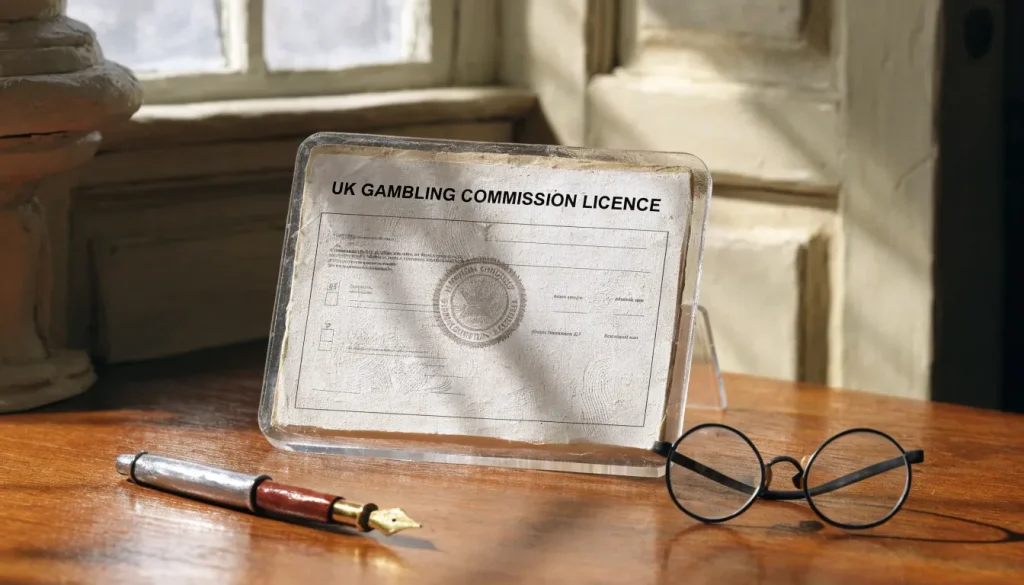
UK Gambling Casino Sites and Slots: Licensing and Play