No Account Casino UK: How It Works and What to Check
 Available in GB

No-account casinos may simplify registration, but operators can still request details and checks, while payment methods can work differently for deposits and withdrawals.
What “No Account” Means at a UK Online Casino
“No account” sounds like a casino will let you play without knowing who you are. In practice, the phrase is better understood as a description of how play begins: you may not have to complete a conventional registration form and create a username and password before reaching the games. It does not promise that the operator will never ask for your details, or that checks can be skipped.
The distinction matters because signing up and verifying a player are not the same thing. A casino may make the first step look brief, use details supplied through a payment process, or create a playing profile behind the scenes. That can change what you see at the start, but it does not settle what information the operator may need later. “No account” describes the front door, not necessarily what is happening in the background.
The term also does not mean that the casino has no record of your activity. A service handling real-money play needs to associate transactions and play with a customer. The interface may avoid asking you to choose a screen name or remember a password, yet the operator can still connect activity to information provided during the process. A simpler-looking route is not the same as anonymous gambling.
Non-GAMSTOP Casinos UK: What the Term Means
That is why claims about no-account casinos can be easy to misread. Some refer to a payment-led entry process; others use the phrase broadly to describe a site where registration is less visible. The wording alone does not tell you which details will be requested, when they may be requested, or what happens if the information cannot be matched. Those practical differences matter more than whether a page calls itself an online casino with no account.
A useful way to read the phrase is as a claim about convenience at the point of entry, not a waiver of the ordinary responsibilities that come with gambling. You should not take it to mean that age checks are absent, that identity will never be confirmed, or that a withdrawal will be automatic. Questions about identity or who owns the payment method can arise before a withdrawal. That timing may surprise someone who thought the absence of a standard sign-up meant there would be no later checks.
Nor does the label tell you whether a particular site is suitable or trustworthy. “New” is a description of a site’s age or marketing, not proof that its process is safer or easier. Likewise, a list of casinos said to operate without accounts is only as useful as the information behind each entry. A shared phrase across several sites does not establish that they use the same operator, handle customer information in the same way, or apply identical conditions.
Casinos & Safety: UK Casino Topics and Licensing
It helps to separate three questions. First, how does the site let you begin? Second, what information does it need to handle play and payments? Third, what may it ask you to confirm before releasing money? A “no account” label mainly addresses the first question. It cannot answer the other two without clear, site-specific information.
The phrase can still describe a real difference in the user experience. Avoiding a conventional registration form may mean fewer steps before you reach the casino interface. But fewer visible steps do not necessarily mean fewer requirements overall. If information is requested later, the process may become more involved at precisely the point when you want to access a balance. The convenient part is easy to advertise; the later qualification is less prominent.
For that reason, treat “no account” as a narrow description rather than a guarantee. It may tell you that the casino presents an alternative to the familiar account-creation flow. It does not, on its own, establish that you can play anonymously, avoid checks, or withdraw without providing further information. Those are separate matters, and the label cannot resolve them.
The UK Licence Still Matters
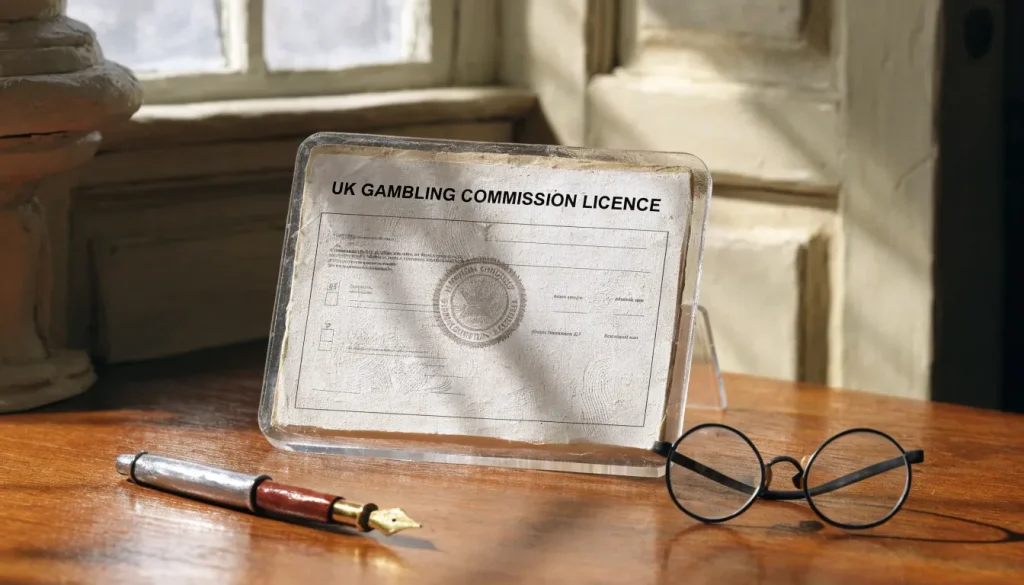
The regulator for commercial gambling in Great Britain is the UK Gambling Commission. It oversees gambling activity, including online casinos, and is the sole regulator for commercial gambling in this part of the UK.
A remote casino must have the relevant Gambling Commission operating licence to offer gambling to consumers in Great Britain.
A remote casino must have the relevant Gambling Commission operating licence to offer gambling to consumers in Great Britain. The location of its servers or other key equipment does not change that requirement: the rules apply to the service offered to people in Great Britain, not just to businesses whose equipment is physically here.
The Commission issues operating licences to businesses and personal licences to individuals who carry out regulated roles. For you as a player, the operating licence is the central point: a site’s claims about its brand, payment options or sign-up process do not establish that it is authorised to serve the market.
This applies whether a casino asks you to create a conventional account or presents itself as a casino without an account. The sign-up route does not determine whether the operator needs a licence. A different-looking entry process is not a different regulatory category.
The UK Gambling Commission’s public register is where to check an operator’s status. Match the business named on the register with the operator and domain you are actually using; a familiar name alone is not enough to show that a particular site is covered. The legal requirement follows the operator’s service to consumers in Great Britain, wherever the equipment supporting that service is located.
Starting Play Without a Conventional Casino Account
The practical difference with a no-account service appears when you arrive at the casino. Instead of completing a conventional registration form and setting up a separate username and password, you may be offered a way to begin through a payment provider or another sign-in route. The screens can look simpler, but the underlying service is still real-money gambling. A shorter entry process should not be mistaken for permission to play anonymously or for an exemption from the rules that apply to online casinos.
The route depends on the operator. You might be asked to choose a payment option, confirm details through an external service, or provide information directly to the casino. Some services create a player profile behind the scenes even if they do not ask you to build a traditional account yourself. Others may ask for personal details as part of the first visit. “No account” describes how you get started, not necessarily whether the operator holds information about you.
Non-UK-Regulated Casinos: Rules for Great Britain
Before you proceed, read what the screen is asking you to authorise. A payment confirmation is not automatically the same thing as accepting a casino’s terms, and a familiar payment brand does not establish who operates the gambling site. Check the operator name shown in the terms and make sure it matches the service you intended to use. If a page directs you elsewhere to complete a payment or identity step, understand which organisation is receiving your information.
Age checks remain part of the process. A UKGC-licensed casino must verify a player’s age and identity, and the operator must establish that a customer is old enough before allowing a deposit. A streamlined sign-in cannot remove those obligations. You may be asked to provide personal details or complete a check even if you have not filled out a standard registration form. If you cannot meet the requested checks, do not assume that a deposit or a successful payment authorisation means you are cleared to gamble.
The same point matters when you use a service advertised as a free online casino with no account. “Free” may refer to access to games without staking your own money, but the label alone does not tell you whether the games are genuinely free, whether a promotion is involved, or whether the operator will ask you to register. Read the page and its terms before selecting a game. If real-money play or a promotional balance is involved, the operator’s obligations do not disappear because the first screen looked like a demo.
Once you have entered, the experience may resemble an ordinary casino: you choose a game, see a balance and use the controls shown on screen. The absence of a familiar account dashboard can make it less obvious where to find your transaction history, responsible-gambling settings, or a way to contact support. Look for those functions before depositing. You should be able to understand how to manage your play and where to get help without having to guess which part of the service controls your account.
A less visible difference may emerge when you want to withdraw. The operator may need to confirm that you are the account holder and that the payment method belongs to you. Identity or payment-ownership questions can arise before a withdrawal, even where the initial route into the casino required little information. That can mean providing documents or answering questions later than you expected. A quick start therefore says little about how straightforward the later stages will be.
No ID Verification Withdrawal Casinos in the UK
Keep the details you use consistent. If the name or other information supplied to the casino does not match what the payment provider can confirm, the operator may need to resolve the discrepancy before processing a withdrawal. Do not use another person’s payment details on the assumption that a no-account route makes ownership irrelevant. Nor should you treat a payment-provider login as proof that the casino has completed every check it may need.
It is sensible to pause if the service asks for information in a way you do not understand, or if the operator’s identity is unclear. Do not provide extra personal or payment information simply because a screen labels the step as required. Read the explanation, look for the casino’s terms and privacy information, and contact the operator through its stated support channel if the purpose of a request is unclear. If you cannot establish who is asking or why, stop rather than trying different details.
The attraction of this route is a lighter sign-up experience, not a different standard for safe or lawful gambling. For a UK player, the operator must still be authorised to serve the market, and the player must still pass applicable age and identity checks. Treat the first screen as the start of a process, not its conclusion. A casino with no conventional account form may still ask who you are, who owns the payment method and whether it can release funds to you.
Casino No ID Verification in the UK: What It Means
What to Check Before You Use a No-Account Casino
A no-account offer can make starting play sound simpler, but the label does not tell you who operates the casino, what checks it can make or what happens when you want to withdraw. Treat each claim as something to verify, not as a shortcut around the operator’s responsibilities.
Identify the operator behind the site
Start with the legal name of the business, not the brand alone. Look for it in the site’s terms and conditions, usually under headings such as “Company information” or “Who we are”. The name should be clear enough to compare with the operator shown in the UK Gambling Commission’s public register.
The relevant question is whether the business serving customers in Great Britain holds the appropriate Gambling Commission licence. A logo or a line saying “fully licensed” is not the same as a register entry. Search the register using the operator’s legal name, then check that the result relates to the casino domain you intend to use. A similarly named company or a licence held by another business does not establish that this operator is covered.
Curaçao Casino Licence in the UK: What It Means
A page claiming that a casino is new deserves the same check as an established one. New branding does not alter the licensing requirement for a remote operator serving Great Britain. If the site does not identify its operator, or the name and domain do not match what you find in the register, pause rather than relying on a badge or a promotional claim.
One specialist review reports that a search of the Gambling Commission’s public register dated 26 September 2026 did not identify a LuckyPays entry under that brand or its stated domain, including luckypays.io. Register information can change, and this is a dated finding rather than a permanent conclusion. If you encounter the claim, check the current register yourself and compare the specific operator and domain. A review is not a substitute for the regulator’s record.
Read the terms that govern access
Before using a casino, find its terms and conditions and check which legal entity they name. Look for whether the rules describe how the service works, what information may be requested and what happens if the operator needs to establish who is using it. A quick entry route does not mean you can assume that no information will be requested later.
Notice whether the site’s statements are precise. “No account” may describe how a session begins, while other wording may explain that a profile or customer record is created as part of play. The key is not the label but whether the operator explains what you are agreeing to and where the full terms can be read. If essential terms are absent, contradictory or difficult to find, that is a reason to stop and resolve the uncertainty before depositing.
Also check that the page you are reading belongs to the domain you plan to use. A search result, advert or review can lead to a different site from the one discussed in its text. Check the address bar and the operator details on the live site; familiar branding alone does not confirm that you have reached the same business.
DO
- Check the operator’s legal name in the UK Gambling Commission’s public register
- Verify that the domain matches the operator on the register
- Read the full terms and conditions before depositing
DON’T
- Rely on a logo or a line saying “fully licensed”
- Assume a familiar brand name guarantees a specific licence
- Rely on a review’s claims without checking official terms
Consider what may happen at withdrawal
Do not assess a casino only by how easily it accepts a deposit. Identity or payment-ownership questions can arise before a withdrawal. That means the operator may ask you to establish who you are or clarify whether a payment method belongs to you before funds are released. The convenient part of the process is not necessarily the whole process.
Read any terms dealing with withdrawals and verification before you play. Check whether the operator explains what information it may request, how to provide it securely and where to ask for help if a request is unclear. Avoid sending sensitive documents through an informal channel or to an address that you cannot connect to the operator. If the site’s instructions are vague, seek clarification through the contact details published on that site before sharing information.
This is not a reason to assume every request is improper. It is a reason to know in advance that a withdrawal can involve checks, even where the route into play was presented as account-free. If a site promises that verification will never be needed, treat that as a claim to investigate rather than as a guarantee.
Make a decision before depositing
Use a short sequence: identify the operator, confirm its current register entry and matching domain, read the relevant terms, then consider what could be requested when you withdraw. Keep a note of the operator name and the pages you checked. If the information does not line up, do not let a smooth sign-up screen settle the question for you.
A no-account casino can still require you to understand who is providing the service and what conditions apply. The useful test is whether those details are visible, consistent and verifiable before you commit money—not whether the site makes the first step look effortless.
Non-GamStop Curacao Casino Sites: Exclusion Explained
Our top casino picks for the UK
- EvoSpinBonus: 125% up to €2500 + 125 Free Spins · Payout speed: 1-3 business days
- x3betBonus: Welcome Pack 100% Up to £1.000 + 200 Free Spins · Payout speed: 1-3 business days
- ChanzeBonus: Slots Welcome Bonus #1 200% up to €500 · Payout speed: 1-3 business days
- SlotoSportBonus: 500% up to £ 10 200+ 777 FS · Payout speed: 1-3 business days
- NightLuckBonus: Welcome Pack + 805% Up To 6400€ + 280 FS · Payout speed: 1-3 business days
- WinBeastBonus: €5000 + 500 FS + €650 Freebet · Payout speed: 1-3 business days
How to Read a No-Account Casino Review
A review can help you identify what to check, but its confident tone is not evidence. Separate statements that you can verify against an official record or the casino’s own terms from judgements such as “easy”, “fast” or “best”. Those may describe a reviewer’s impression; they do not establish what will happen when you use the service.
Start with the operator behind the casino, not the wording of the review. A site aimed at players in Great Britain must have the appropriate Gambling Commission licence. Look for the operator’s legal name and the domain covered by the licence, then compare them with the site being reviewed. A logo or a line saying “fully licensed” is not enough on its own: the review should identify who holds the licence, and the details should match the official register.
Check when the review was updated and whether its claims are still current. A page may remain online after a casino changes its payment arrangements, terms or ownership. If the review names a bonus or a particular feature, compare that claim with the casino’s live information before relying on it. A review can point you towards a detail; it cannot make an old offer current.
Look closely at “no account” claims
The phrase “casino no account needed” can describe a shorter route into play, but it does not tell you everything about how the casino identifies customers or handles withdrawals. Be wary of reviews that turn a streamlined start into a promise of no checks at all. Look for clear explanations of what the service actually requires, and distinguish an account-free marketing label from verifiable information about the operator.
The same caution applies to descriptions of the site as a no-account casino guide or to broad praise for its ease of use. Useful detail explains what the reviewer observed and where the reader can confirm it. A sweeping claim without specifics is difficult to test, however polished the page looks.
Treat deposit and withdrawal claims separately
A review may list ways to put money into a casino and then imply that the same options apply when you cash out. Do not assume that. Depositing and withdrawing are separate processes, and a deposit method may not be available for withdrawals.
No Minimum Deposit Casino UK: How £1 Deposits Work
For UKGC-licensed casinos, withdrawals must be processed through another method, such as a bank transfer, debit card or regulated e-wallet. A review that says a casino accepts a payment option for deposits has not, by that fact alone, established how winnings can be withdrawn. Look for a distinct explanation of the withdrawal route, and confirm it in the casino’s own payment terms.
Promotional language often blurs this distinction. “Quick payments” may refer only to deposits, while a claim about easy cash-outs may omit the method or conditions. Prefer a review that states precisely which part of the process it is describing. If it does not, treat the claim as incomplete rather than filling in the gap yourself.
Read bonus coverage as a claim, not a promise
A review of no-account casino bonuses should make clear whether it is describing an offer currently shown by the casino or discussing promotions in general. The headline alone does not tell you who is eligible, which games qualify or what conditions apply. Use the casino’s official promotion terms to check the details before acting; a review cannot substitute for them.
The strongest reviews make their limits visible. They identify the operator and domain, distinguish deposits from withdrawals, and point to terms that can be checked. If a page relies on superlatives, leaves out the legal operator or treats a deposit option as proof of a cash-out route, its reassuring language is doing more work than its evidence.
Casino Sister Sites and Shared Claims
A casino group may operate several brands, and two sites may describe themselves as sister casinos. That relationship can explain shared design, customer support or promotional language. It does not establish that the sites have the same legal operator, licence, account rules or bonus terms. Treat each casino as a separate service until its own details show otherwise.
Non-UK Licence Casinos: Rules and Risks Explained
This matters when a page presents a list of no-account casinos or recommends several sites under one brand umbrella. A list can make the entries look interchangeable, but a shared parent company is not a substitute for checking the operator behind the particular domain you intend to use. Names and logos are easy to compare; the legal entity and the site’s terms deserve closer attention.
For customers in Great Britain, remote operators offering gambling must hold the relevant Gambling Commission licence. Check the specific site and operator against the Commission’s public register rather than relying on a claim that a related brand is licensed. A licence attached to one company or domain does not, by itself, confirm the status of another. If the site’s operator name is unclear or does not match the register, do not assume the connection has been established.
A useful check is to compare the operator named in the site’s terms with the business details shown on the register. Then confirm that you are looking at the domain you plan to visit, not a similarly named brand or a group landing page. The point is not to infer that every difference signals a problem; it is to avoid treating a family resemblance as evidence.
The same care applies to a no-account casino bonus. One site may advertise an offer that another sister brand does not provide, or may attach different eligibility and withdrawal conditions to an offer with a similar name. Read the promotion on the casino where you would claim it, and use that site’s current terms. A group-level page or an affiliate’s summary may describe the brands together, but it cannot replace the terms that apply to the specific offer.
Be cautious with claims that several sister sites share a single account, identical rules or the same licence. Those details should be stated by the operator and confirmed for the relevant domain. If a claim appears only in promotional copy, look for the corresponding operator and licence information in the site’s legal pages and official register entry.
Anjouan Casino Licence in the UK: What It Means
A dated register check illustrates why specificity matters: a specialist review reported that the UK Gambling Commission’s public register, dated 26 September 2026, did not identify a LuckyPays entry under that brand or the stated domain, including luckypays.io. That is a dated finding, not a permanent description of the register, and it does not establish the status of unrelated sites. For any casino, check the current register and the exact operator and domain before relying on a sister-site claim.
Playing for Real Money on Mobile
A mobile casino is a casino you access on a phone or tablet. The phrase describes the device, not how you pay. You can use a mobile browser or an operator’s app, where available, without using your phone bill to fund play. Likewise, choosing a phone-bill payment does not mean the casino account or its checks are somehow contained within the handset.
Before depositing, check that you are on the intended casino’s genuine website or app and that the operator is UKGC-licensed. A familiar logo or a page that loads neatly on a small screen is not proof of either. On mobile, it is easy to move quickly from a promotional link to a payment screen, so take time to confirm the operator and read the terms before entering personal or payment details.
Real-money play on a phone remains subject to the same age and identity requirements as play on a computer. A UKGC-licensed casino must verify your age before it lets you deposit. Using an app, or starting without a conventional sign-up form, does not remove that requirement. The operator may also ask questions about who owns a payment method, and identity or payment-ownership checks can arise before you withdraw. Keep the details you provide consistent and use a payment method that belongs to you.
Do not confuse pay by mobile with mobile play. Pay by mobile charges a deposit to your phone account; it is a payment route, not a general feature of casino apps. It is deposit-only: winnings cannot be sent back to your phone bill. If you fund play that way, you will need a different permitted route to withdraw. A deposit method may not be available for withdrawals, so check the casino’s stated cash-out options before paying in rather than assuming the money can return by the same path.
Trustly is also a payment name you may encounter while using a casino on a phone, but the device does not establish whether a particular service is offered or suitable. Check the payment options shown by the operator and the conditions attached to them. The key distinction is simple: mobile access concerns where you play; payment choice concerns how money enters or leaves the casino. Neither substitutes for checking the operator, the terms, and the withdrawal route.
No-Deposit Bonuses: Read the Terms Before You Claim
A no-deposit bonus lets you try an offer without first making a deposit. It may be a small credit bonus or free spins on selected slots. A specialist review describes no-deposit spin offers in the range of 10 to 30 spins, but that is not a promise about a particular casino’s current promotion. Check the casino’s own offer and terms before treating it as available.
The headline value tells you little about what you can keep. Free spins may be restricted to named games, while a credit bonus may have conditions attached before winnings can be withdrawn. Look for the eligible games, the expiry date, any wagering requirement and the rules for withdrawing winnings. Check whether the offer’s terms say that some games contribute less, or do not contribute, towards wagering. A large figure can be less useful than clear, workable conditions.
The rules for incentives offered to customers in Great Britain also changed on 19 January 2026: wagering requirements on bonus funds are capped at ten times. A specialist review may describe a different figure, but that should not be treated as the governing rule. Read the current official terms and check that the offer is presented in line with the applicable rules. A single incentive must not bundle more than one type of gambling product.
Check the operator
Verify the operator’s legal name and the current terms and conditions before claiming any bonuses.
If you are comparing a no-account casino deposit bonus with a no-deposit offer, keep the distinction clear: the former involves a deposit, while the latter does not require one to claim the promotion. Neither label tells you whether winnings are withdrawable, what conditions apply or whether the offer remains live.
Before claiming, open the promotion’s full terms from the casino’s own site. Confirm the offer is current, which games qualify, when it expires, how wagering is calculated and what withdrawal conditions apply. Do not rely on a banner or an old review in place of those terms. A bonus is only useful if you understand what you must do before any winnings can be paid out.
Can You Gamble Without Any Verification?
Trustly, Phone Billing and Casino Withdrawals
A casino may offer several ways to deposit without a conventional sign-up flow, but that does not mean each option can also be used to withdraw. Treat the two journeys separately: a payment method that sends money into a gambling account may not provide a route for cashing winnings back out.
Pay by mobile is a deposit-only option. The charge is added to your phone bill or deducted from prepaid balance, but a casino cannot return a withdrawal to that bill. A specialist review reports a monthly carrier-billing ceiling of £240; check the current terms with the payment provider and casino before relying on that figure, as limits can change. The practical point is that phone billing is for funding play, not receiving money.
Trustly is a separate payment service, not another name for phone billing. A casino’s mention of Trustly does not by itself establish that the service is available for a particular account, or that it can be used for both deposits and withdrawals. Check the cashier’s current options and the operator’s withdrawal terms rather than inferring one from the other.
If a deposit method cannot receive payouts, the casino must provide another permitted withdrawal route. At UKGC-licensed sites, withdrawals are processed through an alternative method, such as a bank transfer, debit card or regulated e-wallet. Before depositing, confirm which routes are available to you and whether the casino requires the payout method to meet any account or payment-ownership checks. A payment logo on a deposit page answers only one question: how money can go in.
Paysafecard and the Deposit–Withdrawal Divide
Seeing Paysafecard mentioned alongside a no-account casino does not, by itself, establish that the casino accepts it. Nor does a deposit option tell you how you can receive a withdrawal. Treat funding and cashing out as separate parts of the payment arrangement, and confirm both against the specific casino’s current cashier information and terms.
A no-account route does not change that distinction. You may be able to use a payment method to add funds without following a conventional registration flow, but that does not mean the same method can return winnings. For a UKGC-licensed site, withdrawals must be processed through another route, such as a bank transfer, debit card or regulated e-wallet. Check which alternatives the operator actually provides before depositing; a general mention of a payment brand is not enough.
Look for clear answers to practical questions: is Paysafecard listed for deposits, what information is required to use it, and which withdrawal routes are available? If the cashier explains deposits but says little about withdrawals, contact the operator before sending money. Keep the reply and the relevant terms so you can refer back to what was stated.
Also check that the payment page belongs to the same operator and domain where you intend to play. A method advertised elsewhere, or on a page for a related brand, does not confirm availability at the casino you are considering. The important point is not whether a payment name appears in a list, but whether the specific site explains how funds go in and how an approved withdrawal can come out.
Related posts

Terms of Use
UK Gambling Casino Sites and Slots: Licensing and Play