Trusted UK Casino: How to Check a Site
 Available in GB

A UKGC licence is a legal threshold, not a guarantee; operator details, account checks, terms and payment rules all shape the picture.
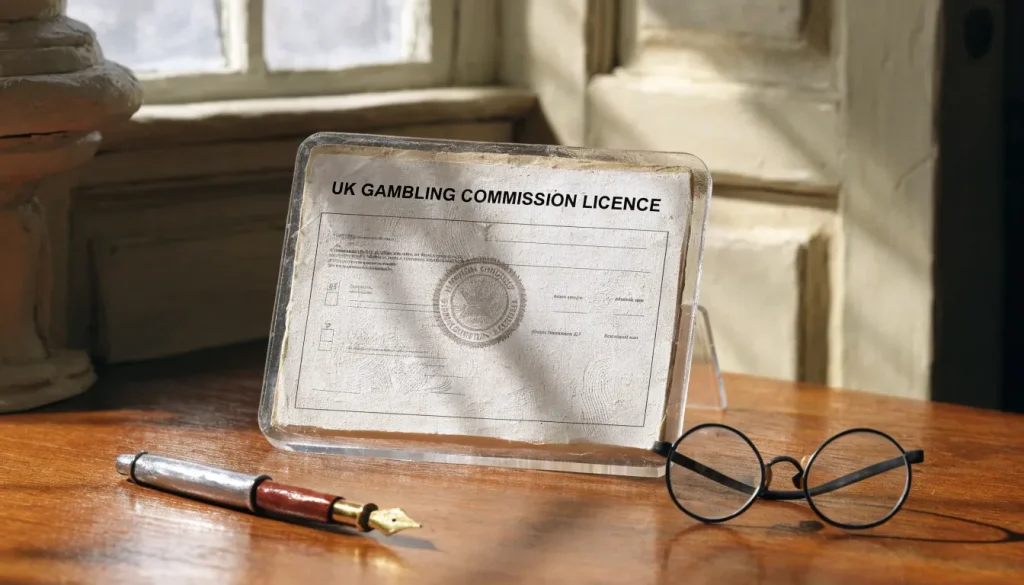
What a UK Gambling Commission Licence Actually Tells You
A UKGC Licence is the starting point for assessing whether an online casino may legally offer real-money gambling to customers in Great Britain. Operators serving people in England, Scotland and Wales must hold the relevant permission from the UK Gambling Commission (UKGC), whether the business is based in Britain or elsewhere. Location does not remove that requirement: a company cannot avoid the British licensing rules simply by running its website from another country.
That is a regulatory threshold, not a general certificate of trustworthiness. A licence means the operator is authorised to provide the gambling covered by its permission under the UKGC’s rules. It does not mean that every feature will suit you, that every transaction will be immediate or that a particular casino is the right choice. Nor is the word “trusted” a status the regulator awards to sites. Treating it as one would turn a useful legal check into a promise it cannot make.
The distinction matters because casino websites can make broad claims about being safe, established or reputable. Those descriptions are not substitutes for a UKGC Licence. For a customer in Great Britain, the relevant question is whether the business offering the gambling has the required UK permission. A polished site, familiar game titles or confident wording does not answer that question by itself.
A licensed operator is accountable within the British regulatory system for the gambling it offers to consumers here. That gives the licence practical significance: it identifies a business operating under local rules rather than merely asserting that it is trustworthy. But the licence is evidence of regulatory status, not a guarantee against problems. You still need to understand what the operator’s terms say and how its account works; those are separate questions from whether it is authorised.
Casinos & Safety: UK Casino Topics and Licensing
There is also a geographic boundary to keep clear. The UKGC’s remit for remote gambling applies to consumers in Great Britain. The Gambling Act 2005 governs England, Wales and Scotland, while Northern Ireland is not covered by the Commission’s remote-gambling regime in the same way. So a statement about a UKGC Licence should not be stretched into a claim that the Commission regulates every part of the United Kingdom under identical arrangements.
For someone comparing sites, this is why “trusted online casino” is better treated as a description to test than as a category with an official definition. A casino can be legally licensed without being endorsed by the regulator as one of the most trusted UK casinos. Conversely, a site’s own assurance of security cannot establish that it has the permission required to offer real-money gambling to British customers. Legal authorisation and broader confidence in a business are related, but they are not interchangeable.
The licence requirement applies to the operator providing the gambling, not merely to the appearance or branding of a website. The name shown to customers may not, on its own, tell you which legal business is responsible. That is why the licensing question is ultimately about the operator behind the service. A brand’s wording, design or use of a familiar name cannot create a licence where the responsible business does not hold one.
This baseline also helps prevent a common misunderstanding: a casino does not become legitimate for the British market because it accepts customers from Britain or displays a general statement about regulation elsewhere. The relevant authorisation is the UKGC permission required for remote gambling offered to consumers in Great Britain. A licence from another jurisdiction is not the same thing as that local permission.
In practice, the licence answers a narrow but important question: is the operator authorised by the UKGC to provide the relevant gambling to customers in Great Britain? It does not settle every question you might have about the company, its service or its treatment of customers. Keeping those questions separate makes “safe and trusted” a more useful standard: first establish the legal basis for operating, then assess the other evidence without mistaking a regulatory threshold for a blanket endorsement.
A UKGC licence confirms an operator is authorised to provide specific gambling activities under British rules, but it is not a guarantee of service quality or trustworthiness.
How to Check Who Runs a Casino Site
A casino brand is not necessarily the legal name of the business operating its website. To find who stands behind a site, look up its brand and domain in the UK Gambling Commission’s public register, then compare those entries with the operator record. A logo or a statement on the site can tell you what the business wants you to see; the register connects that presentation to a named licence holder.
Start with the domain you intend to use, rather than relying only on a brand name. Sites can use several web addresses, and an entry for one domain does not automatically establish that a different address is covered. Search the Commission’s register for the domain, then follow the link to the relevant operator account. Check that the spelling of the domain and the operator’s name match the site you are assessing.
One example is leovegas.co.uk. The Commission’s domain register lists it as an active UK-facing domain under operator account number 39198. The corresponding operator entry names LeoVegas Gaming PLC and carries the same account number. That shared number is the useful link: it lets you move from the address a customer visits to the licensed business recorded by the regulator.
This does not make the brand name and the operator name interchangeable. A customer may recognise LeoVegas, while the register identifies LeoVegas Gaming PLC as the account holder. When reading the site’s terms or other account information, look for the legal operator name and compare it with the register entry. If the names differ, the difference is not automatically evidence of a problem; it is a reason to establish how the brand, domain and operator are connected.
US Casinos for UK Players: Rules and Risks
What a white-label entry means
The register can also show a relationship in which a brand uses a site operated under another company’s licence. In one register entry, 333casino.com is linked to Grace Media (Gibraltar) Limited, account 57869, and identified as a White Label domain. That label signals that the brand and the licensed operator are not the same named entity. It is a specific recorded arrangement, not a reason to assume that every casino brand works this way.
A specialist affiliate review has also reported this connection, but an independent check should start with the Commission’s register rather than relying on a review’s description. The register entry is the evidence that identifies the domain, operator and account number. If you encounter the same brand elsewhere, check the exact address there too; a familiar name alone does not establish that a different domain has the same registered connection.
Follow the account number
An operator account number is a practical cross-check when several names appear. Search the operator’s legal name in the register and confirm that the account number matches the one attached to the domain. In the LeoVegas example, both the active domain listing and the operator entry point to account 39198. That agreement makes the relationship easier to verify than a brand name in isolation.
Keep the distinction clear: the domain tells you which web address the register records; the operator entry tells you which legal entity holds the account. A casino page may foreground its brand, while its terms name a company that is less familiar. Matching the records helps you see whether the company presented in the site’s legal information corresponds to the operator shown by the Commission.
Do
- Search the UKGC public register for the domain and operator name
- Match the account number between the domain and the operator entry
- Verify the legal name of the operator in the site’s terms
Don’t
- Rely solely on a brand name to identify a business
- Assume a site is licensed just because it accepts UK customers
- Treat a similar-looking name as proof of registration
Take care with similar spellings, old links and copied descriptions. A result for a related name is not proof about the exact domain you have open. Nor does a review’s claim that a site is trusted settle who operates it. For a site you are considering, the relevant check is whether its actual domain can be traced to an operator entry in the public register, and whether the legal name and account details line up.
Register records can change, so treat this as a check of the current listing, not a permanent certificate about a brand. If the result is unclear, search by both the domain and the operator name and compare the entries directly. This gives you a documented answer about who is recorded as responsible for the site, rather than asking a brand’s marketing to serve as its own evidence.
Our top casino picks for the UK
- EvoSpinBonus: 125% up to €2500 + 125 Free Spins · Payout speed: 1-3 business days
- x3betBonus: Welcome Pack 100% Up to £1.000 + 200 Free Spins · Payout speed: 1-3 business days
- ChanzeBonus: Slots Welcome Bonus #1 200% up to €500 · Payout speed: 1-3 business days
- SlotoSportBonus: 500% up to £ 10 200+ 777 FS · Payout speed: 1-3 business days
- NightLuckBonus: Welcome Pack + 805% Up To 6400€ + 280 FS · Payout speed: 1-3 business days
- WinBeastBonus: €5000 + 500 FS + €650 Freebet · Payout speed: 1-3 business days
What the Register Can—and Cannot—Verify
A search of the Gambling Commission’s public register can establish whether the regulator lists an operator or domain in its records. A result is evidence about the entry shown, not a general certificate that every claim made by a casino is accurate. A missing result matters, but its meaning depends on what was searched and when.
Trusted Casinos Not on GamStop UK: What to Know
The register is not a directory of every name a casino might use. A brand, website address and legal operator can differ, so checking only one of them may not reveal the relevant entry. Search the exact brand and domain, then look for an operator record that connects them. If a result appears, read the entry itself: confirm that it relates to the site you are assessing, rather than assuming a similar name belongs to the same business. If no match appears, do not treat the gap as proof that the site is covered under another identity. It is a reason to pause and establish the connection before relying on the site.
A missing entry is also different from a confirmed match. The register can tell you what it records; it cannot independently verify every statement on a casino’s website, such as its ownership claims, customer service standards or the accuracy of its promotional wording. Nor does the absence of a result automatically explain why nothing was found. The name may have been entered incorrectly, a domain may have changed, or the relevant record may use the operator’s legal name rather than its trading name. Those possibilities call for careful checking, not an assumption that the site is authorised.
Dated findings illustrate why precision matters. A specialist review reported that a check of the public register dated 26 September 2026 did not show a LuckyPays entry under that brand or the stated domain, luckypays.io. That is a record of what the check found on that date, not a claim about what the register will show later. If you encounter the same brand, repeat the search against the current register and check the relevant names and domain rather than relying on an old summary.
Attention A missing entry in the public register means the operator’s status is unconfirmed; do not assume the site is authorised if a match is not found.
A separate specialist review reported that a register check dated 25 September 2026 found no Gambling Commission operating-licence entry for either Usoftgaming N.V. or Hustles Casino. This is a specific finding about those names at that time. It should not be stretched into a wider claim about unrelated casinos, and it should not be treated as a current status without a fresh check. Register records can change, so a dated finding should remain clearly dated.
The practical distinction is between “I found a matching record” and “I did not find one.” The first gives you something concrete to inspect: the named operator, its account details and any linked domain information. The second leaves an important point unresolved. It does not provide reassurance, and a casino’s own statement that it is licensed is not a substitute for a matching public record.
When the result is unclear, try the exact website address and the legal business name shown in the site’s terms. Compare spellings carefully, including company suffixes. A near match is not enough: the record must connect the operator to the brand or domain you intend to use. If you cannot make that connection in the regulator’s records, treat the licensing status as unconfirmed rather than filling the gap with an assumption.
A register check is therefore a limited but useful piece of evidence. It can confirm that the regulator lists a particular operator or domain, or show that a search did not produce an entry. It cannot turn an unverified claim into a verified one, and a dated absence is not a permanent description of a site. The distinction is especially important when a casino presents a polished brand name but the public record does not make clear who is responsible for it.
Casinos Without a Swedish Licence: UK Regulation
Before You Play for Real Money: Verification and Limits
A casino account can look ready before it is cleared for real-money use. In Great Britain, an operator must verify your identity before you can deposit or play. Treat this as a condition of opening an account, not a formality to leave until you want to withdraw. A site’s polished design, welcome offer or range of slots does not replace the checks.
What identity checks involve
You may be asked to upload a photo of your passport or driving licence and a recent utility bill. These documents help the operator establish who you are and confirm your address. Follow the instructions for the account you are opening: the accepted documents and upload process can vary between operators.
Make sure images are readable and that the details match the information you entered. If a document is unclear, out of date or inconsistent with your account, the operator may need to ask for more information. Do not assume that completing a registration form means verification is finished. Look for an explicit indication that your account has been checked and is cleared for use.
Verification can feel like friction, particularly when you are eager to start playing. Its timing matters: the required identity check must happen before the first deposit or real-money play, rather than being deferred until a later point in your account’s life. If a site appears to let you proceed without completing the required check, pause instead of treating that as a convenience.
Non-UK-Regulated Casinos: Rules for Great Britain
Set limits before money is at stake
Account controls deserve attention before you deposit, not after spending has become difficult to track. Check where the account lets you set financial limits and what each one controls. A limit can help you put a boundary around your gambling, but it is only useful if you understand its scope and choose it deliberately.
Consider what you can afford to lose without affecting essential costs. Set a limit that reflects that amount, rather than the amount you hope to win or a bonus you might receive. A promotion does not change what you can afford. Nor does a limit make gambling risk-free: it is a control on your account, not a promise about the outcome of play.
Read the explanation beside each control before confirming it. Check whether it applies to deposits, losses or another measure, and whether it covers the period you intend. If the wording is unclear, ask the operator to explain it before you fund the account. It is better to resolve the meaning of a control while no money is involved than to discover later that it did not work as you assumed.
Changes do not work both ways at the same speed
Reducing a limit takes effect immediately. Raising one is subject to a cooling-off delay. That difference is intentional: lowering the boundary can protect you straight away, while an increase is not available at once.
VPN-Friendly Casinos in the UK: Rules and Risks
If you decide that a limit should be lower, do not wait for a future review. Make the change in the account controls and check that it has been applied. If you request an increase, plan around the delay rather than assuming the new amount will be available immediately. A pause gives you time to reconsider whether the higher limit is genuinely affordable.
Keep a note of the limits you set and revisit them if your circumstances change. Avoid raising a limit in response to losses or to try to recover money; that changes the boundary at the point when it may be most difficult to judge calmly. If you are unsure whether you can keep gambling within your chosen limit, do not deposit while you decide.
The useful test before real-money play is simple: identity verification is complete, you understand the account controls, and the limits reflect your finances rather than the casino’s offer. If any of those points is unresolved, wait. A trusted real-money casino is not identified by how quickly it lets you play, but by the checks and controls you can understand and use before you do.
Casino Apps: Check the Operator, Not Just the App
A casino app can look polished, carry a familiar brand and be easy to download. None of that establishes who takes your bets or whether the service is authorised to offer gambling in Great Britain. The relevant evidence is the operator’s identity and its UKGC Licence, not the app’s appearance.
App vs Operator
An app’s appearance and publisher name may differ from the actual gambling operator. Always check the app’s legal information and compare the company name and any stated account number against the UKGC public register to ensure the service is authorised.
Remote gambling businesses serving customers in Great Britain need the relevant Gambling Commission licence, wherever the business itself is based. That requirement applies whether you use a website or an app. An app-store listing is not a substitute for checking the operator against the Commission’s public register.
Start with the app’s legal information: look for the company name and any stated account number. Compare those details with the register, and check whether the operator and the UK-facing domain are linked there. The app’s publisher may be a software company rather than the gambling operator, so the publisher name alone may not tell you who is responsible for the account.
The register provides a concrete example of how those links can be checked. It lists LeoVegas Gaming PLC under operator account number 39198 and identifies leovegas.co.uk as an active UK-facing domain for that account. This is a register finding, not a general endorsement of every app using a related name. If an app’s terms give a different company, or its details do not match the register, pause and establish the connection before signing in or depositing.
Treat claims inside an app with the same care. A logo, a reference to a licence, or a link to a regulator does not prove that the named company operates that particular service. Check the company name in the app’s terms and privacy information, then compare it with the register entry. If the relationship remains unclear, do not rely on branding to fill the gap.
Merkur Casino Online UK: Games and Play Rules
Apps also make it easy to return to an account, which can make a quick visual impression feel more reassuring than it is. Convenience is not evidence. A trusted casino app in the UK should be traceable to an identifiable operator whose permission to serve Great Britain consumers can be confirmed independently. The app is only the interface; the operator stands behind the gambling service.
Reading Casino Reviews Against the Evidence
A casino review is a claim about a business, not proof that the business meets the standards it describes. Treat praise such as “trusted” or “fully regulated” as something to check, rather than as a finding in itself. A useful review makes clear which company operates the brand and gives enough detail for you to compare its statements with public records.
The UK Gambling Commission’s register can provide that independent check. For example, its listing links 333casino.com to Grace Media (Gibraltar) Limited, identifies the operator under account 57869, and classifies the domain as a White Label domain. That is more informative than a review that names only the casino brand: it lets you assess whether the reviewer has identified the company behind the site and whether the register supports the claim.
The register is not a general endorsement, and a review should not present a licence entry as proof that every aspect of an operator’s conduct is beyond question. Regulatory action is relevant evidence too. On 26 June 2025, the Gambling Commission imposed a £60,000 financial penalty on Grace Media over breaches involving self-exclusion and consent for direct electronic marketing. A review that calls the operator trustworthy without acknowledging relevant documented action may be leaving out information that matters to a reader.
Regulatory penalties, such as fines for breaches of self-exclusion rules, are specific to individual operators and do not necessarily apply to all companies in the market.
That does not mean a past penalty, by itself, settles every question about a brand or its current service. Read what the action concerned, check which company it involved, and compare that with the review’s wording. If a review discusses a brand operated by a group company, it should make the relationship clear rather than implying that the brand and the licensed operator are necessarily the same entity.
Be wary of reviews that offer confident conclusions but no operator name, register details or explanation of how claims were checked. Also note whether the text distinguishes verifiable facts from opinion and whether it is dated: company arrangements and register entries can change. A clear review helps you follow its evidence; it does not ask you to substitute its verdict for your own check.
A Practical Trust Check Before You Sign Up
A trusted online casino is not established by a polished website, familiar branding or confident promises. Before opening an account, check three things in order: whether the operator is licensed for the market, whether you can identify the company behind the site, and what you will need to provide before playing.
Start with the UKGC Licence. Remote gambling businesses that offer services to customers in Great Britain need the relevant UK Gambling Commission licence, wherever the business is based. Look up the casino’s stated operator and domain in the Commission’s public register. A licence is a regulatory requirement, not a blanket guarantee that every aspect of a business will meet your expectations. Treat it as a threshold check, not a substitute for understanding who runs the site.
Anjouan Casino Licence in the UK: What It Means
Match the site to its operator. The name shown on a casino’s homepage may be a brand rather than the licensed company. Check that the operator named in the register corresponds to the brand or domain you intend to use. If the details do not match, or you cannot establish which company is responsible, pause rather than relying on the site’s own claims. This is a practical way to judge whether a casino has a verifiable basis for serving British customers.
Know what account checks involve. UK rules require verification before you can deposit or play. Be prepared to provide identity or payment-ownership information; identity checks can involve a passport or driving licence image and a recent utility bill. Read the site’s explanation before registering so you know what may be requested and can decide whether you are comfortable supplying it. A request for documents is not, by itself, evidence of a problem: verification is part of the process.
If you cannot confirm the relevant UKGC Licence, connect the site to a named operator, or understand what information will be required, do not treat the site as checked. The purpose is not to find a promise that sounds reassuring. It is to establish who is accountable and whether the basic conditions for playing are clear before you hand over personal details or money.
Final Summary
- Always verify the UKGC licence via the public register.
- Match the website domain to the correct legal operator and account number.
- Complete identity verification before attempting to deposit or play.
- Understand all account controls and deposit/withdrawal rules beforehand.
Payments, Games and the Rules That Affect Them
A casino payment method is not simply a matter of preference: UK rules restrict how gambling accounts can be funded. Remote operators must not accept credit-card payments for gambling. The ban also covers credit-card funds routed through a money service business, and a wallet cannot be used where it lets you gamble with money drawn from a credit card. A payment option appearing on a cashier page does not, by itself, tell you which funding sources are allowed.
Check the terms for the method you intend to use, including any limits or charges set by your bank or payment provider. Bank transfers may carry a charge under the customer’s bank policy; a specialist review has cited fees of £2–£5, but that is not a universal tariff. Read the terms shown for your own account rather than assuming the same cost applies everywhere. Deposit and withdrawal availability are separate, so check both before relying on a method for moving money in or out.
The games themselves are subject to rules too. Online slot autoplay is banned in Britain, and each slot spin must last at least 2.5 seconds. The minimum duration is a feature of the game rules, not a promise about how long an entire session will take. If a site offers a control that appears to run slot spins automatically, treat that as a reason to pause and check what the control does and whether the game is being presented in line with British rules.
Stake limits also apply to online slots. Customers aged 25 and over can stake no more than £5 per game cycle; for customers aged 18 to 24, the ceiling is £2. These limits concern the stake on a slot game cycle, not a general cap on every casino game or on the total amount in an account.
Before depositing, make sure you understand how the payment route works and what the game controls do. A clear cashier and a polished games menu are not substitutes for rules that apply to the underlying payment and play.
Free Spins and Bonus Terms: Check the Cost of the Offer
A bonus is not simply extra money to withdraw. Its terms may require you to stake the bonus, or winnings from free spins, a specified number of times before they can be withdrawn. That requirement is called wagering.
The calculation is worth doing before you accept. A specialist review gives the example of a £20 bonus with 10x wagering: you would need to place £200 in total stakes to meet the requirement. That is the amount wagered, not a promise that you will have £200 left afterwards. Stakes can lose, and the terms determine whether bonus funds, winnings, or both count towards the target.
Check which games contribute and at what rate. If a game contributes only part of each stake, you may need to wager more than the headline calculation suggests; if it is excluded, play on it may not advance the requirement at all. Free spins can also come with their own conditions, including limits on eligible games or on how winnings are credited. Read the offer rules rather than relying on the short description beside the sign-up button.
How long does it take to receive a withdrawal?
Withdrawals involve two stages: the casino’s internal review and the payment provider’s transfer. The time required depends on whether identity checks are needed and the specific clearing times of your chosen method.
What is wagering?
Wagering is the requirement to stake a bonus or winnings a specific number of times before they can be withdrawn from your account.
Expiry matters too. A specialist review describes bonus funds and free spins as having a set validity period, commonly between seven and thirty days. The exact deadline is offer-specific, so check when the clock starts and what must be completed before it ends. An offer that looks generous can be of little practical use if its wagering target, eligible games and expiry do not suit how you intend to play.
For a trusted casino offering free spins in the UK, the useful test is not the size of the headline offer. It is whether the terms clearly state the wagering calculation, qualifying games, expiry and any withdrawal conditions. If a detail is unclear, treat that as a reason to pause rather than assume the most favourable interpretation.
Withdrawal Times: What Can Add to the Wait
A payout involves two separate stages: the casino’s review and the payment provider’s transfer. A quoted processing time may cover only one of them, so check what the estimate actually measures before treating it as the time until money reaches your account.
The first withdrawal can take longer if the operator needs to confirm your identity or ask questions about who owns the payment method. A specialist review reports that first-time withdrawals can involve an additional 12–24 hours for document checks. Treat that as a reported estimate, not a promise: the wait depends on whether checks are needed and how quickly you provide any requested information.
Once the operator approves a withdrawal, the payment method has its own clearing time. A specialist review gives PayPal as an example, reporting a clearance estimate of 4–6 hours on weekdays and 8–10 hours from Friday to Sunday. These are reported timings, not a service guarantee; weekends can make the difference between an approval and money arriving more noticeable.
A useful comparison between trusted online casinos for UK players is therefore not simply which site advertises fast payouts. Look for a clear explanation of when the operator begins processing, what can trigger a review, and whether the stated estimate refers to approval or receipt of funds. Deposit and withdrawal availability are separate, so do not assume a method available for funding an account can also receive a payout.
Keep the confirmation of your withdrawal and note when its status changes. If the stated processing period has passed, ask the operator whether the request is still under review or has been sent to the payment provider. That distinction identifies where the delay sits; a single headline figure often does not.
Protection, Complaints and Regulatory Enforcement
Self-exclusion lets you block yourself from gambling with participating operators. Online operators licensed for Great Britain must take part in GAMSTOP, the national online self-exclusion scheme; participation became compulsory on 31 March 2020. If you choose to self-exclude, check the scheme’s terms and follow its registration process.
Casino Sites Not on GamStop: UK Rules Explained
You should also be able to control the promotions you receive. Casinos must let customers choose which types of marketing they receive and through which channels. If you have opted out, an unwanted direct message is more than an irritation: it can indicate a failure to respect your preference.
If a dispute arises, use the casino’s internal complaints process first. UKGC licensees must also provide access to an approved Alternative Dispute Resolution service if the complaint remains unresolved. Keep copies of relevant messages and account records so you can set out what happened clearly.
Regulatory penalties show what enforcement can address, but do not establish that every site has the same failures. On 26 June 2025, the Gambling Commission fined Grace Media £60,000 over breaches concerning self-exclusion and consent for direct electronic marketing. That is a specific enforcement finding against one operator, not a verdict on all casinos.
Is LeoVegas UK licensed?
Yes. The UK Gambling Commission register lists leovegas.co.uk as an active UK-facing domain under operator account 39198, held by LeoVegas Gaming PLC.
What is the fastest withdrawal method?
PayPal is the fastest method listed: withdrawals take roughly 4–6 hours on weekdays and 8–10 hours from Friday to Sunday.
Where can I find responsible gambling tools?
You can use GAMSTOP, which online operators in Great Britain are required to participate in. You can also call the National Gambling Helpline on 0808 8020 133, available 24 hours a day.
Related posts

Terms of Use
UK Gambling Casino Sites and Slots: Licensing and Play